

Total Internal Reflection
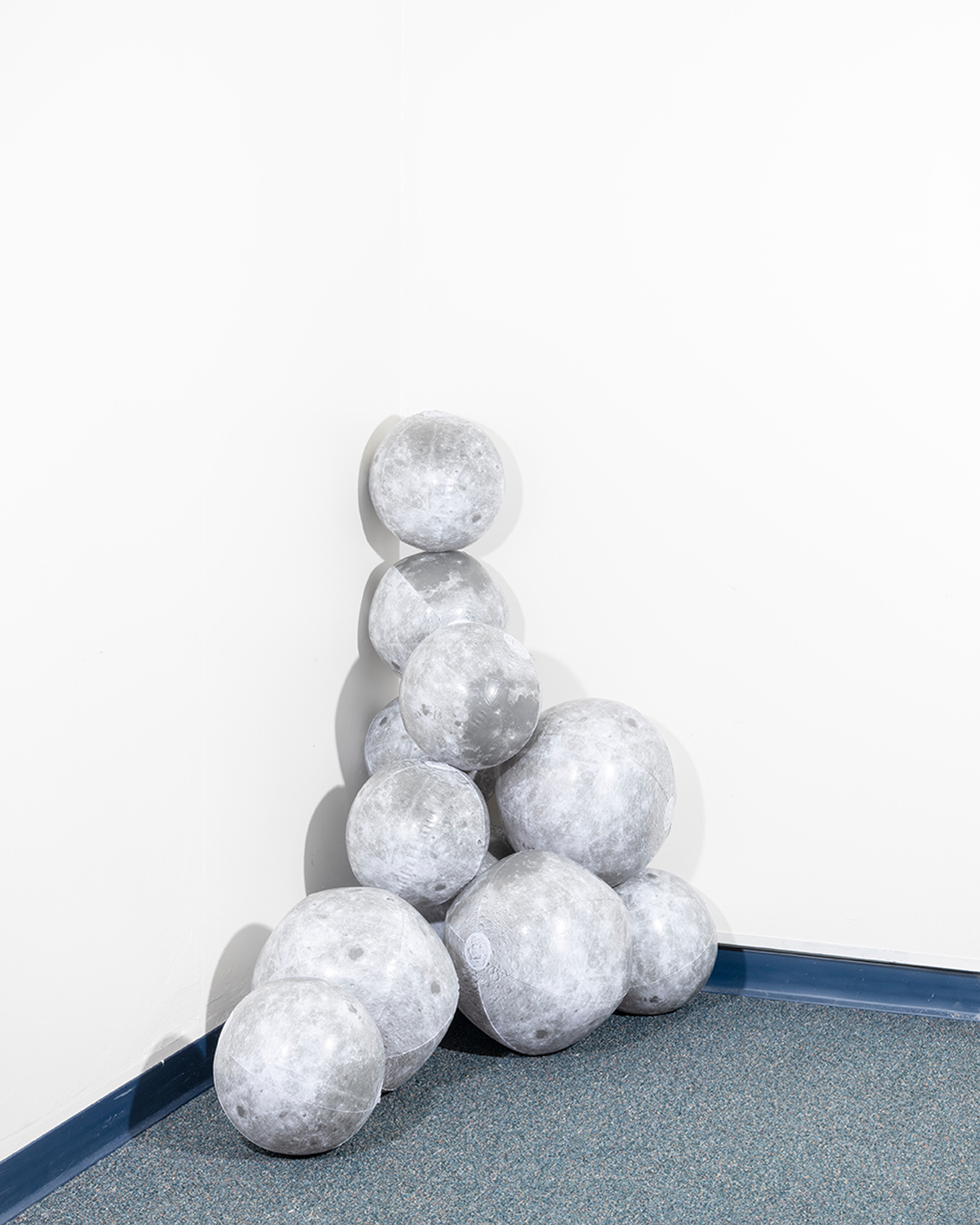
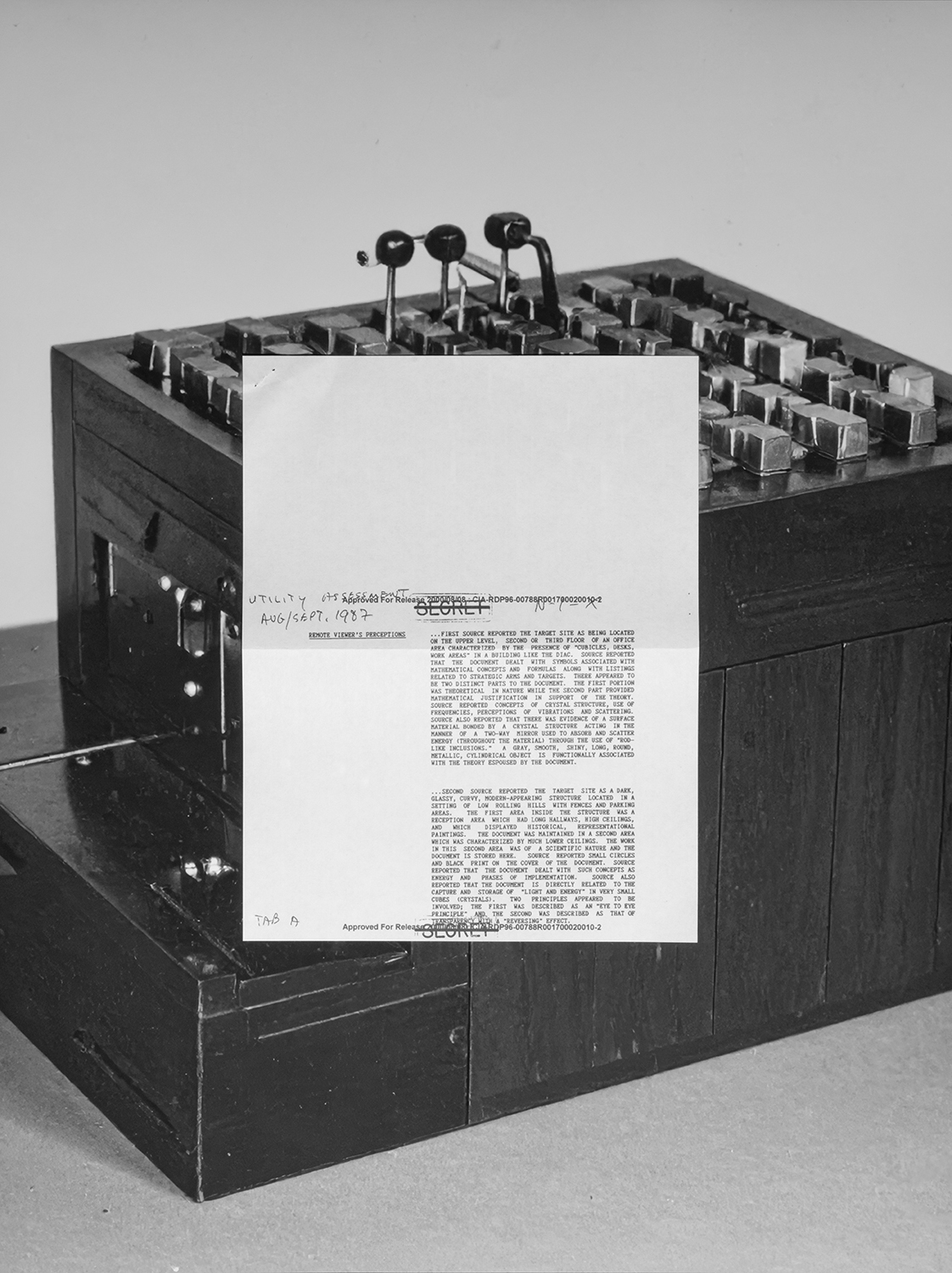
The CIA’s Stargate Project (1978–1995) is a declassified U.S. program that, in the context of Cold War anxieties, investigated psychic phenomena, particularly remote viewing, as a possible tool for intelligence gathering. I am particularly drawn to this specific archive as it allows me to navigate a crucial moment when the Institution attempted to legitimize the uncertain, exposing how speculative practices were institutionalized and preserved as authoritative knowledge. My thesis work enters this collection of documents, photographs, and drawings through three distinct approaches:
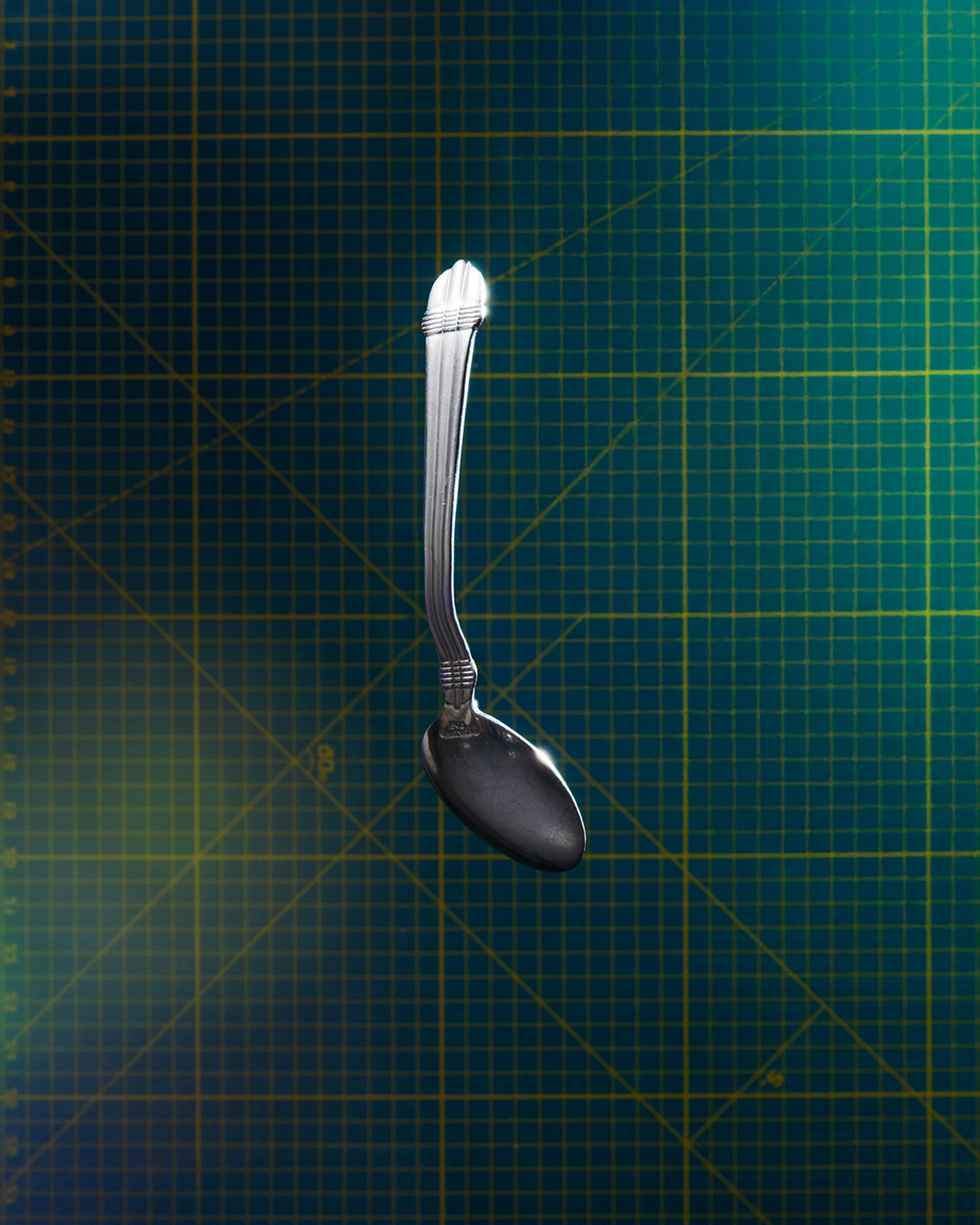
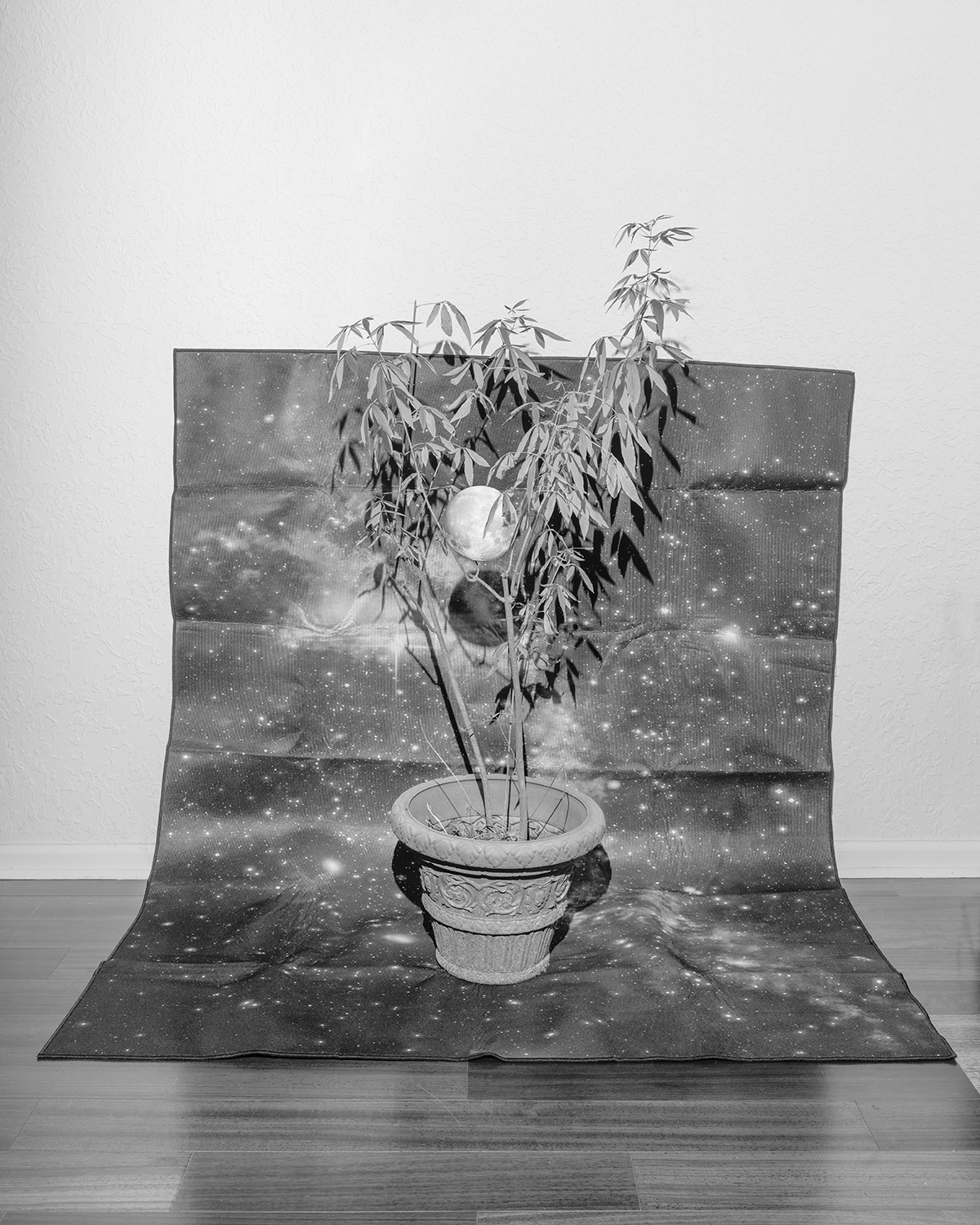
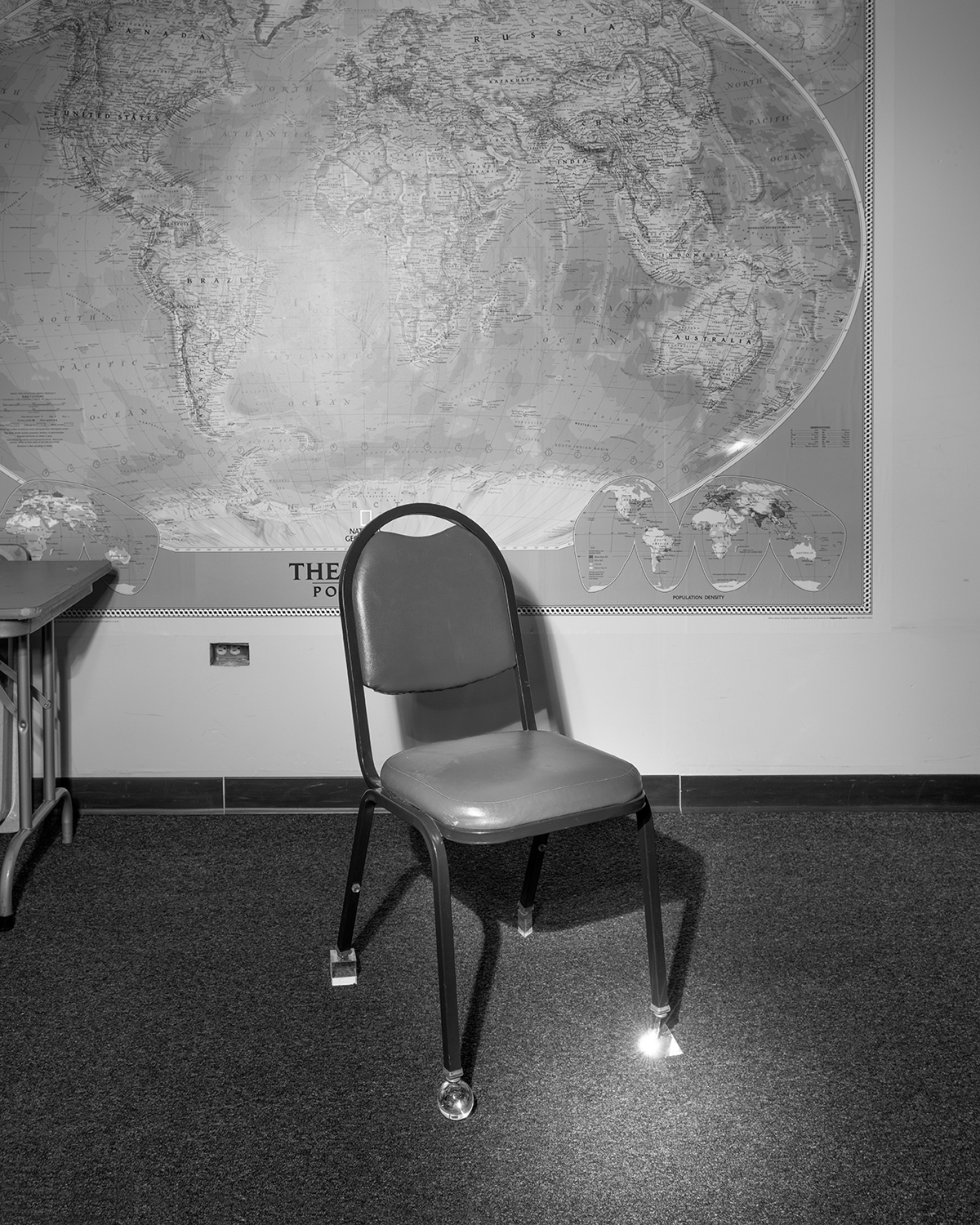
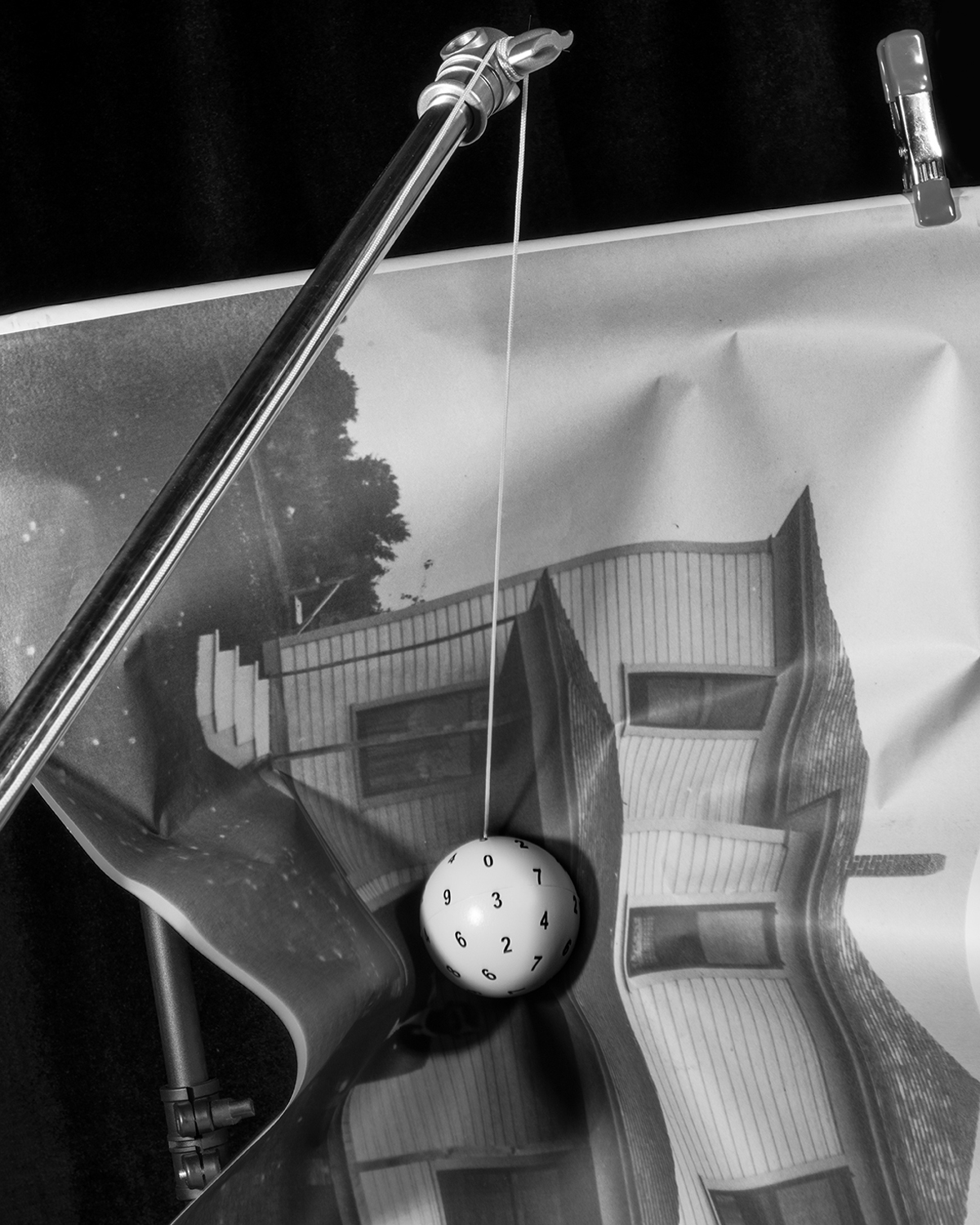
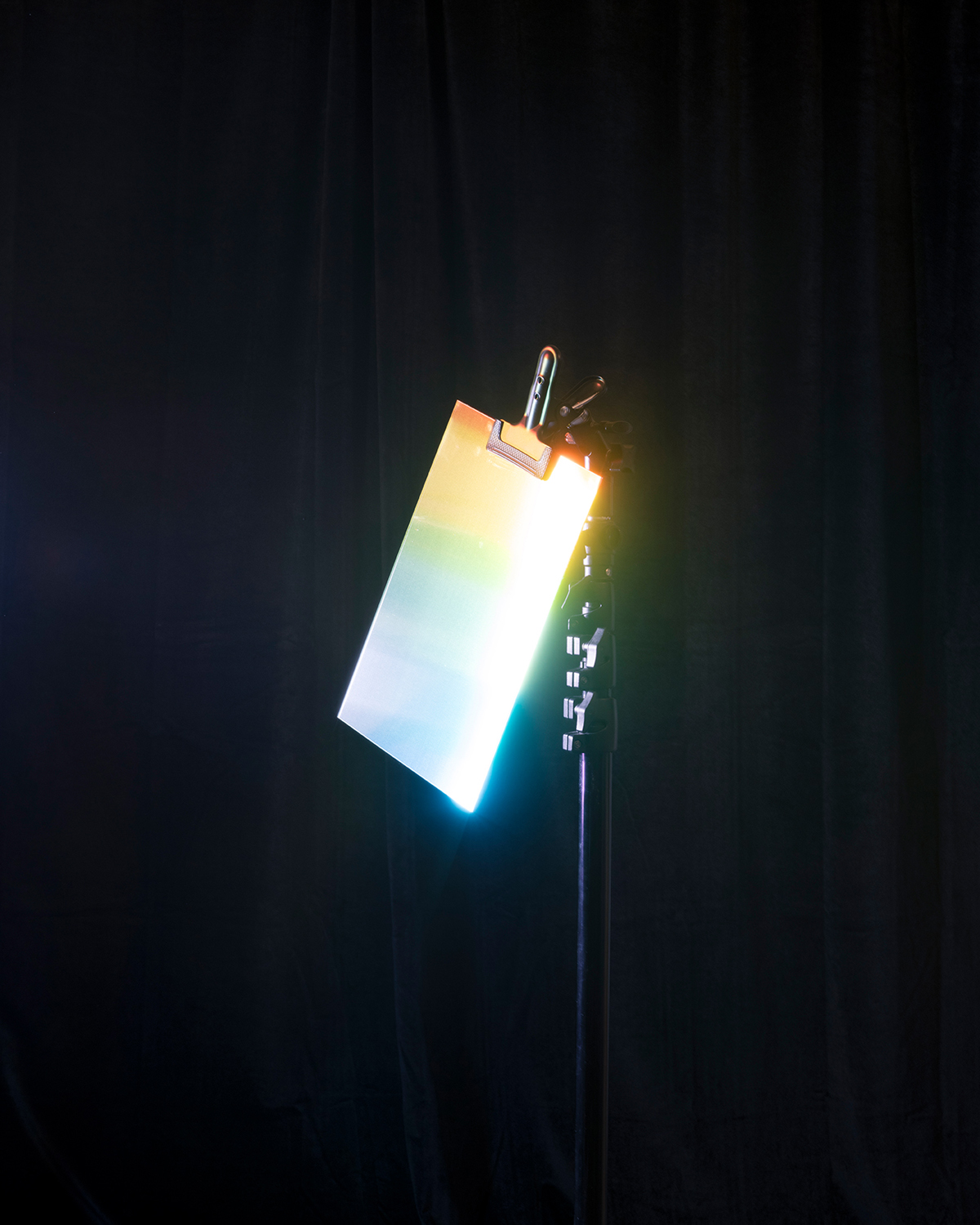
I. In my photographs, I borrow devices that test the invisible, such as dowsing rods, prisms and pendulums: instruments historically used to detect what lies beyond ordinary perception, and have them perform as agents of uncertainty. The studio becomes a site of testing, where belief, measurement, and fiction begin to overlap. I, the photographer, mirroring the role of a scientist, stage experiments with optics, gravity, and motion, as they are rendered through the camera into images that claim truth.
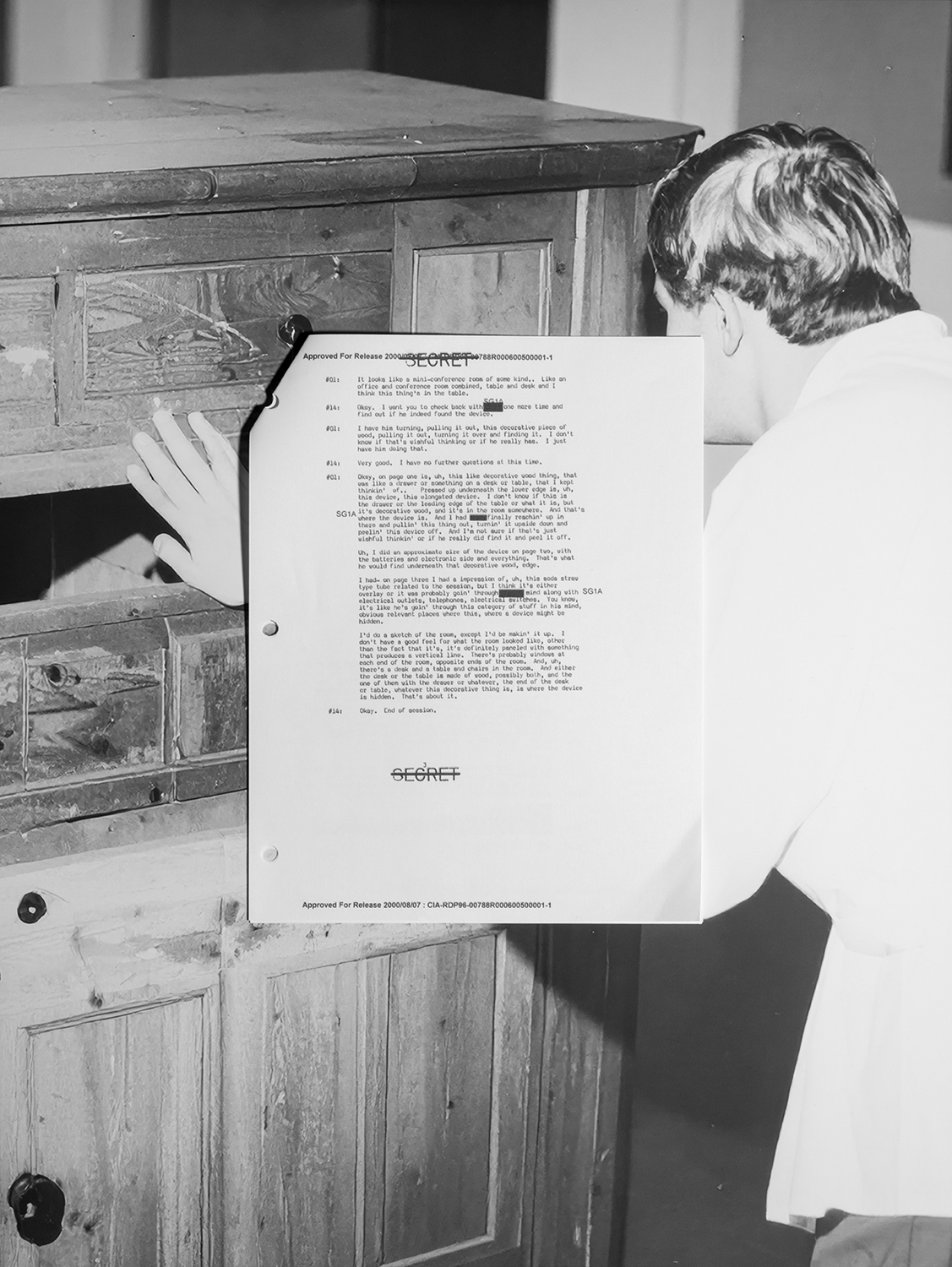
II. I work with fragments of declassified transcripts, translating them into images using AI software (Firefly). In doing so, I focus on the increasingly unstable boundary between the human and the artificial, where perception, interpretation, and fabrication begin to blur. Considering photography’s long-lasting role in the empirical gathering of knowledge, I explore how these images may legitimise the CIA transcripts and how AI disrupts this authority, eventually revealing knowledge as provisional and constructed. By feeding selected remote viewers’ descriptions to the image-making software, I invite the algorithm to render the unreal, giving form to visions that have existed only in speculation. AI becomes both a tool and a lens for inquiry in my project, and enacts a dialogue between human perception, institutional record, and machine interpretation, inviting the viewer to consider how knowledge can be mediated, transformed, and unsettled.
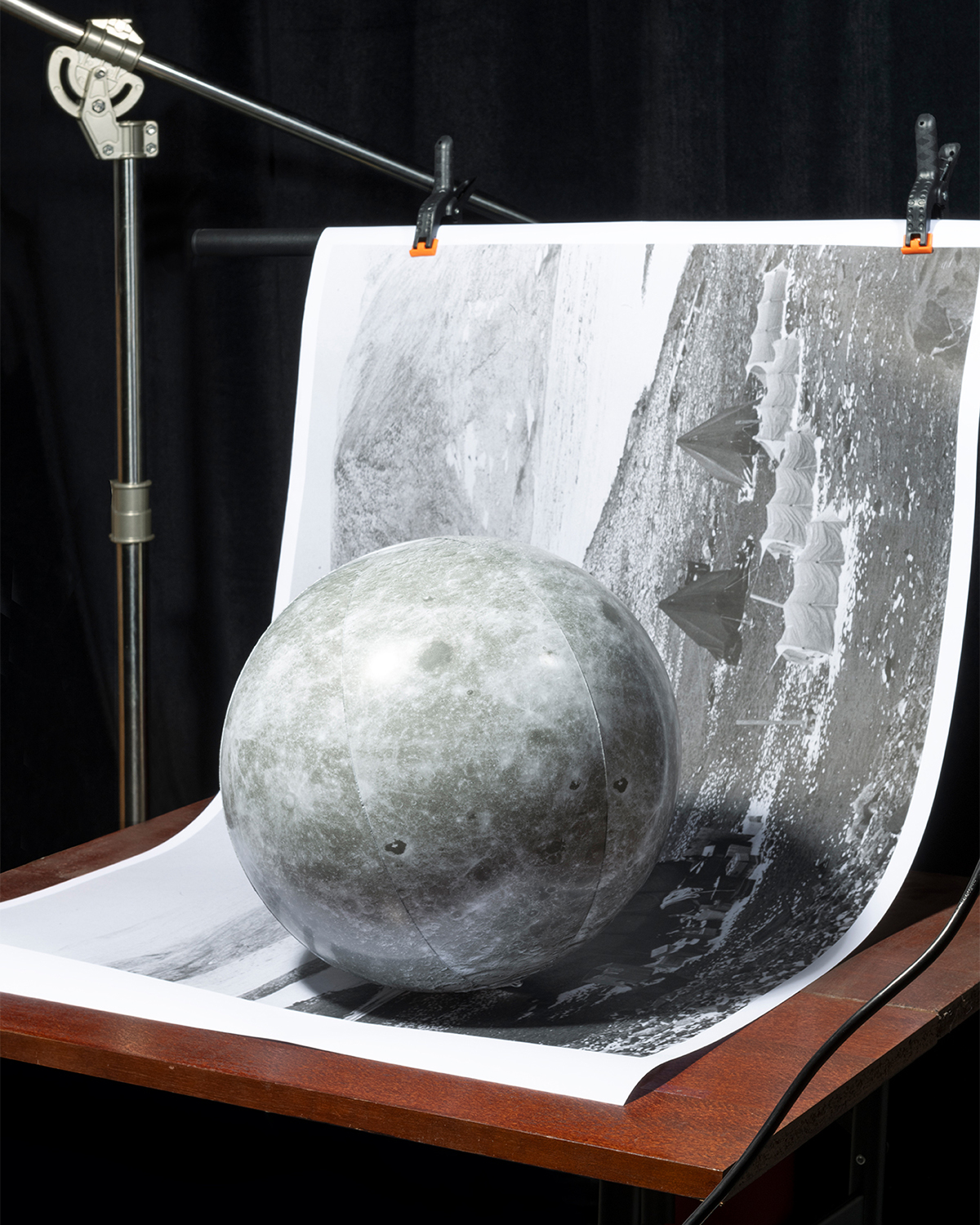
III. I transmit photographs as radio signals, so that the image must first exist as belief, a remote proposition, before the viewer reconstructs it as sight. The photograph is transmitted repeatedly, and its consequent degradation becomes a crucial part of its existence as a visible object. This process aligns with the remote viewer’s act of reconstructing an image through belief and mediated signals rather than direct perception, where vision takes on a speculative, almost psychic quality.
Diana Sosnowska is a Polish Italian visual artist working between the United States and Italy. She holds an MFA from the University of South Florida and a BA in Photography from Robert Gordon University in Scotland. In 2026, she attended the Skowhegan School of Painting & Sculpture. Her research based practice examines how institutions produce, preserve and circulate knowledge. Working with photography, archival material and sculpture, she draws on governmental, institutional and vernacular archives to explore the shifting relationship between evidence and belief, documentation and speculation. Her work is particularly interested in the images, objects and traces that emerge at the limits of knowledge.