


Nienke Coers
14 August 2026
Not every truth arrives as fact. Some emerge through memory, myth, intuition, or community – taking root in the body, resurfacing across time, texturing the surface of the earth. They circle, spiral, wander, sediment, echo, ripple: the ways we come to know the world are as shifting and plural as the world itself. It is in this spirit that the artists gathered in this Emerging Talents issue understand images less as records than as methods of thinking. Their projects move between archives and imagination, between inherited histories and speculative futures, between the intimate and the political. Rather than seeking definitive answers, they dwell in ambiguity, embracing that which resists easy explanation. In doing so, they propose new ways of understanding how knowledge is made and carried, using photography not to stabilise meaning but to question how meaning itself is produced.
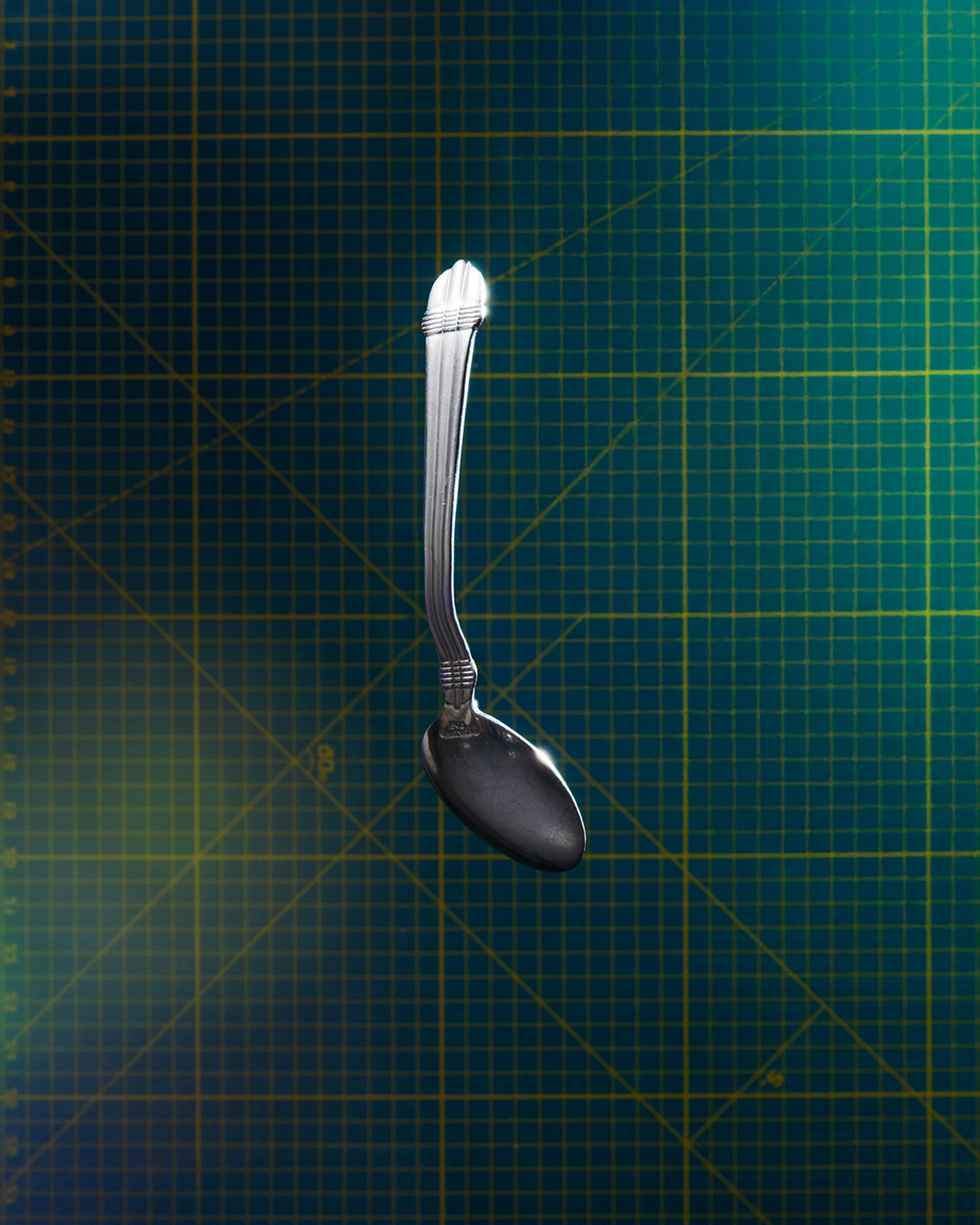
In Total Internal Reflection, Diana Sosnowska enters the strange territory of the CIA’s Stargate Project, a declassified Cold War program that, between 1978 and 1995, investigated psychic phenomena such as remote viewing as possible instruments of intelligence. Through staged studio photographs incorporating sculptural elements, archival objects, and photographic interventions, Sosnowska reconstructs the visual and conceptual world of a program situated at the tense boundary between scientific research, military strategy, and the supernatural. For Sosnowska, the archive is not a stable repository but a site of speculation, projection, and contradiction. Her photographs expose the conditions through which knowledge comes to appear credible, transforming the image into a space where certainty can falter, authority can be questioned, and seeing itself becomes an act of interpretation.
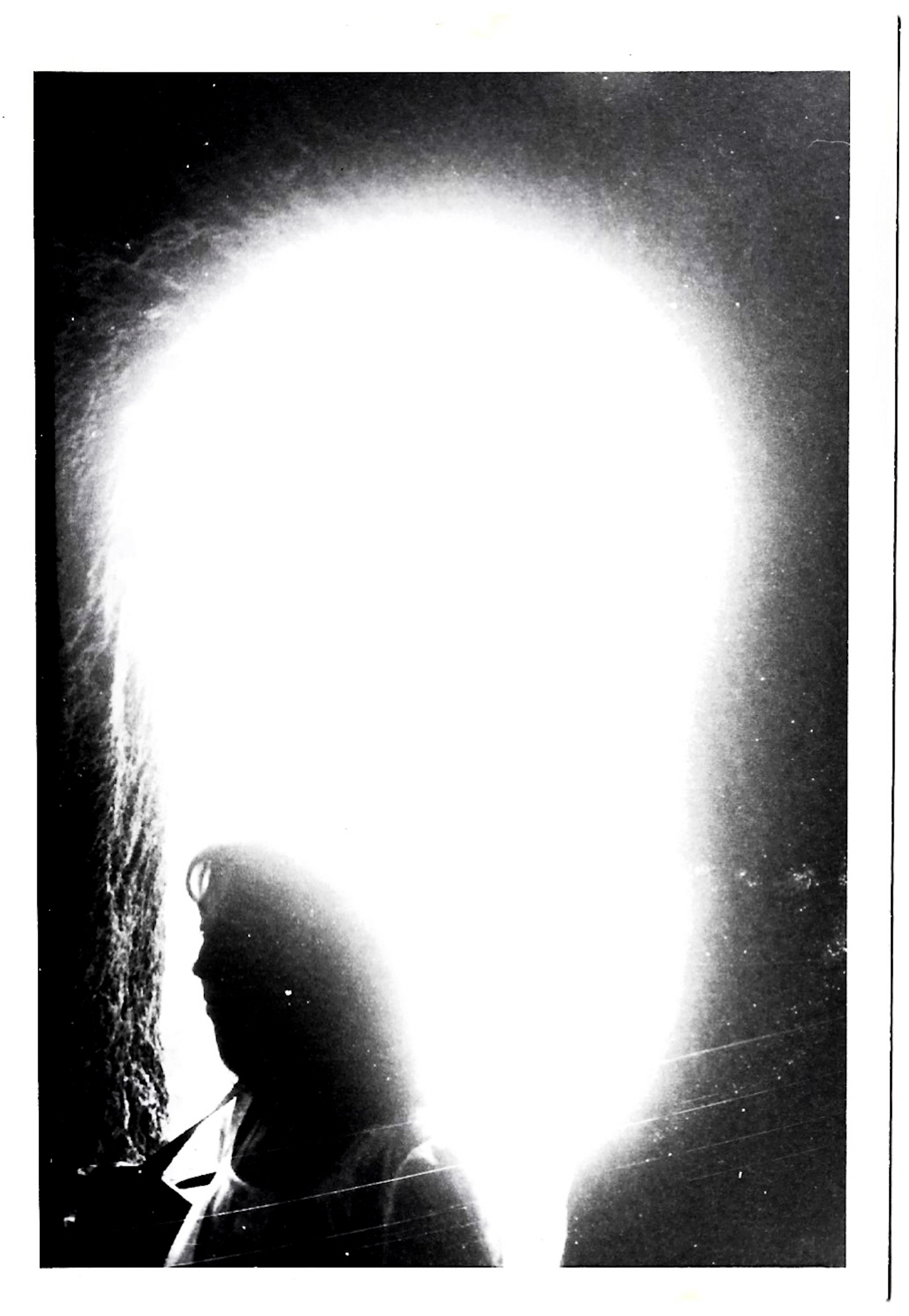
Paula Elena Ramos too turns toward the more-than-human, be it through an intensely personal encounter with the unknown. At the age of twenty-seven, she experienced a sudden cardiac arrest. During resuscitation, her body was left behind as she crossed into a space where neither time nor form existed, and that was populated by luminous silhouettes. Ramos returned to life with a pacemaker, but not without questions. Combining staged photographs, drawing, writing, and speculative imagery, No hay cielo detrás / No Heaven Behind traces her ongoing search for the meaning of that encounter. Part autofiction, part record, the work follows her passage between the human and the unknown – and navigates the uneasy space between surviving an experience and truly returning from it.
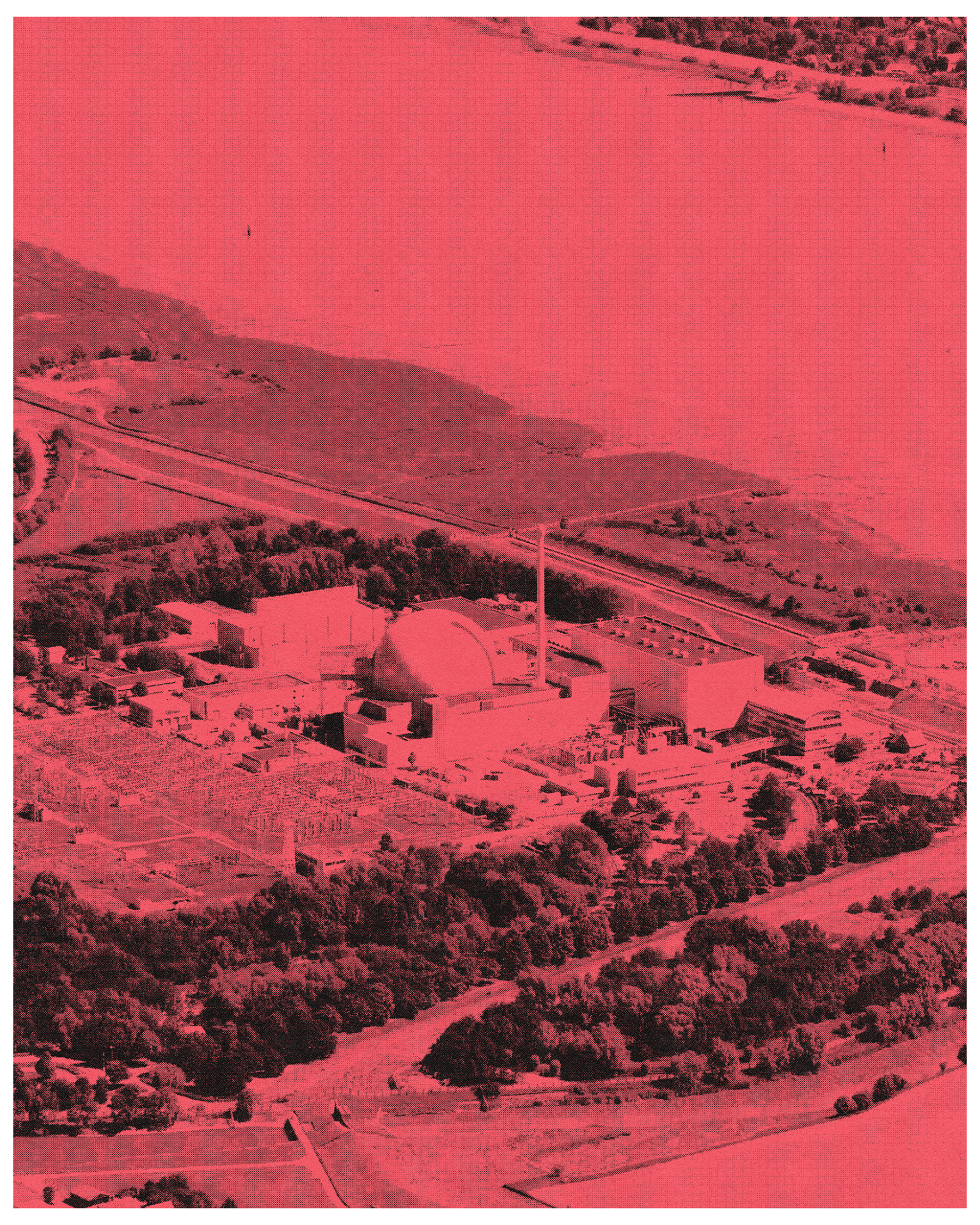
The question of what comes after death that Ramos relates to her own experience resurfaces on a planetary scale in This Place Is a Message by Cseke Tamás. Nuclear energy is often presented as a solution to the growing energy demands of a population of eight billion. Yet, the waste it produces may become the only trace of human civilisation capable of outlasting every culture we create. Drawing on nuclear semiotics – the attempt to devise warnings that can communicate across millennia – alongside archival material and photographs made at nuclear sites in Hungary, Cseke constructs a speculative meditation on the power plant’s significance and possible afterlife. What symbols could warn future civilisations of the poison buried beneath their feet? What will remain of us when our languages, politics, and constellations have disappeared? His project transforms nuclear energy into a meditation on the traces we leave behind, and the distant future that will inherit them.
Where Cseke looks to the political futures we are building, Léa Chen and Grace Tenneh Kromah turn toward the traces history has already left behind. In The Stars That Don’t Look Back, Chen draws on her family archive, Taiwanese literature, and historical events from the island’s two most recent periods of colonial rule to trace the political and private memories of three generations of women living in Taiwan. In one photograph, Chen stands alongside her mother and grandmother, their hands joined in a gesture that becomes both intimate and symbolic: within a history that has repeatedly repressed and forgotten women, women have continued to hold one another up, carrying memory, resilience, and care across generations.
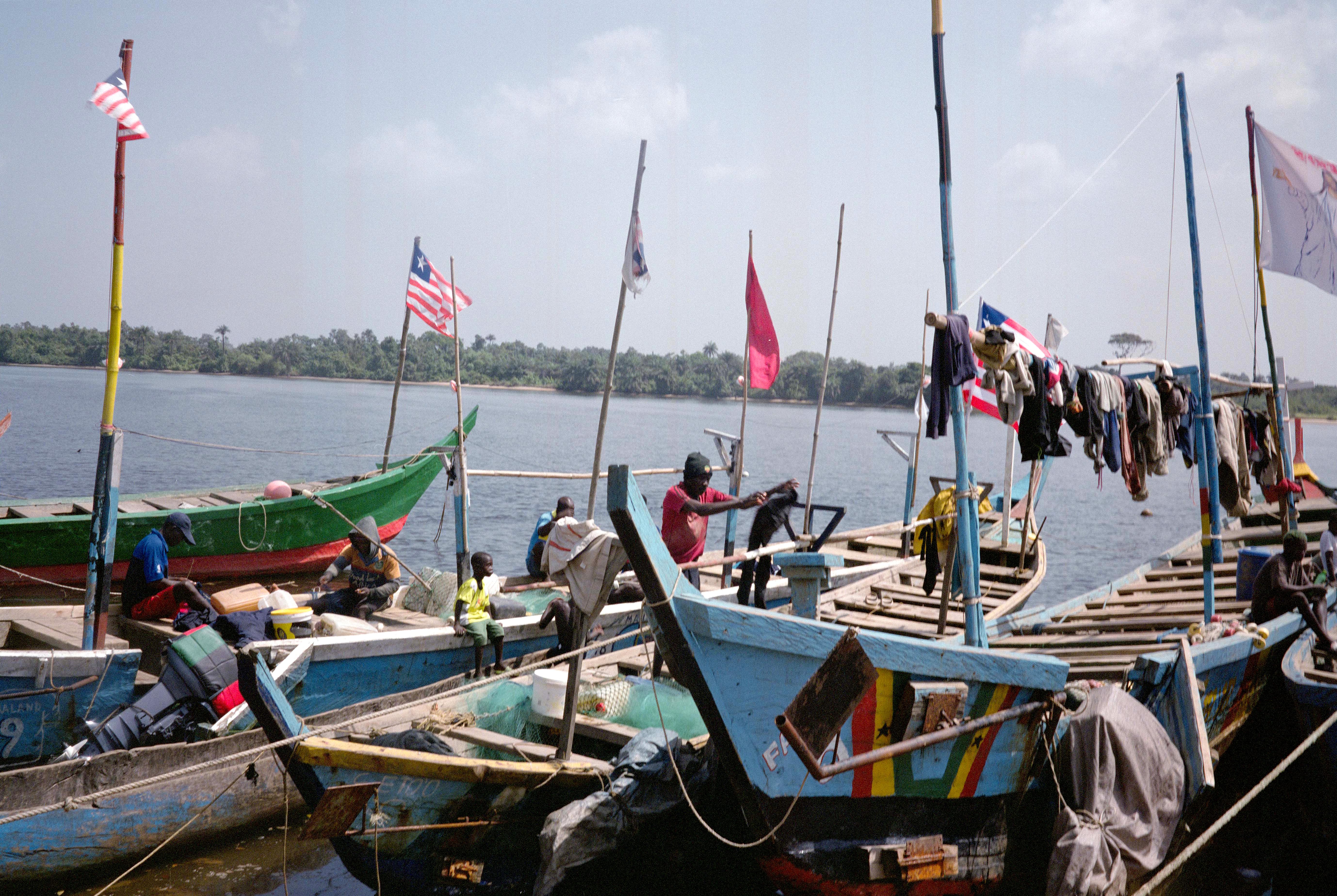
Kromah, in Between Liberia and elsewhere, juxtaposes photographs of her family and their surroundings in Liberia and the United States with archival family images and historical documents relating to Liberia’s national history. Through these layered encounters between the personal and the historical, she traces the quiet persistence of the past: the ways history settles into architecture, daily routines, relationships, and memory long after moments of crisis have passed. The ‘elsewhere’ of the project title thus extends beyond Kromah’s experience as an artist in the diaspora. It names the space between places, between personal and collective memory, and between what history records and what it leaves behind.
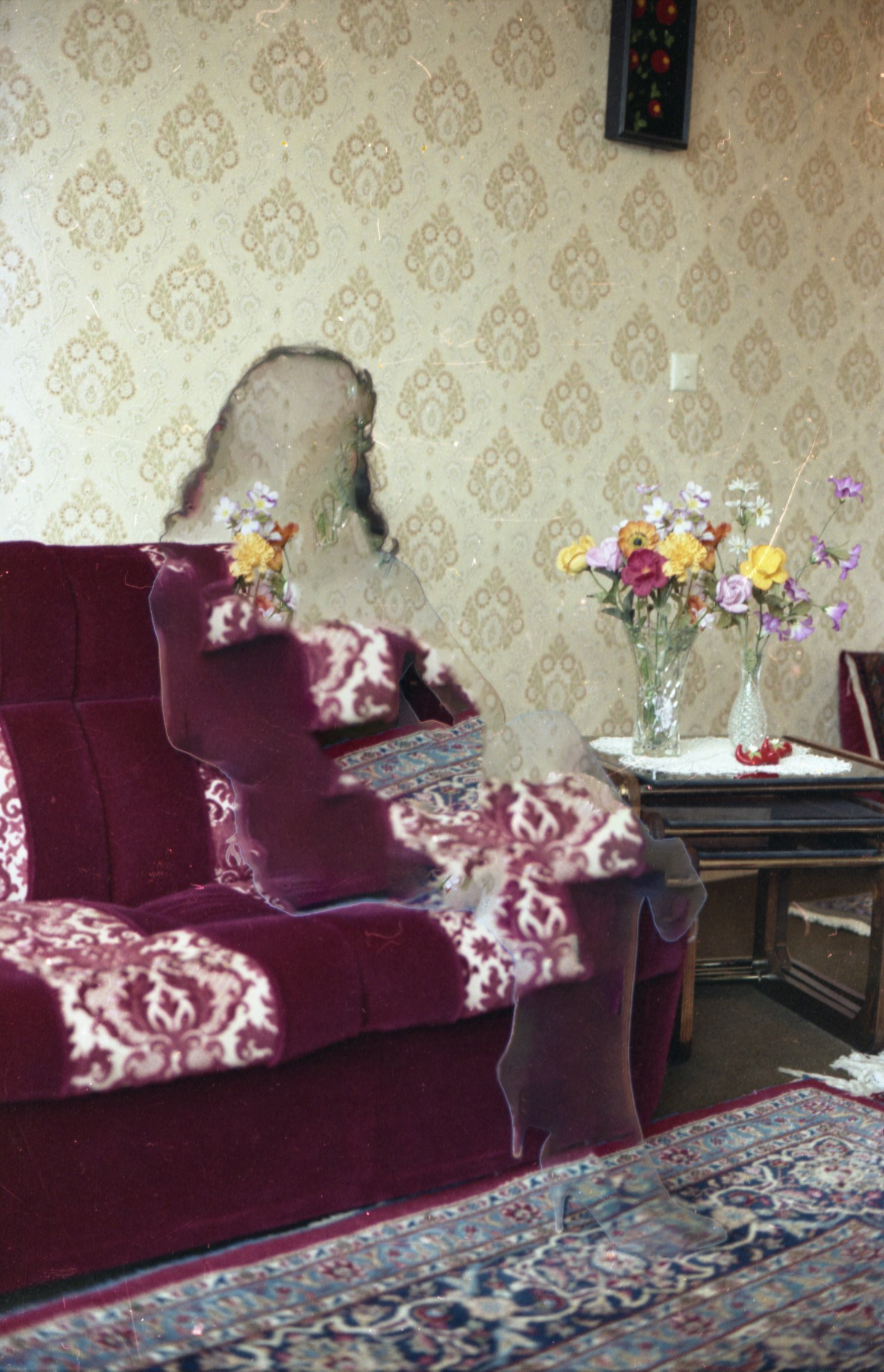
Farhad Yasavoli similarly explores how memories are transmitted across generations and borders, but rather than tracing their meanings, he turns his attention to the very act of remembering itself. Developed from the family archive he brought with him from Iran, Memorial considers memory as something subjective and perpetually in motion: across time, they shift, blur, overlap, and drift. What persists is often not a memory in its entirety, but the fragments through which it can be accessed – a flower vase on the table, the texture of a familiar sofa, the pattern of wallpaper. These sensory details and domestic spaces become anchors, offering points of entry into memories that might otherwise remain inaccessible. By foregrounding these objects, surfaces, and architectures, Yasavoli asks how the places we inhabit continue to shape what, and how we remember it.
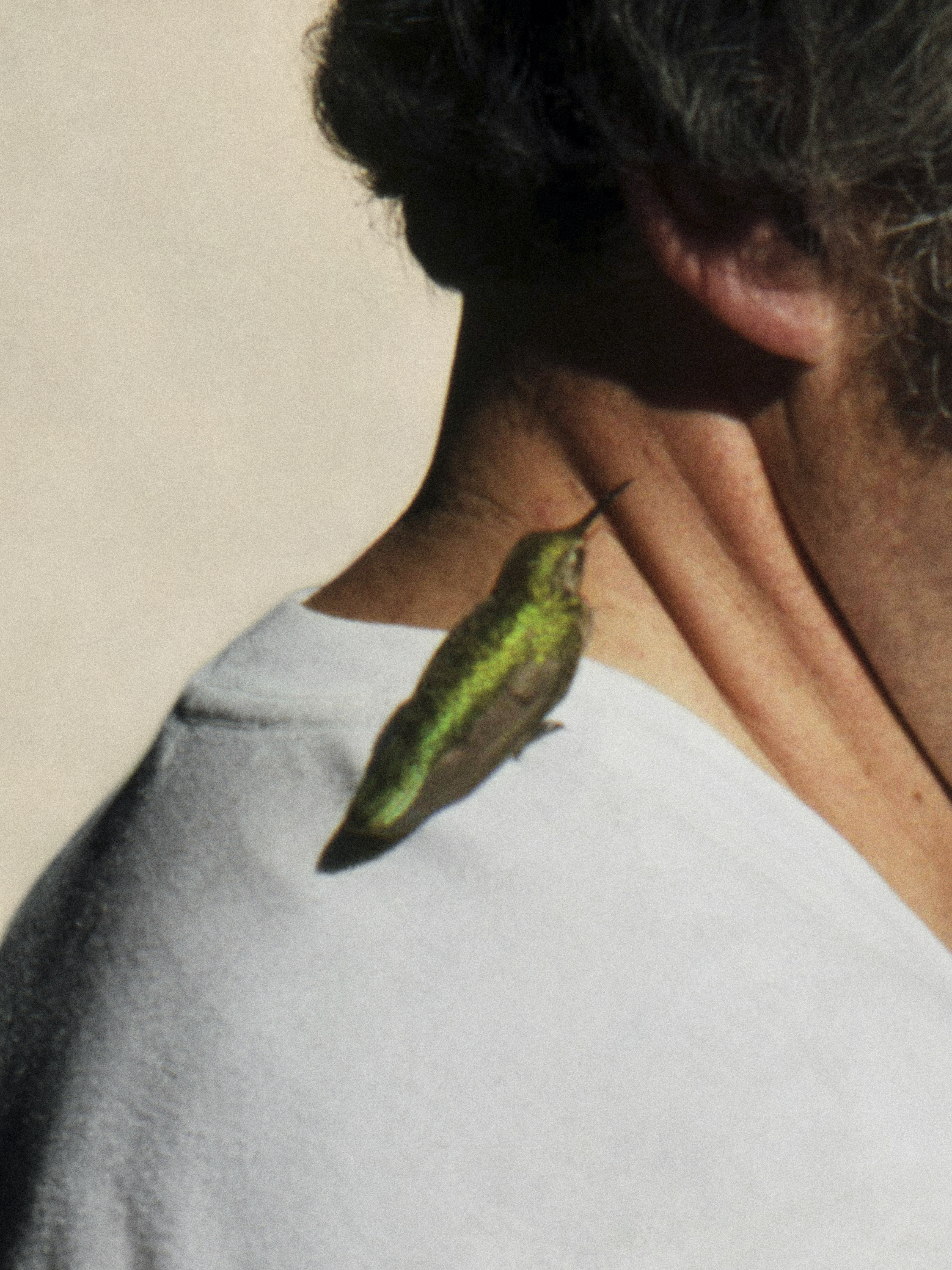
For Joel Jimenez Jara, that anchor is the hummingbird. In Glimmers, Feathers and Staring Skies, the bird becomes both a symbol of mourning and a living presence through which the artist remains connected to his father, who died from a neurodegenerative disease while Jimenez Jara was living away from his native Costa Rica. Hummingbirds are the only birds capable of flying backwards, offering an apt metaphor for grief, moving ‘into the past’ while still held in the present. Drawing on personal archives, ornithological materials, and Costa Rican folk beliefs in which hummingbirds carry the souls of the dead, the project moves between scientific knowledge and myth, asking what other forms of understanding might emerge through interspecies relationships.
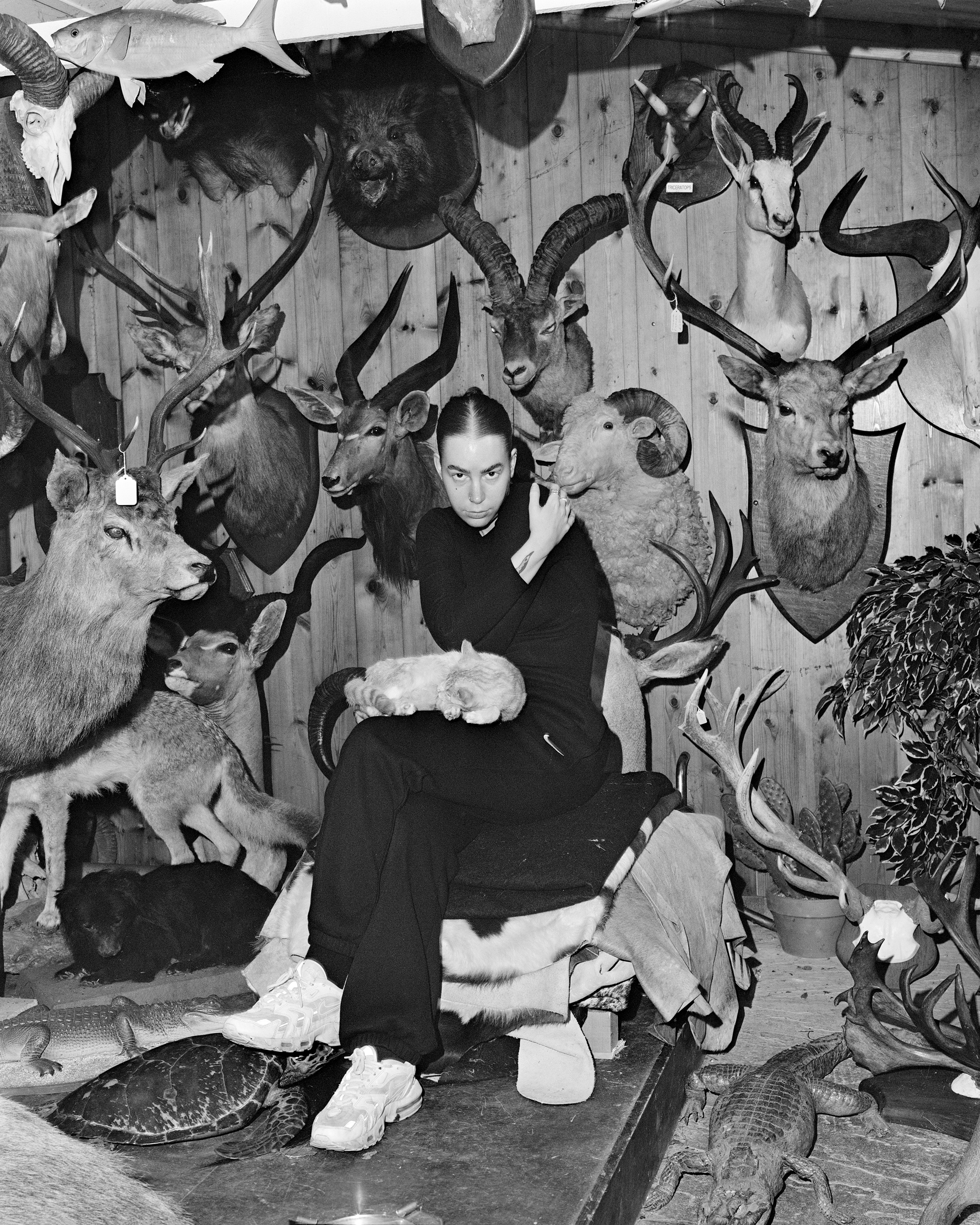
Alice Poyzer finds such a different way of knowing the world through her relationship with animals. Her project Other Joys explores the intensity of autistic special interests. Not as obsessions, but as deeply focused passions that can offer joy, relief, self-regulation, and a sense of structure amid the unpredictability of the outside world. While these interests vary from person to person, Poyzer’s include pets and taxidermied animals. Through photographs made with and of these subjects, the process of making the work becomes a way to understand her own autism better while creating a space in which she can unmask. The images are deeply personal, yet also reflect on broader questions of routine, masking, and the need for greater representation of autistic lives – particularly those of autistic women. In doing so, Other Joys transforms what was once experienced as a difference into a source of self-knowledge, pleasure, and acceptance.
Similar questions emerge in Principi di indeterminazione, in which Grace Martella reflects on her experience as a transgender girl living in southern Italy and undergoing gender affirmation. Rather than documenting transition as a linear passage from one fixed identity to another, Martella develops a metaphorical visual language that understands it as a movement through space, time, memory, and the gender spectrum. In dreamy self-portraits and staged photographs, the body becomes fluid and generative: at once tangible and conceptual, continually changing form and producing new meanings. By moving beyond familiar visual codes of trans representation, Martella creates a space for recognition and solidarity, where an individual experience can expand into a shared emotional terrain.
In Some Say We’re Sick, Angus Fayers explores what it means to become what he playfully calls a ‘self-made man’. Here, too, the trans body emerges as a site of possibility rather than certainty. Through intimate photographs of everyday life, relationships, and the changing rhythms of the natural world, Fayers rejects narratives that frame trans existence as pathological or exceptional. Instead, his work understands identity as something lived, unfolding through care, joy, desire, vulnerability, and continual transformation. At a moment when trans lives are increasingly subjected to political scrutiny and erasure, Some Say We’re Sick insists on the ordinary and extraordinary fact of trans existence: not as something that requires justification, but as a way of being that, like nature itself, is always in motion. As Fayers writes, it is about becoming one’s truth.
Across these projects, knowledge emerges not as a fixed destination but as something continually made and remade: through bodies, families, archives, animals, landscapes, myths, memories, and imagined futures. Photography here is no longer a record: it becomes a way to linger with uncertainty, unsettle what we think we know, and ask whose ways of knowing have yet to be seen.
Nienke Coers (b.1999)
is a Rotterdam-based writer and curator whose work explores the intersections of photography, migration, and diasporic identity. She writes and edits for a range of research platforms and magazines, including Trigger, C4 Journal, SEA Foundation and Hard//hoofd. Previously, she worked as a researcher on several large-scale projects at Fotomuseum Den Haag.
Coers is the 2026 Photoworks’ Writer in Residence alongside Echo Callaghan. Read more here.