

From issue: #32 Un/Stable
Liza Faktor, 2 October 2026
As I was trying to trace the beginning of my meaningful relationship with forests, I remembered the deciduous woods of my childhood in central Russia and the coniferous forests of Estonia where we spent our vacations. I recollected the sense of fear at having to cross even a short strip of woods by myself on a country path, a fear planted by the folk tales and stories my grandmother told. It wasn’t until I found myself in the Siberian taiga that I first grasped the vastness of the primeval forest as a complex living entity. It was a full-body experience—it felt like I was able to take the deepest breath, as if my lung capacity had doubled. I discovered a sense of interconnectedness I hadn’t been aware of before, being in tune with other forms of life—listening to them, breathing them in and watching them grow. The fear disappeared and gave way to curiously and wonder.
When I moved to the Pacific Northwest, a long way from the megalopolises where I’d spent most of my adult life, I finally realised, truly, that ‘the word for world is forest’ [2]. Driven by the need to ground myself in this new landscape, and by the shift towards ecology in my practice, I was confronted by catastrophic evidence of human disturbance on these lush temperate rainforest ecosystems. The crisis of humanity appeared more discouraging than the worst climate emergency-related data. Looking for ways to resolve this conflict, and battling the overwhelming feeling of our disconnection from the fate of the planet and nonhumans, I found my answer and healing in the ancient forests. Not only they are crucial in preventing climate collapse, and therefore in postponing our extinction, they remain central to political discourse and the cause of a deep divide from Brazil to the United States to Asia.
I embarked on an extensive artistic research project that eventually led to Roots, a deeper curatorial inquiry into the traumas, memory and resilience of the forest ecosystems. Inspired by the work of, and conversations with, like-minded artists—such as Adriene Hughes, Uta Kögelsberger, Ian van Coller, Pia Rönicke, Pedro David, Richard Mosse and Chrystel Lebas—my research addresses our entanglement with the natural world and our role as visitors, witnesses and participants. I looked at the similar issues that the consequences of colonisation and climate change bring to the wildlife habitats and to our existence across continents, on biodiversity, rewilding, the growing more-than-human rights movement, and the radical possibilities for bringing the forests back.
I never thought of myself as an activist—instead, I focus on how we, as artists, curators and cultural workers, recollect and reimagine ways of being, foresee a better relationship with the living world, and use art as a bridge between different experiences and wisdoms: how we can communicate across political and social divides, as well as across species.
Artists working with the forest as subject matter or main protagonist consider these landscapes as one of the solutions to our crisis of relation to the land and a source of healing. They are engaged in intercontinental dialogue, through collaborations and conversations with Indigenous communities, environmentalists, activists and scientists. They interpret this meeting of knowledges about the forest by speaking a visual language, introducing a spiritual dimension to the experience of science, and ‘translating’ data into emotional entry points for engaging with complex forest entities.
These visual artists explore various mythologies of forests and trees, and some truly fascinating subjects, while acknowledging their vital role in sustaining the livelihoods of humans and nonhumans alike.
Singing forest ecosystems back to health
After producing a series of works about forests—both in Europe and the US—including the multi-faceted Fire Complex, which brought together video, photography, a replanting initiative and activism—Uta Kögelsbergerembarked on an even more ambitious artistic intervention: Forest Choir.
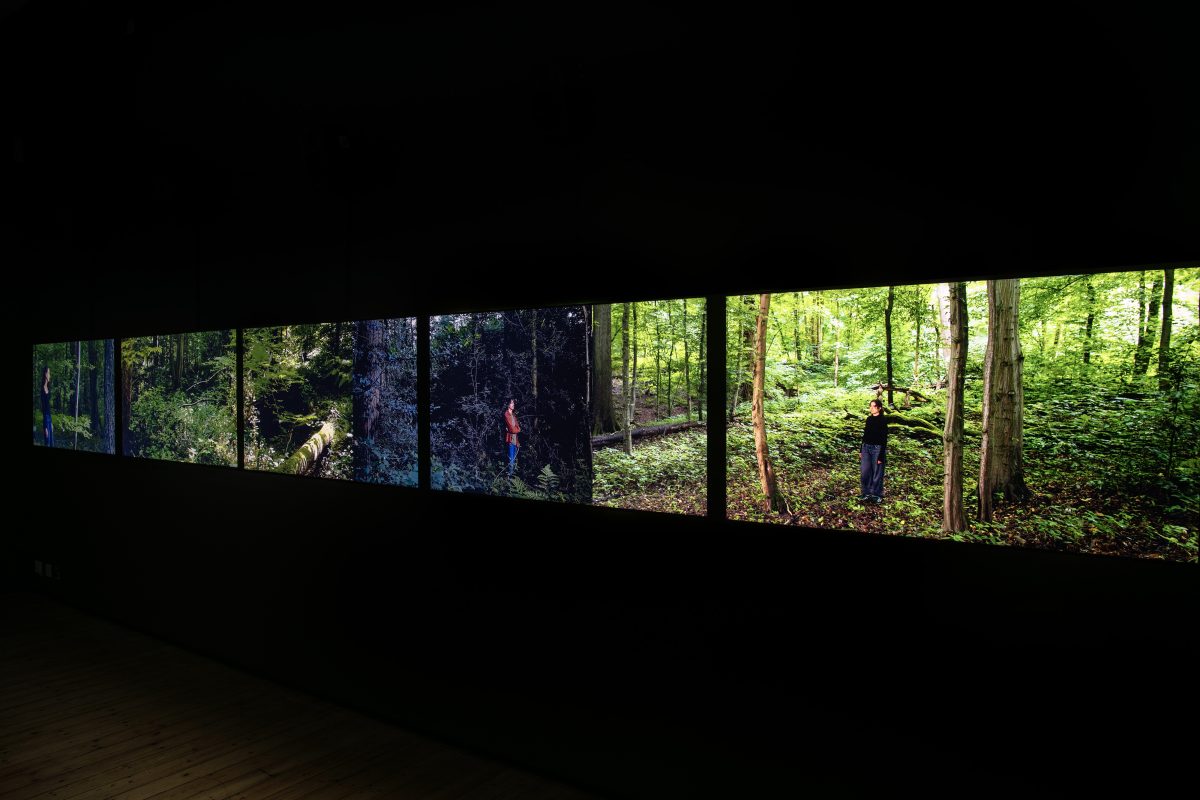

The resulting five-channel video installation takes its cue from the long-held popular belief, contested by large sections of the scientific community, that playing music to plants accelerates their growth and strengthens their immune systems, opening up exciting possibilities for cross-species conversations.
Developed in collaboration with composer Georgie Buchanan and the Brussels Opera Youth Choir, the project makes an artistic contribution to communication with trees and the forest entities. Bringing together individual singers across geographical, social and economic divides to sing forest ecosystems back to health, the piece forms a gesture of care towards damaged landscapes, letting nonhumans know how we feel about our mutual loss of habitats, species and ways of life.
Kögelsberger acknowledges that we are only at the beginning of understanding the mental health impacts that the climate emergency will have on us, and the work serves as a therapeutic tool both for a nonhuman audience and for the singers channeling their climate grief. Forest Choir offers a layered reflection on humanity’s place in the living world and its limitations, recognising our often-failed attempts to control the ecosystems that sustain us.
Rewilding: human compost
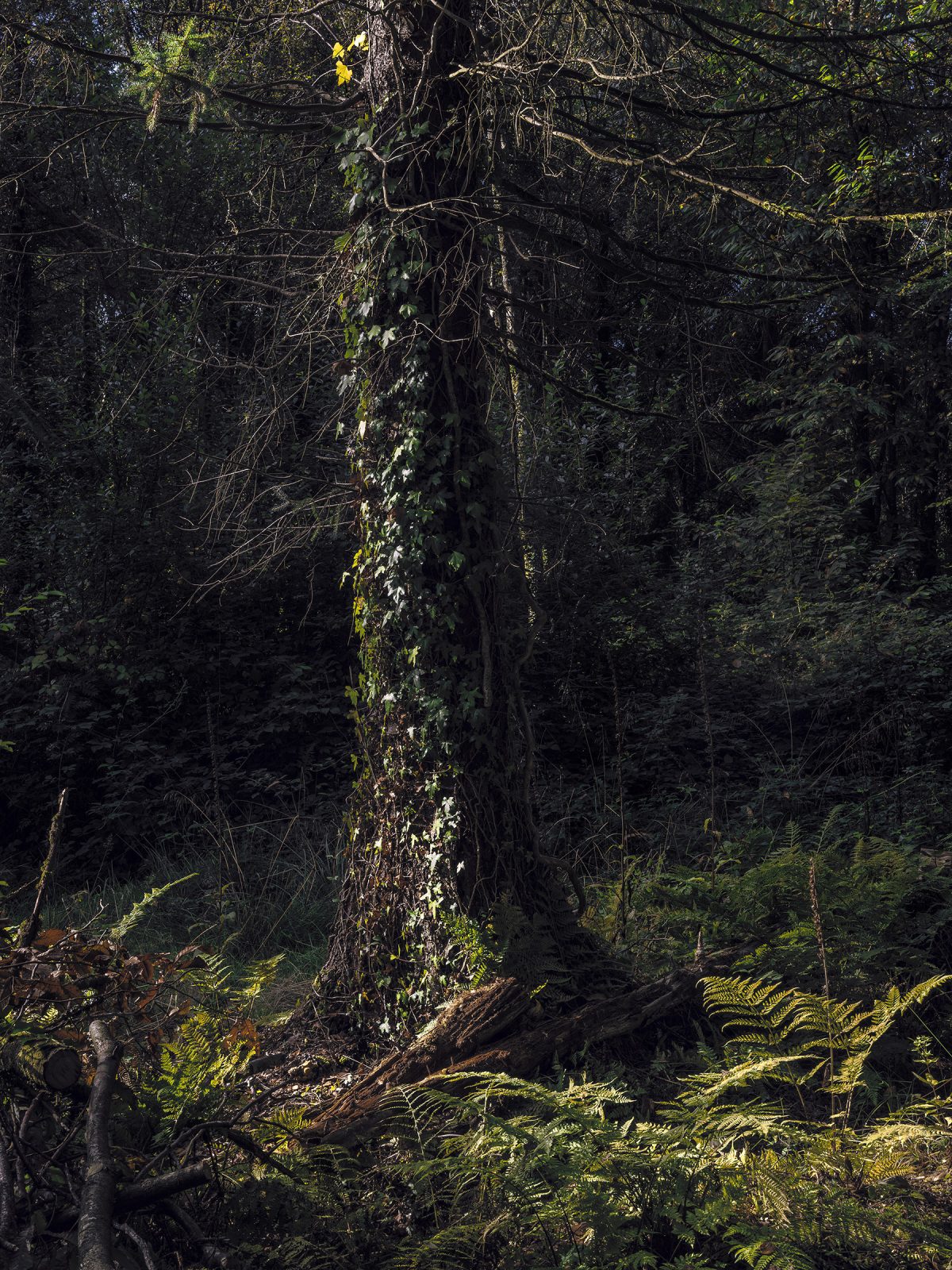
In his private quest for inner silence and a good death, Hubert Humka visited green cemeteries in Welsh, Scottish and English forests, where people are interred without markers, gravestones or religious symbols, in biodegradable containers, their remains nourishing the trees planted above them.
In Eternal U, the forest itself—giving final shelter to the buried and making them a part of its ecosystem—becomes the main character.
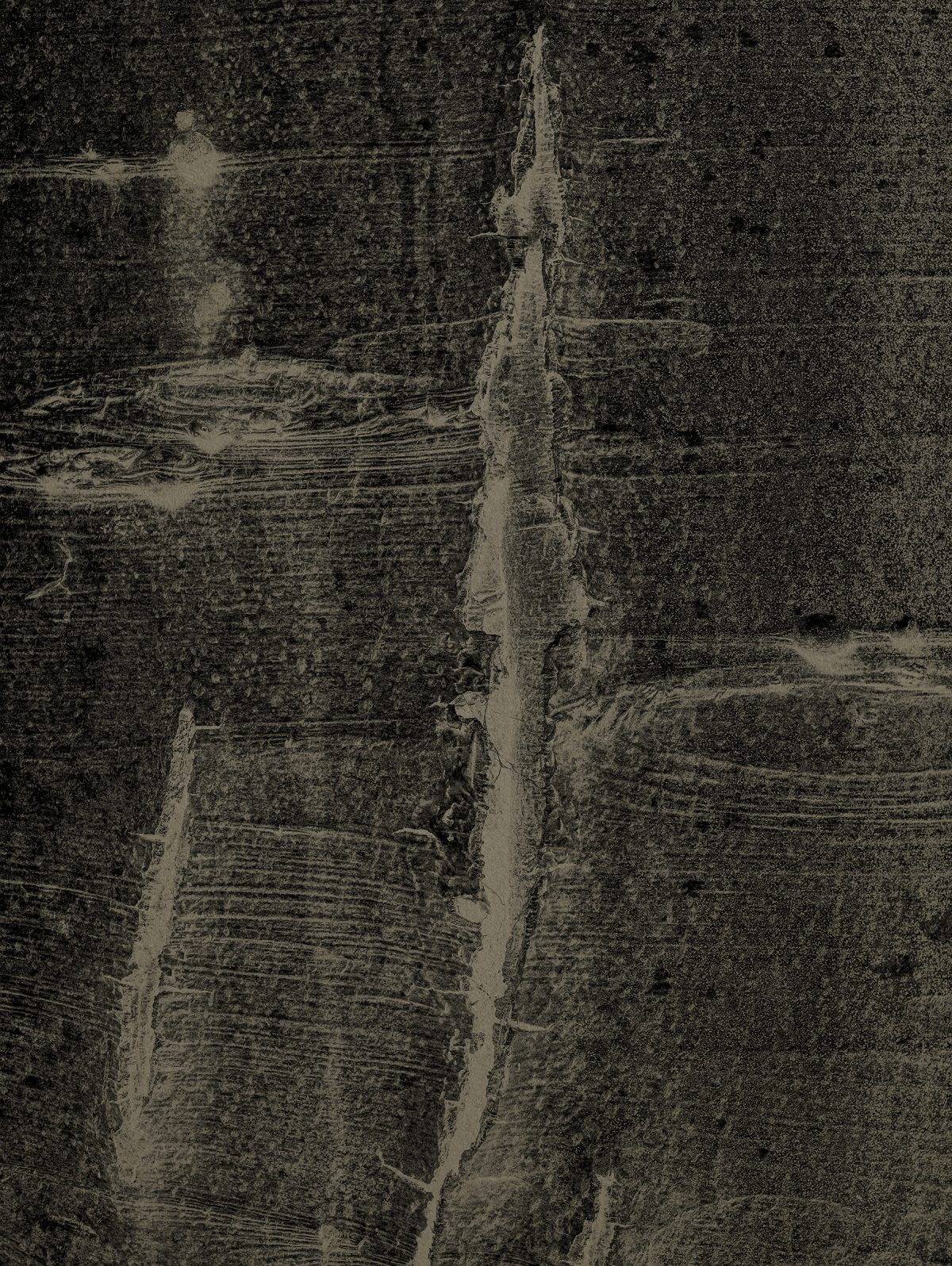
Humka photographed the soil and bark of the trees that the interred dead became, imagining their roots drawing the buried into new existence, as they transform and become tree, forest, and part of infinite universe. Coming to terms with his own mortality, Humka goes on to create a fictional narrative, a first-person meditation on natural burial and bodily decomposition. He imagines his own death in vivid, unflinching detail: the initial stillness and cooling of the body, its stiffening into a corpse-like “statue”, the discolouration of skin as blood settles, and then the full process of decay—the smell, the bloating, the infestation by insects and larvae, and the eventual reduction to a skeleton that itself crumbles away. Rather than treating this decomposition with horror, the piece calls to continuity and transcendence: the body’s dissolution becomes a merging with soil, roots, trees, and ultimately “cosmic dust”, suggesting that death is not an ending but a transformation into a bigger part of the living world—the ongoing cycle of life above and around the grave.
Intelligence of nonhumans
Fernanda D’Agostino’s immersive installation work engages themes of movement and growth as catalysed by phenomena of the natural world, alchemical transformation, complex networks, and human engagement with nonhuman communities.
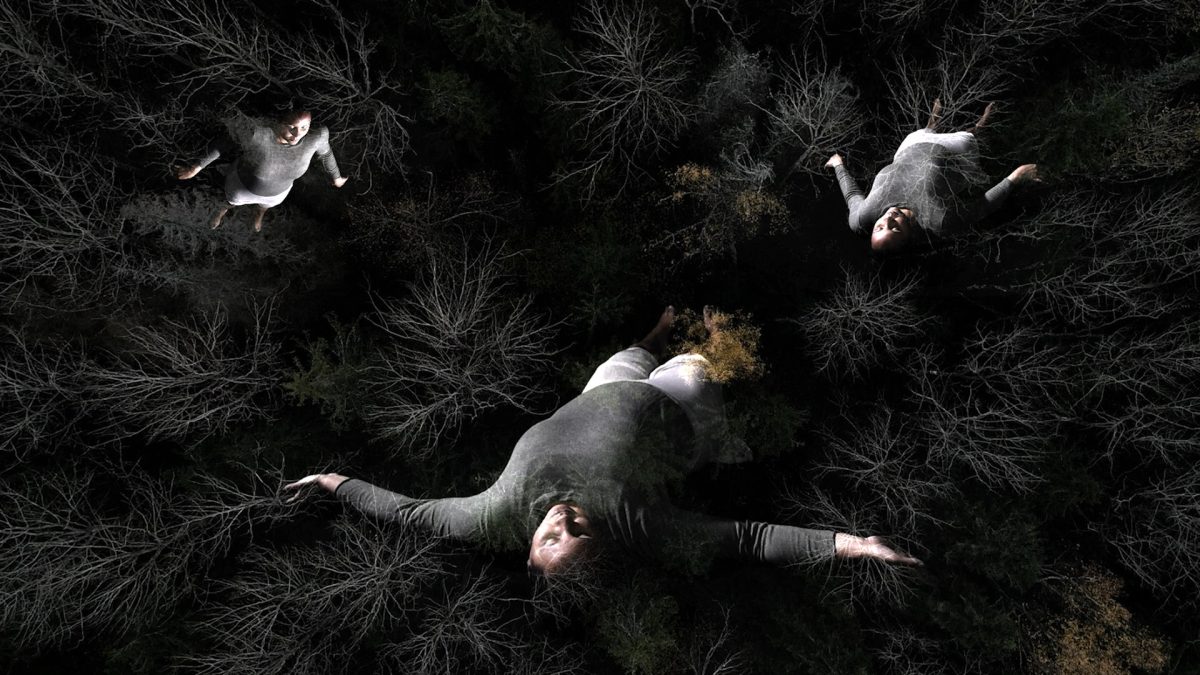
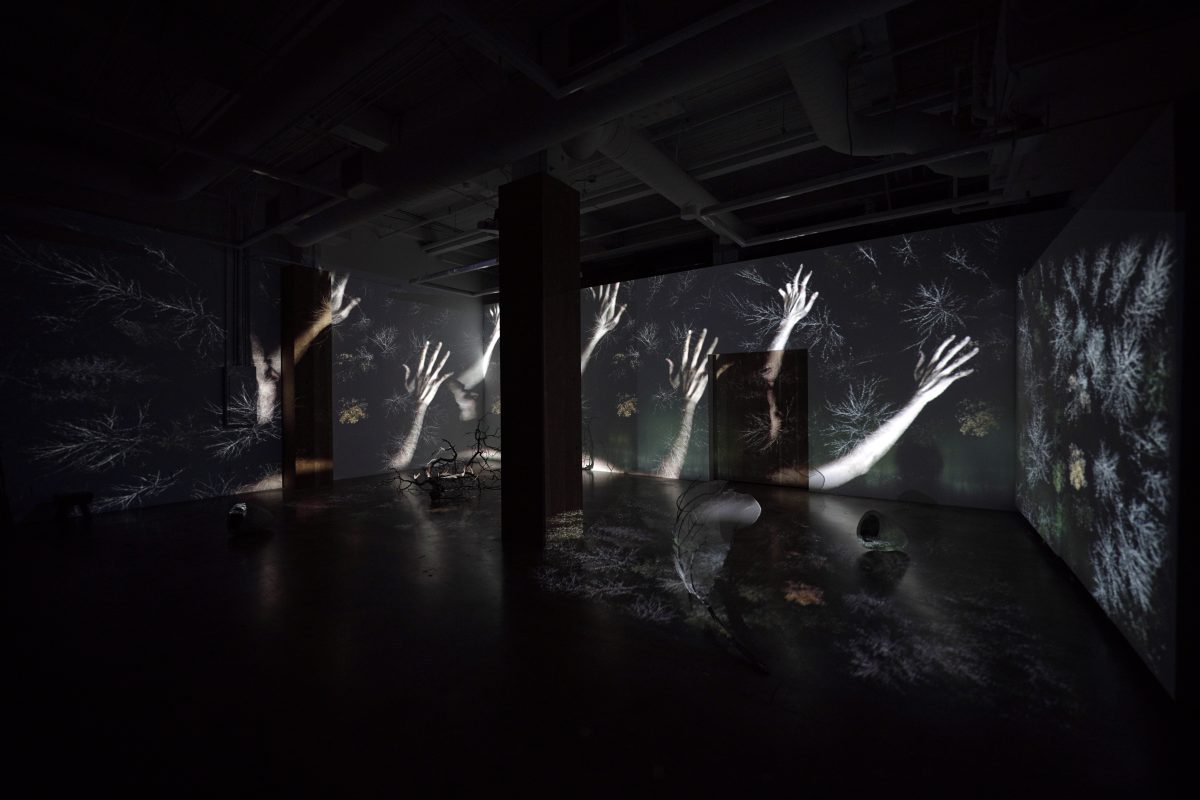
Her new work-in-progress, Field Studies (Symbiosis), is a response to forests that is developed through a series of investigations: field trips to remnant boreal forests in New England, consultations with forest scientists and mycologists, and collaborations with composer Lisa DeGrace and movement artist Laura Kathrein. Combining sculpture, video projection, recorded performance, sound and creative coding, the work traverses layers of time, landscape memory and cross-species communication. In this symbiotic exchange, the piece translates hidden languages and opens the possibility of a world where all living beings are recognised as our sacred relations, creating an embodied field study that gives voice to the forest itself.
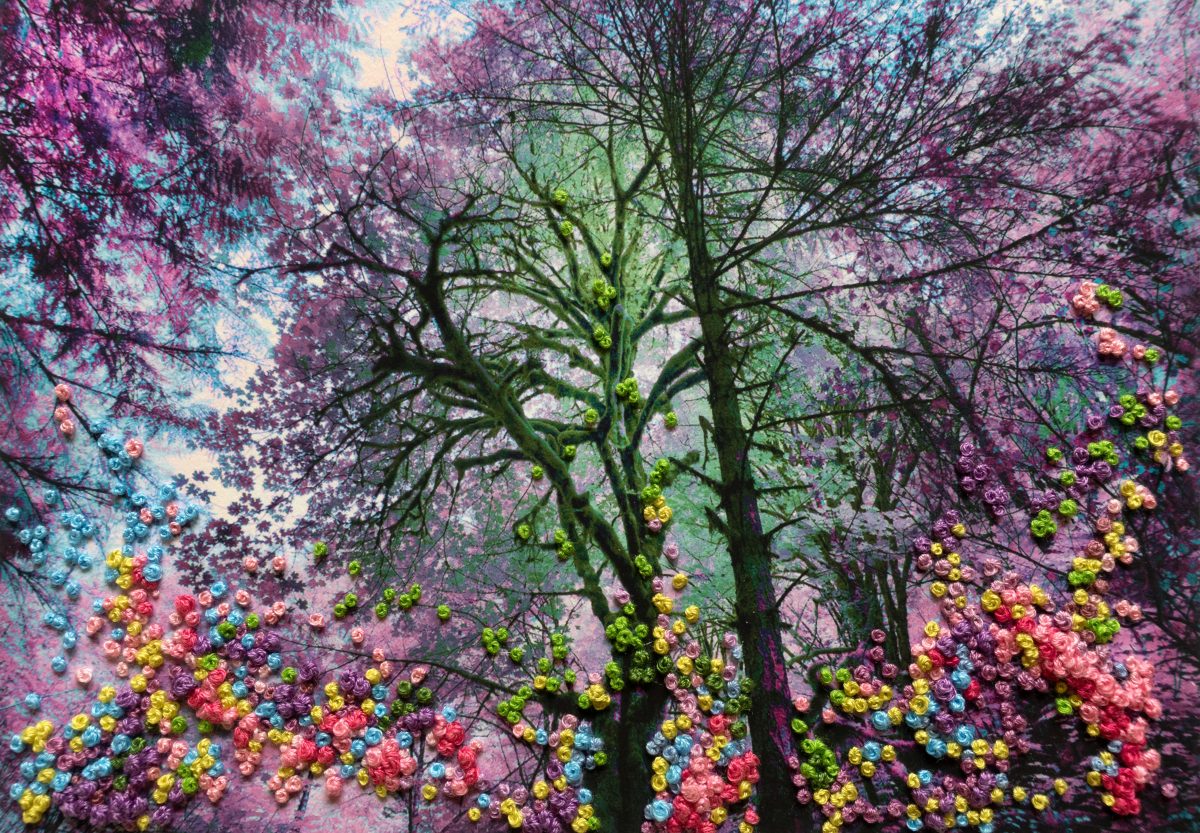
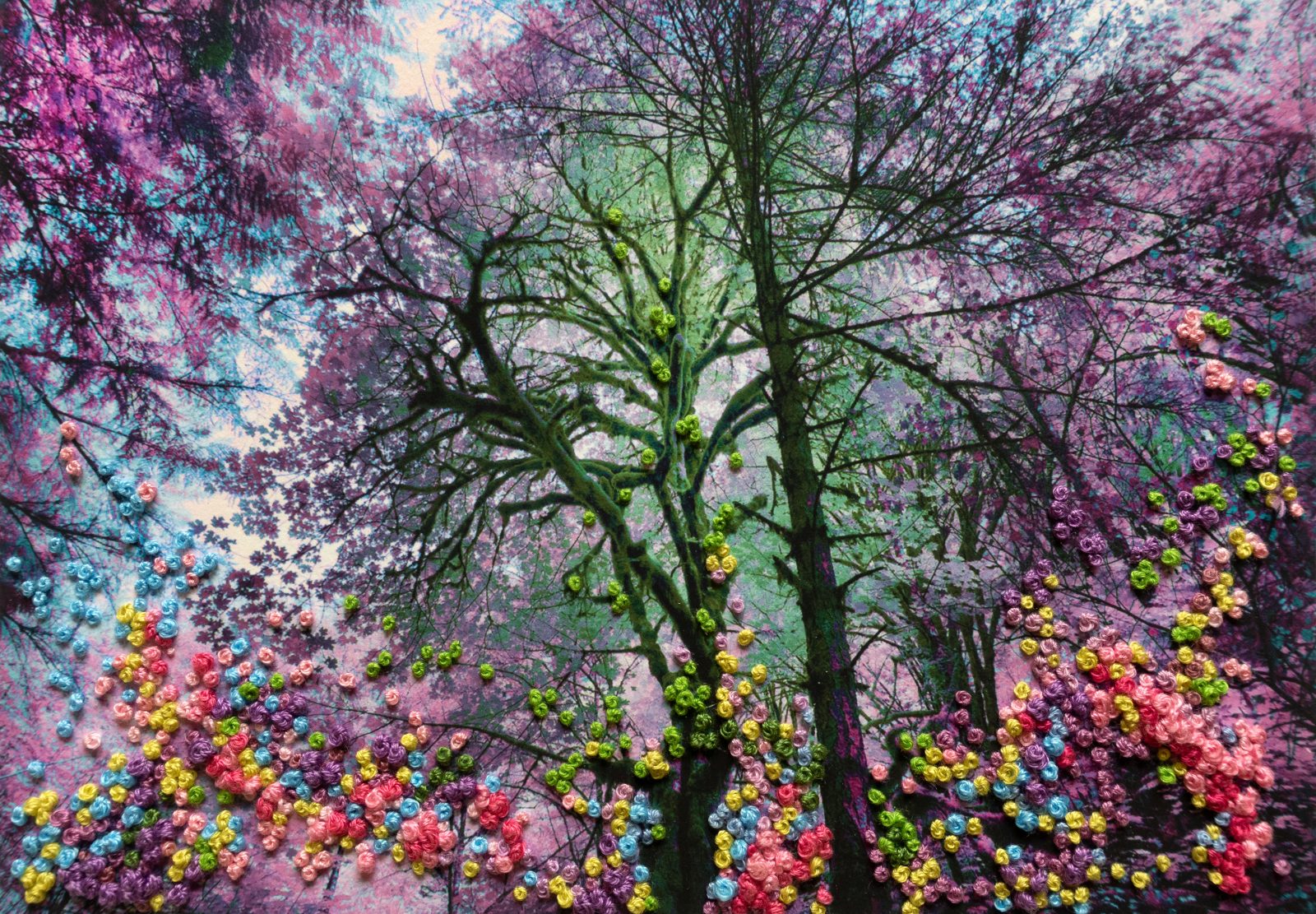
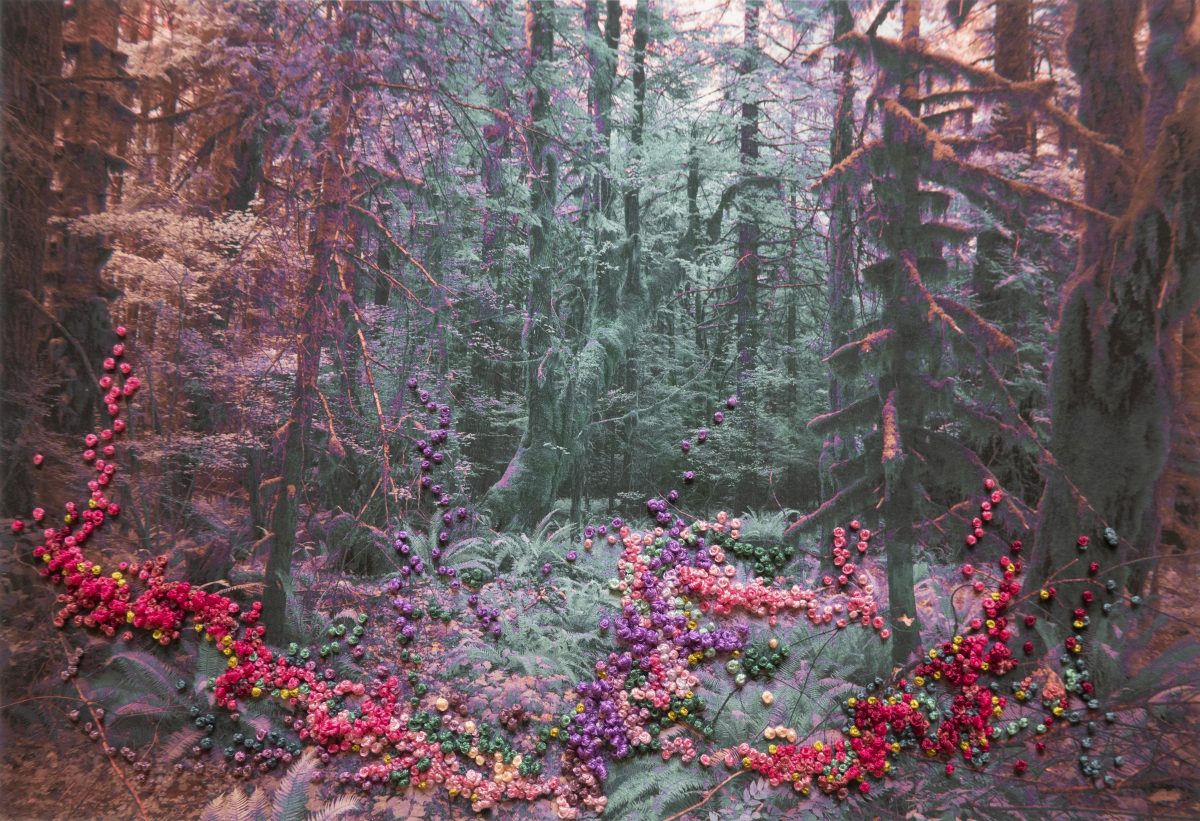
In her series The Secret Life of Trees, Adriene Hughes opens a portal into the spiritual world of the trees and the complexity of the forest ecosystem—creating a multi-dimensional space with infrared vision, embroidered photographs and video.
Hughes has been working consistently at the Olympic National Park in Washington State, a critically important temperate rainforest ecosystem and one of the quietest places on Earth. When she took pictures with an infrared camera during a forest fire there in 2017, she registered a colour anomaly, picking up the ‘morse code’ from mycorrhizal network in a distressed forest. This network of fungi can spread over many miles, connecting thousands of trees to one another. It’s possible that the resulting colours in these photographs are a recording of this communication, as the trees warned each other of and defended against the impending fire.
She enhanced these biochemical and electrical signals with embroidery, translating them into a tactile language and magically making us present in their alert conversation. Embroidery, historically seen as a practice reserved for women, becomes, in Hughes’s hands, a way of laying claim to the photographic landscape on her own terms, as a craft-maker. Together, the colours created by infrared technology and the thread she stitched onto these photographs, tie her physical body to the ethereal, and the ethereal to the landscape.
The road to abundance
Epiphany Couch’s work is rooted in Indigenous ecological knowledge and her connection to ancestral lands. In the paired collage works Chokecherry Sister and Huckleberry Sister, based on the Yakama story, she explores the depth of her relationship with her sister and with the forests of Washington. Each sister is rendered as a European-style silhouette, cut from a photographic print of nature.
Her larger series, Before the Fire Lit My Dreams, explores seasonal transformation on her tribal lands in Washington State and the sacred role of fire in Native American cultural traditions, land and forest use. In Robin Wall Kimmerer’s essay “Burning Cascade Head”, she describes a fire ritual that called the salmon home, binding people, land, and waterways in reciprocal balance—a balance that faded along with the ceremony. The essay evokes the awakening moment when we recognise the threads tying us to each other and the world that sustains us, with the fire lighting the way.
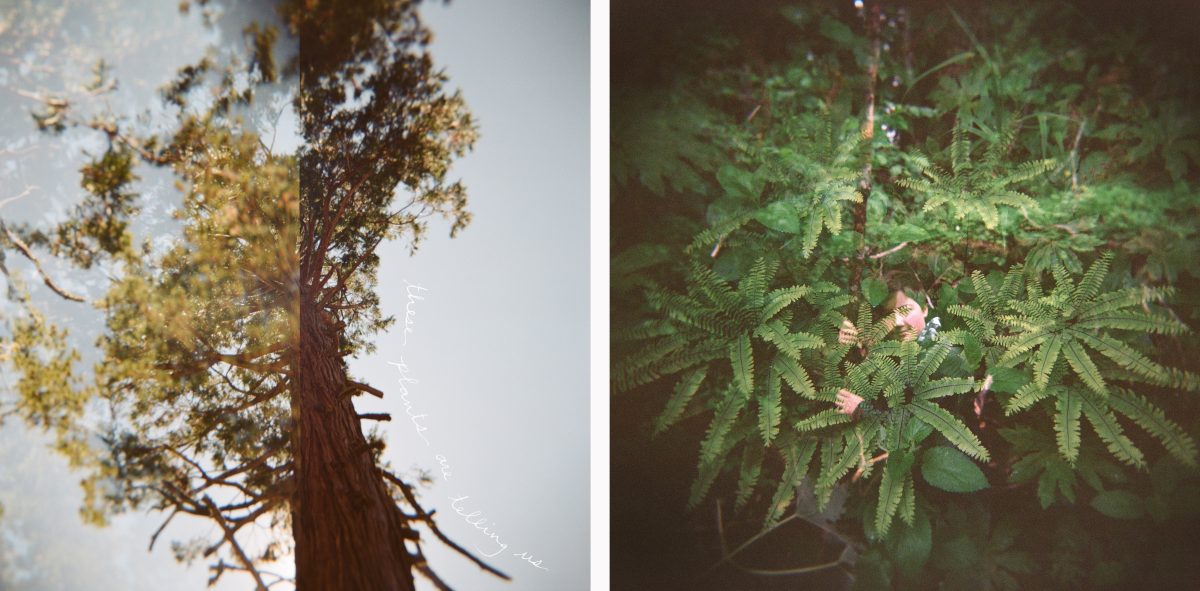
Before the Fire Lit My Dreams is Couch’s attempt to connect with those threads, to touch the place where memory meets presence. Through twelve diptychs—one for each month of the year—we witness the seasons change, reflecting on the ways in which families, tribal lands, and waterways hold stories of time and place. Some of these images are in-camera double exposures, layered frames that evoke the interwoven connections between people and land, seasons and cycles. Couch invites us to not only witness these connections but to reflect on our own place within the ever-turning cycles of this planet, holding a mirror to our own relationship with nature’s rhythms.
Forests and ways of being
My biggest takeaway from my Roots curatorial research [2], was a call for our moral imagination to reach past our thin layer in the geological record, and to visualise how to meaningfully engage with the forest, with both human and nonhuman communities, in an attempt to heal these ecosystems and ourselves.
The artists responding to the forests, share with us their individual experiences and communicate with the land in a way that elevates the spirituality of being in nature, and that has a pronounced political aspect. They express grief over the loss of species and the fading away of whole ecosystems. But there is also a celebration of the beauty of what we have and an anticipation of something that is approaching. Everything has a part to play in the evolution of Earth—species come and go, as we are recording the energy of the planet, in, yet, another evolutionary phase of Earth adjustments. There will be a new future, new ecosystems that will be born after us and after destruction. There is always a possibility in the forest, especially in the primeval forests, where we can feel the non-linear duration of deep time next to several hundred years old trees who are survivors and holders of memory.
[1] ”The Word for World is Forest” is a 1972 science fiction novella by Ursula K. Le Guin
[2] The Roots curatorial project was supported by the Oregon Arts Commission and The Ford Family Foundation.
Liza Faktor is an independent curator, visual artist and arts producer working at the intersection of photography, moving image, performance and emerging media. She has curated over twenty exhibitions, organised festival programmes and lectured and taught workshops worldwide. As an award-winning creative producer, she has worked with photographers, filmmakers and visual artists on installations, art films, multi-platform and community engagement projects. She was a founding member of Vessel, an international art+film production collective, co-founded the cross-platform production Screen in New York, and was the founding director of the Objective Reality Foundation in Russia. Currently, she works at Curatorial Exhibitions.