

From issue: #30 In at least one dream!
David Solo, 8 May 2026
“The photographs are not illustrative. They and the text are coequal, mutually independent, and fully collaborative” James Agee wrote in the introduction to his 1941 collaboration with Walker Evans, Let Us Now Praise Famous Men. These principles have extended to many forms of phototexts, including photopoetry. While there is a long history of books combining poetry and photography which date back almost to the beginnings of photography, only relatively recently has the genre received more attention.
Photopoetry books all involve some form of dialog between poem and photograph. They span a wide range of topics, arrangements of text and image, and processes for bringing together the poems and photos. Many of these books are based on a process involving a partnership between a poet and a photographer (such as Facile by Man Ray and Paul Eluard; Home is not a Place by Johny Pitts and Roger Robinson; or Remains of Elmet by Ted Hughes and Fay Godwin) or in some cases a single person creating both poems and photographs (including books by Gordon Parks, Rebecca Norris Webb, Caleb Femi).
In the recently launched P5 series of photopoetry pamphlets, we’ve chosen examples of both a single artist and a collaboration. In this essay, I’d like to explore some examples that fall into a third category: selection. In this category, a poet or photographer may choose existing work from a range of artists to accompany their own, or an individual may choose pairings from a wide range of sources. An artist may also decide to respond to an existing work. Some poems have attracted multiple responses and interpretations over time, including the Rubaiyat of Omar Khayyam, Baudelaire’s Les Fleurs du Mal and Rimbaud’s Une Saison en Enfer.
By expanding the selection and pairing of works beyond those made by a pair of artists or a single artist, there is potential for greater latitude in the connections that can be drawn and therefore the overall creative possibilities of the work. This expanded menu can also introduce additional criteria for how such combinations behave differently to active collaborations. The following are a few examples of such books:
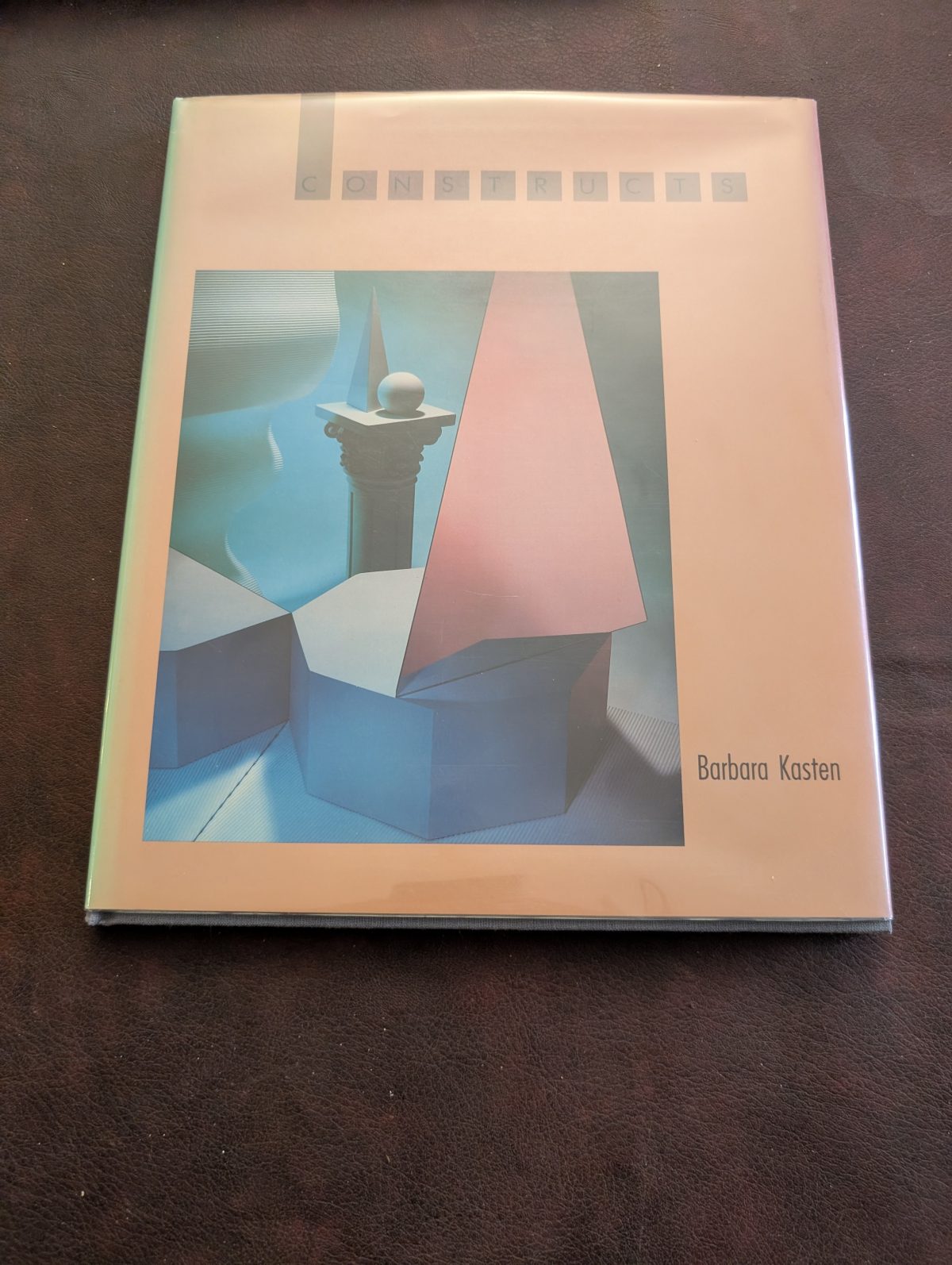
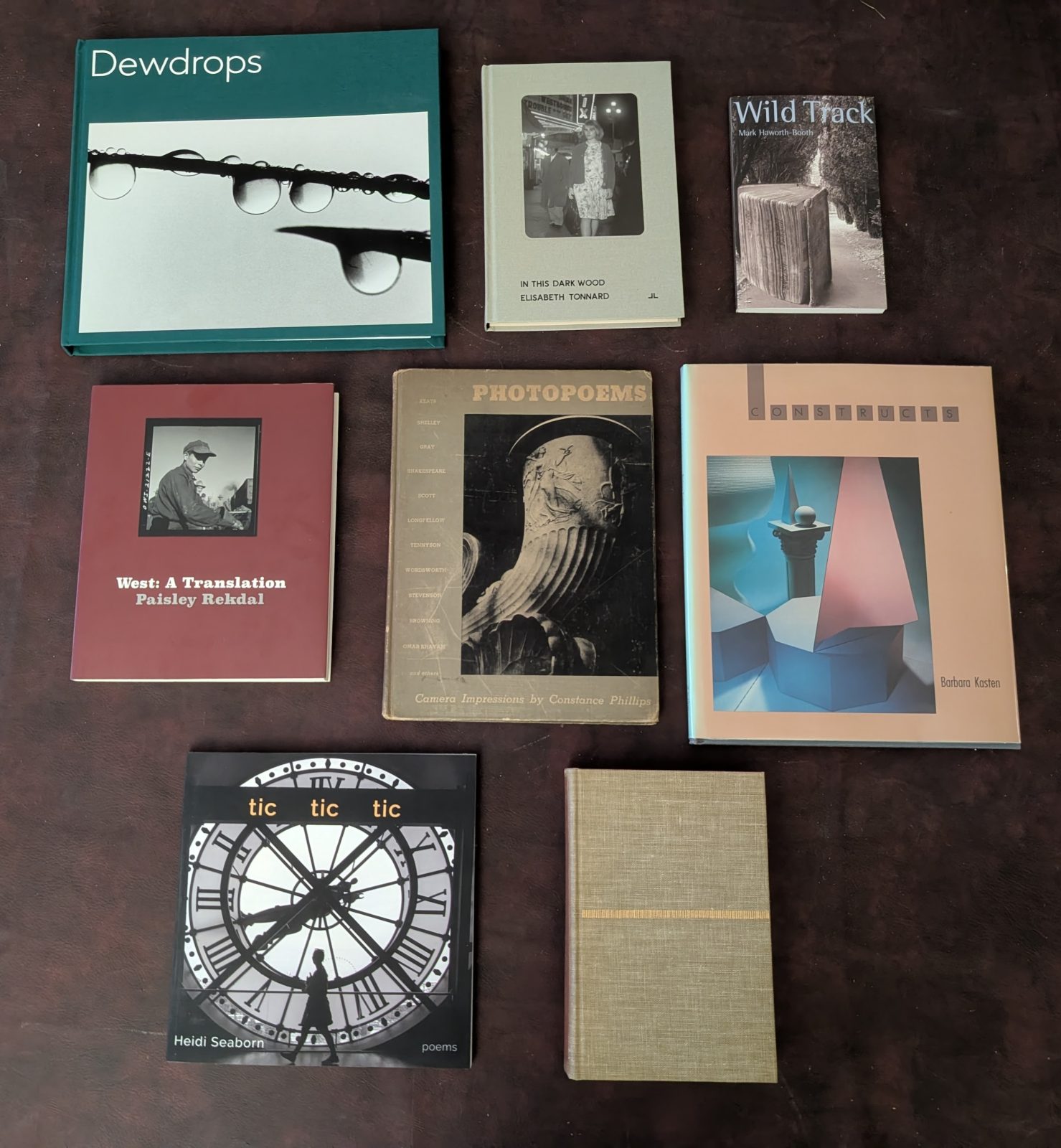
Constructs (New York Graphic Society, 1985) – Barbara Kasten’s abstract images are paired with a wide range of poems selected by Daniel Halpern. Poets selected include, among others, Elizabeth Bishop, Derek Walcott, Czesław Miłosz, Seamus Heaney and Louise Glück. The reader is left to search for a connection between the image and poem, if any exists. Many of the poems have references to landscape and geography. Any relationship between poem and photo is speculative but inviting.
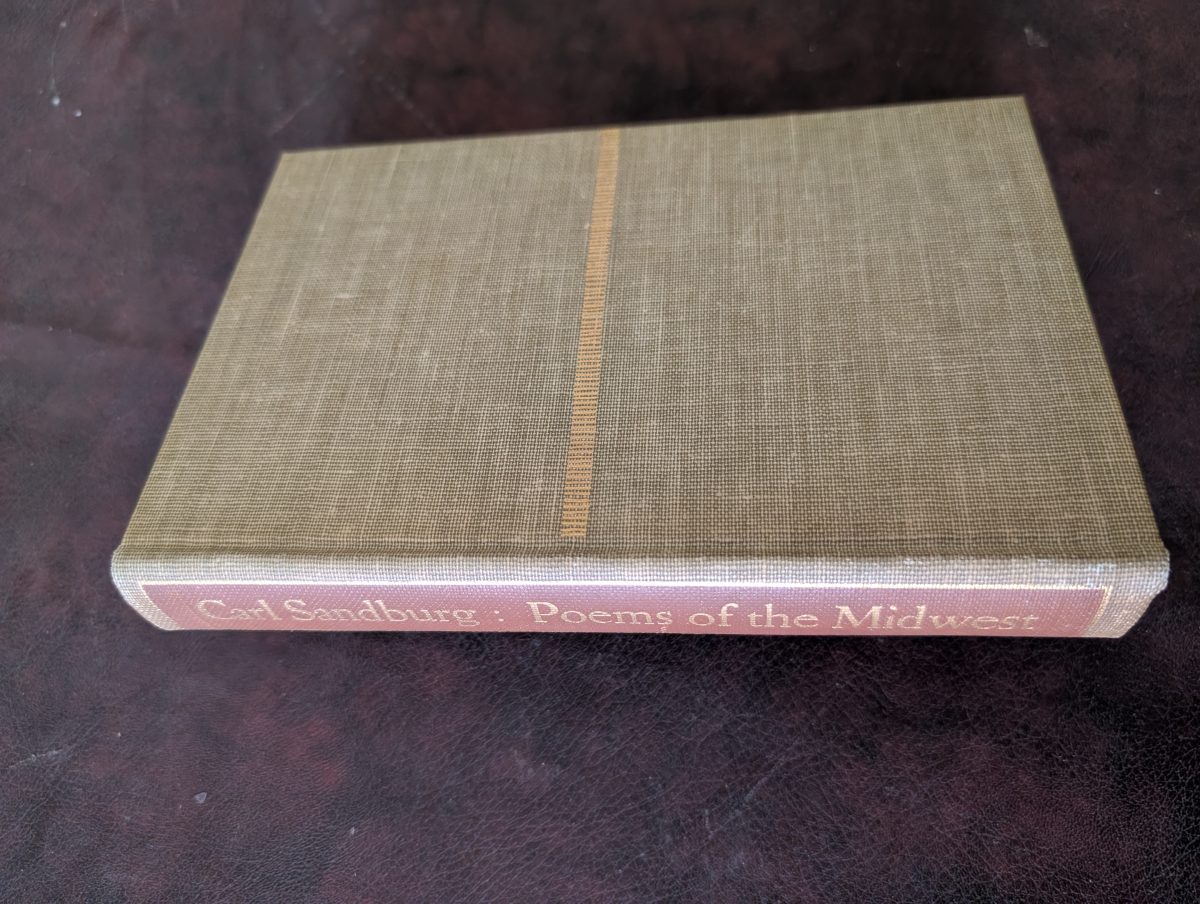
Poems of the Midwest (World Publishing, 1946) – a collection of poems by Carl Sandburg with photographs selected by Elizabeth McCausland, who writes “…we sought not literal picturings of Sandburg’s subject matter but visual equivalents of his mood and feeling. Mechanical fidelity to fact of time and place did not seem as important as truth to the meaning of the poems.” To achieve this, they worked with the Picture Collection of the NYPL, MoMA and other photographers. Among those included were Dorothea Lange, Lewis Hine, Brett Weston, Gordon Parks and many FSA photographers.
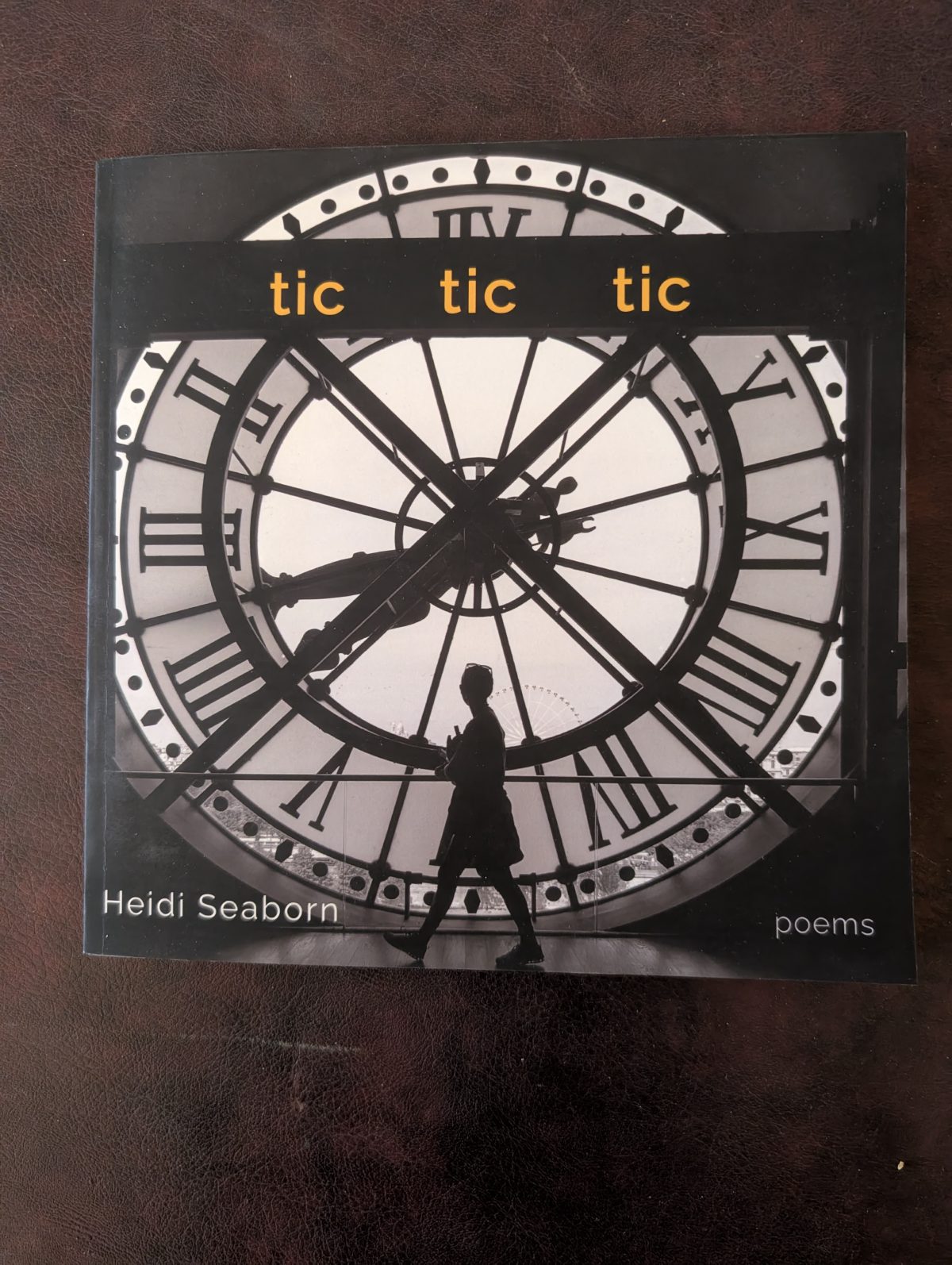
tic tic tic (Cornerstone Press, 2025) – a book created by the poet Heidi Seaborn about time – both its daily passing and historical perspective. The poems, organised around the seasons, are accompanied by both literal images (e.g. a class photo and an ultrasound) and more indirect photographs from a group of photographers. The emphasis is on the text, while the images seem more like a complement that functions to present the overall themes.
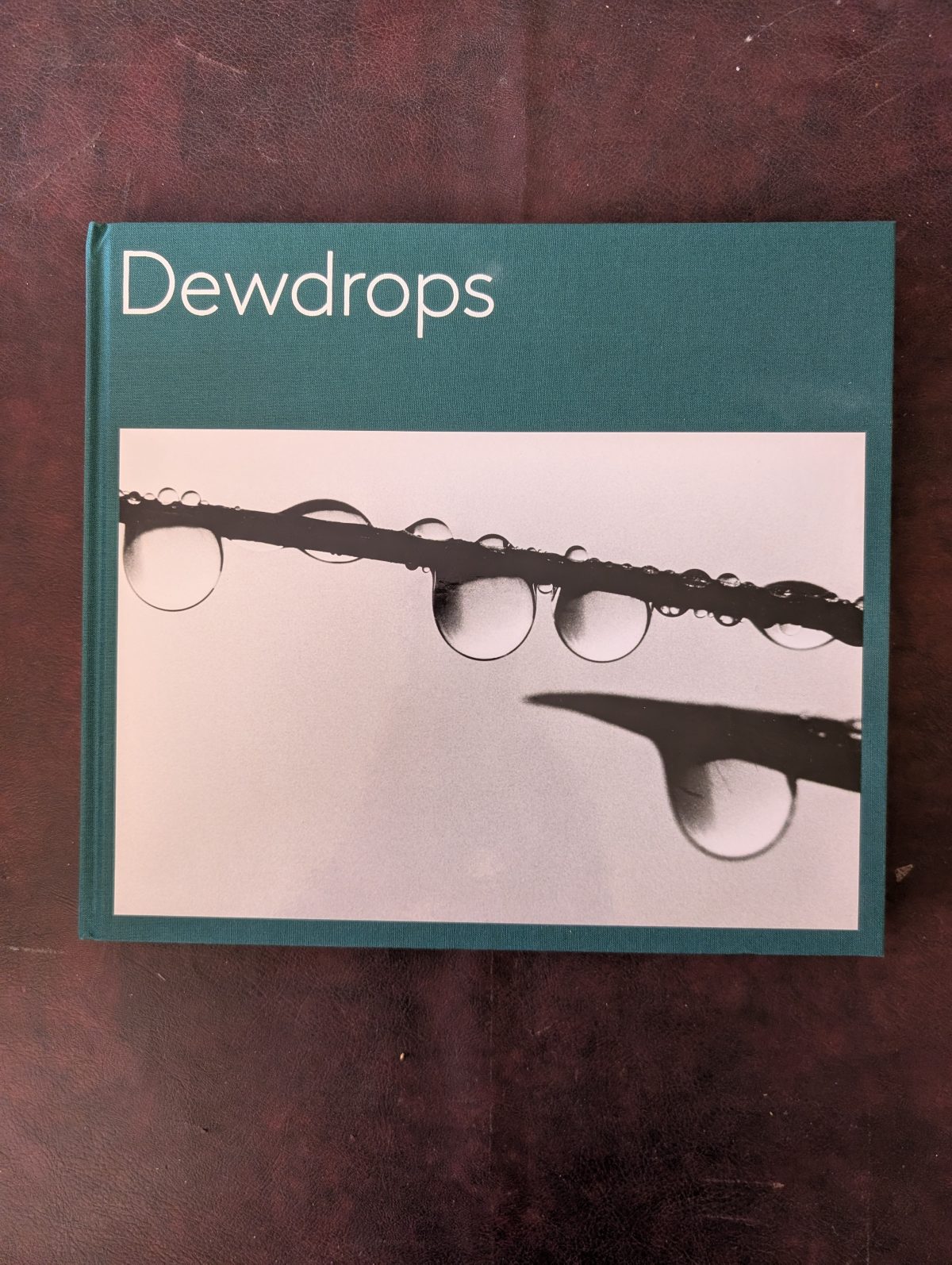
Dewdrops (everyedition, 2024) – a book of macro photos by Maddel Fuchs of dewdrops on branches, leaves and other plants. Interspersed throughout are classic Japanese poems on green sheets including work by Basho, Buson, Issa, Shiki and others. It is a very quiet, slow and contemplative work and the poems along with the design reflect that.
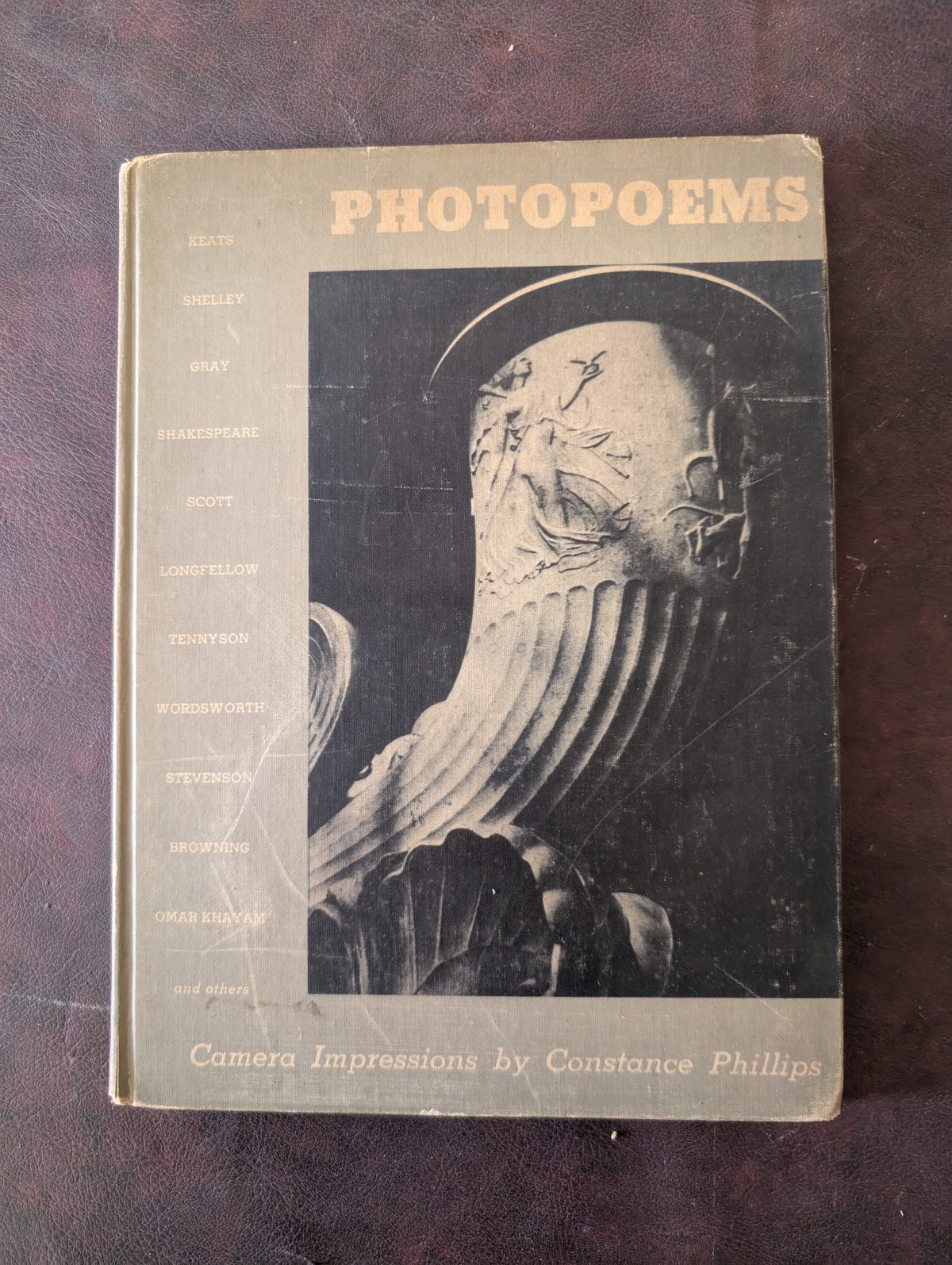
Photopoems (Covici Friede, 1936) – a book of photographs by Constance Phillips that coined the term ‘photopoem’. Phillips took photographs to accompany a selection of poetic texts from history. As she says in her introduction “It is my purpose to show that many of these famous lines, some written centuries ago, can today be given a new and original interpretation through the dramatic medium of modern photography. In other words, I am attempting to ‘re-sight’ poetry through the lens.” Her selections of poets include Tennyson, Longfellow, Keats, Browning and Omar Khayyam. Her images are closely connected to the poems’ content, even if they are not quite illustrations.
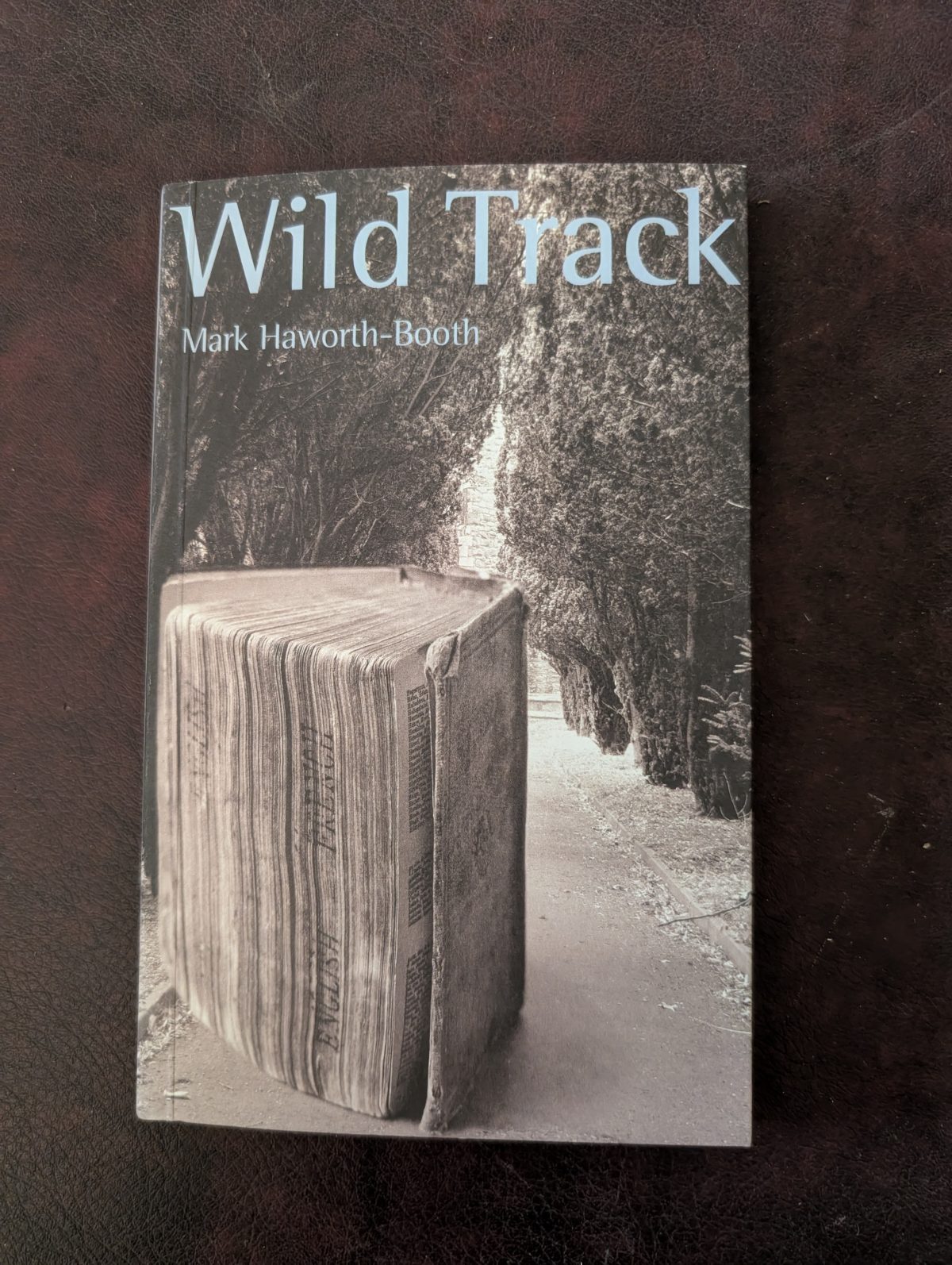
Wild Track (Trace Editions, 2005) – a collection of poems by Mark Haworth-Booth, who may be better known as the longtime photography curator at the V&A. He invited photographers (including Susan Derges, Tessa Traeger, Christopher Bucklow and Nigel Shafran) to contribute work that either already existed or that was made in response to individual poems and so in a sense it is closer to a collaboration than a pure selection. The feeling of collaboration comes across in spreads containing both poems and photographs.
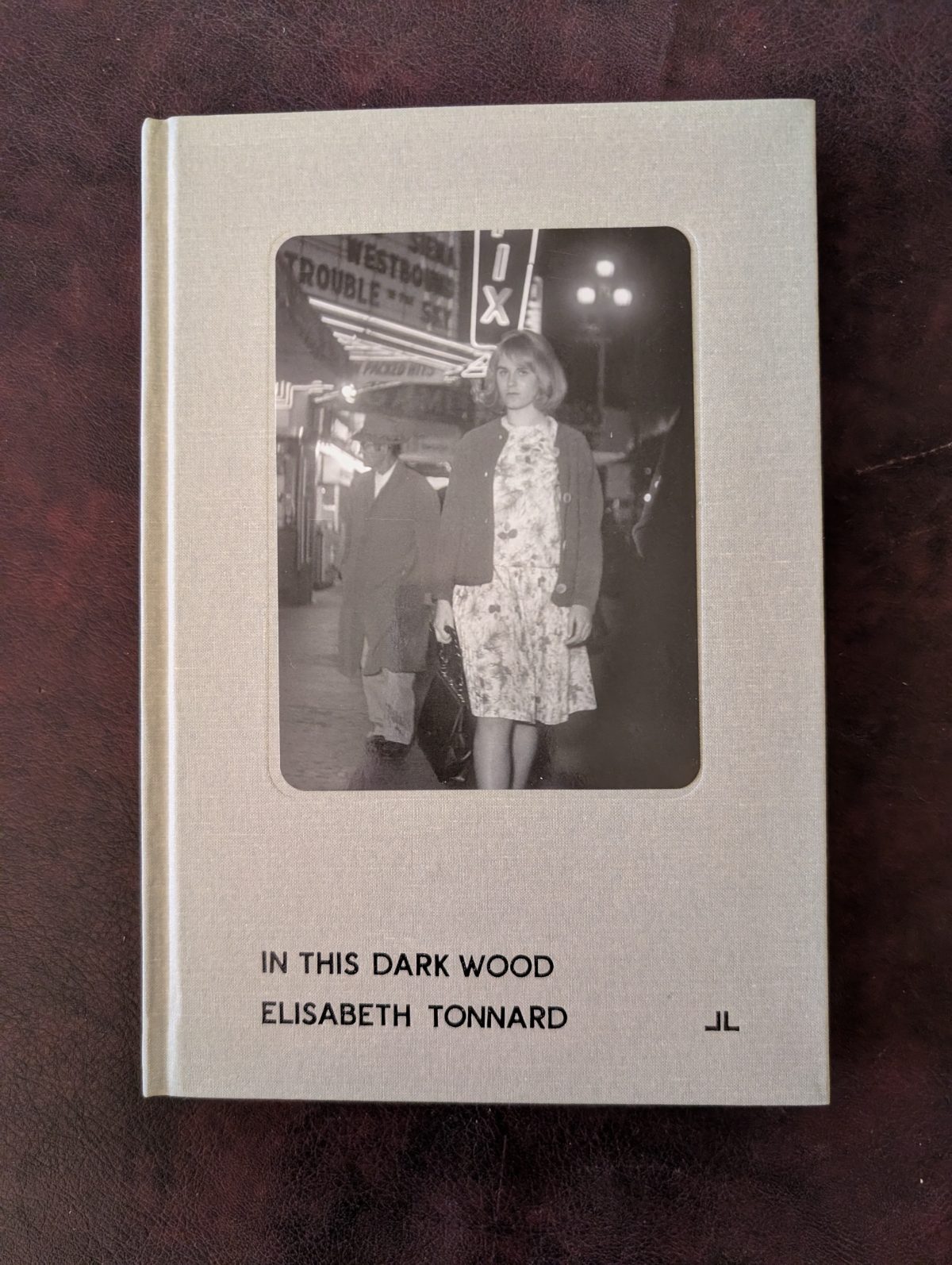
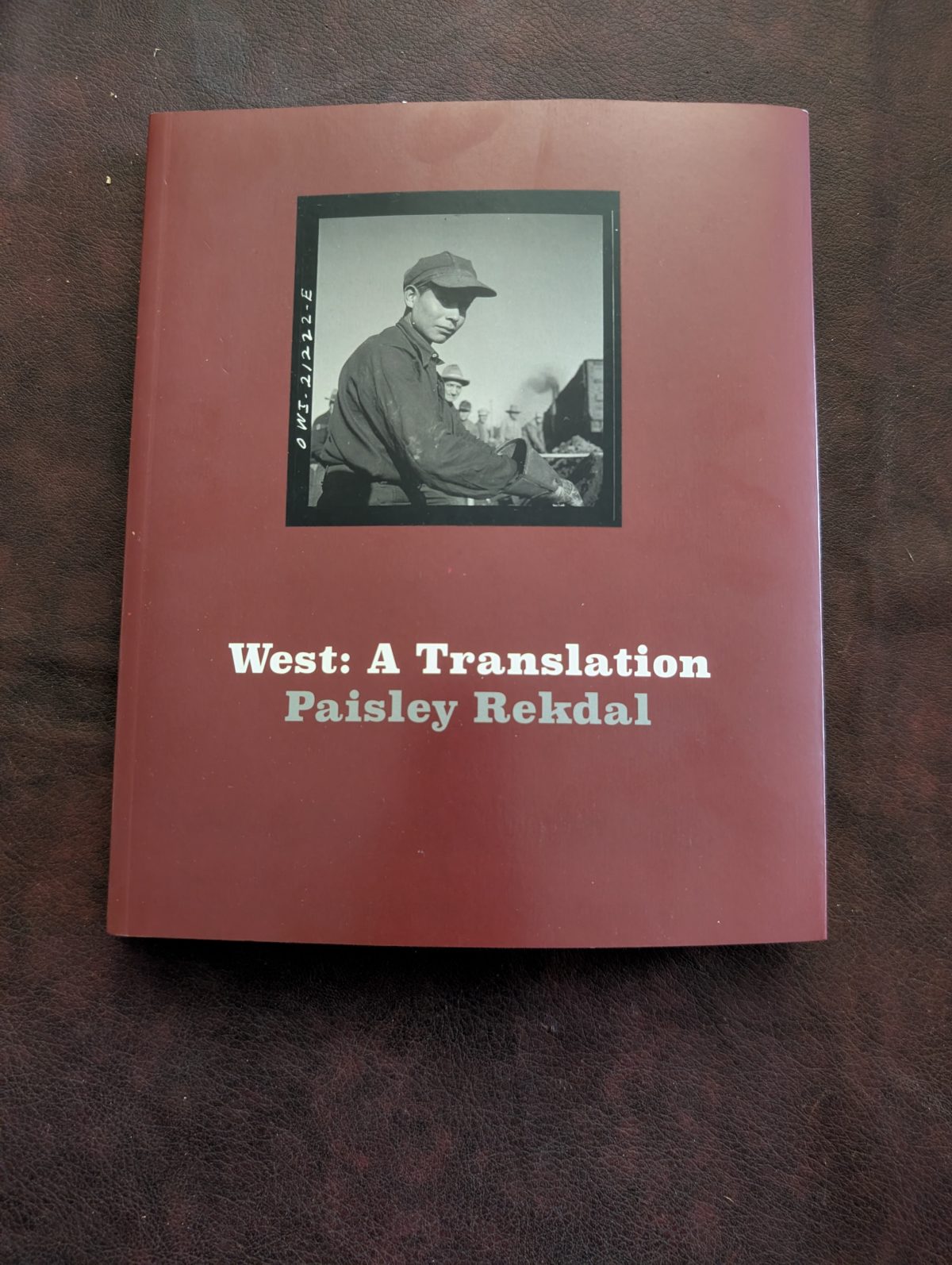
Some other examples are more conceptual. In This Dark Wood by Elisabeth Tonnard is a work which pairs 90 different translations of the first tercet from Dante’s Inferno with images from the Joseph Selle archive of solitary individuals in the mid-20th century on San Francisco’s streets. West: A Translation by Paisley Rekdal is a multimedia project about the Chinese workers, migrants and the transcontinental railroad. It is a collection of poems, documents, historic images and, in its online and richer incarnation, also video and sound, with all the parts meshing and sharing space.
In thinking about these examples, one observation is that more so than with collaborations, these works come across predominantly as either a photobook or a poetry book augmented with words and images. This may reflect that, in many of these books, one role is more passive in contrast with the books where either a single artist or a pair are in conversation – both literally and figuratively – throughout the process. This allows the artist more flexibility in expressing their concept and ideas and so some of these examples do work very well. It seems that this category of photopoetry has become less common recently, and so perhaps there is an opportunity for poets and photographers to find new ways to use it.
In the V&A Photopoetry reading room (on view until 20 Sep 2026), Solo selected photopoetry book examples that embrace the form and prompt readers to consider how poems and photographs talk to each other. He organised these into three types: works with photographs and poems by a single author; collaborations between photographers and writers; and edited volumes that bring together photography and poetry.
David Solo is a Brooklyn based collector, independent writer and researcher, and patron focused on artists’ and photo books and especially the global history of books combining poetry and photography. He is a frequent speaker and writer on artists’/photo books and is actively involved with a number of art and book institutions in London, Boston and New York. David partners with Photoworks on directing the P5 photopoetry program; is a co-founder/co-editor of the Book Art Review with the Center for Book Arts in NY, organized a Photopoetry reading room at the V&A and Photo Poetry Surfaces as part of the Bristol Photo Festival. Retired in 2020, his professional career has been in the technology, risk and financial sectors.