

From issue: #32 Un/Stable
Amandine Vabre Chau, 2 October 2026
On the northern slopes of Tai Mo Shan, Hong Kong’s highest peak, long-concealed tea terraces re-emerged after a hill fire. In Bones of Our Land, Tsz Wai Pun and Coşkun Güçlü turn this recovering landscape into a meditation on restoration’s central paradox: how can we return to an original state when the past itself remains partial, layered and contested? First presented by WMA in Hong Kong, the exhibition is now on view in Brighton as part of Photoworks Festival 2026.
Bones of Our Land
Gallery Lock In
Brighton
2 Oct – 25 Oct 2026, Wed – Sun
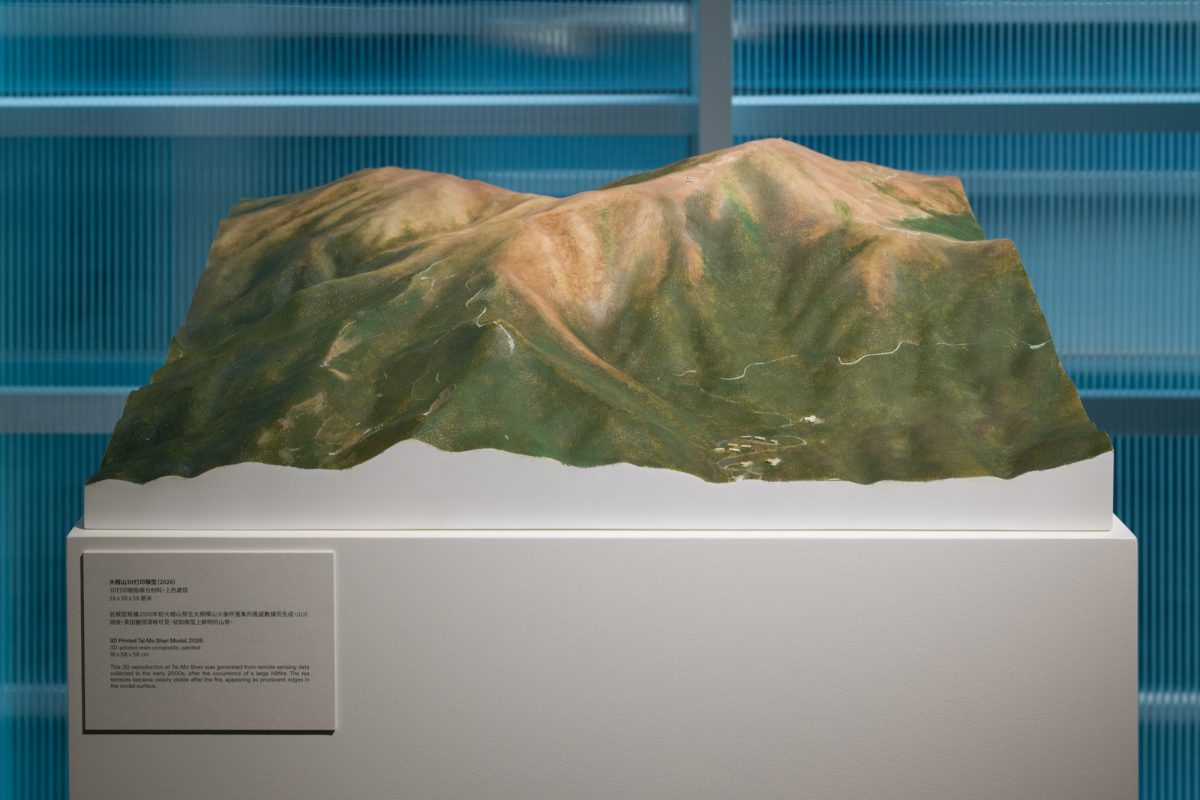
We open with a contradiction. The first element we see upon entering the Bones of Our Land exhibition is a scaled replica of the Tai Mo Shan mountain, our protagonist. The 3D model is placed on a plinth with a spotlight on it. It announces both the subject of the show, and an underlying methodology: the foregrounding of an ambiguity that simultaneously holds illusion and veracity. The object is a facsimile, a surrogate aimed at better explaining a distant reality. Artist Tsz Wai Pun and ecologist Coşkun Güçlü collaborate on this show to explore nature as an entangled, living (and lived through) archive. They envision it as a place reflecting a larger history that is in constant movement. Centering a poetic research on our environment and its ecological restoration, the duo presents a body of work that questions history, hybridity and authenticity in a contemporary socio-ecological context.
Commissioned for WMA’s 2025-26 theme ‘Hope’, and co-curated by Chloe Chow (WMA) and Louise Fedotov-Clements (Photoworks), this project’s central piece is a 50min film exploring the history of Tai Mo Shan as a shifting landscape, and a powerful repository of time slippages–or instances where history seems to cave in on itself by disappearing and reappearing. As an intermediate between the film and a research section, a diorama showcases an imagined geography inspired by the mountain itself, allowing us to experience the film’s narrative in a three-dimensional environment. Following a successful showing at the Hong Kong non-profit, the exhibition travelled to Photoworks in Brighton, United Kingdom, in fall 2026[1].
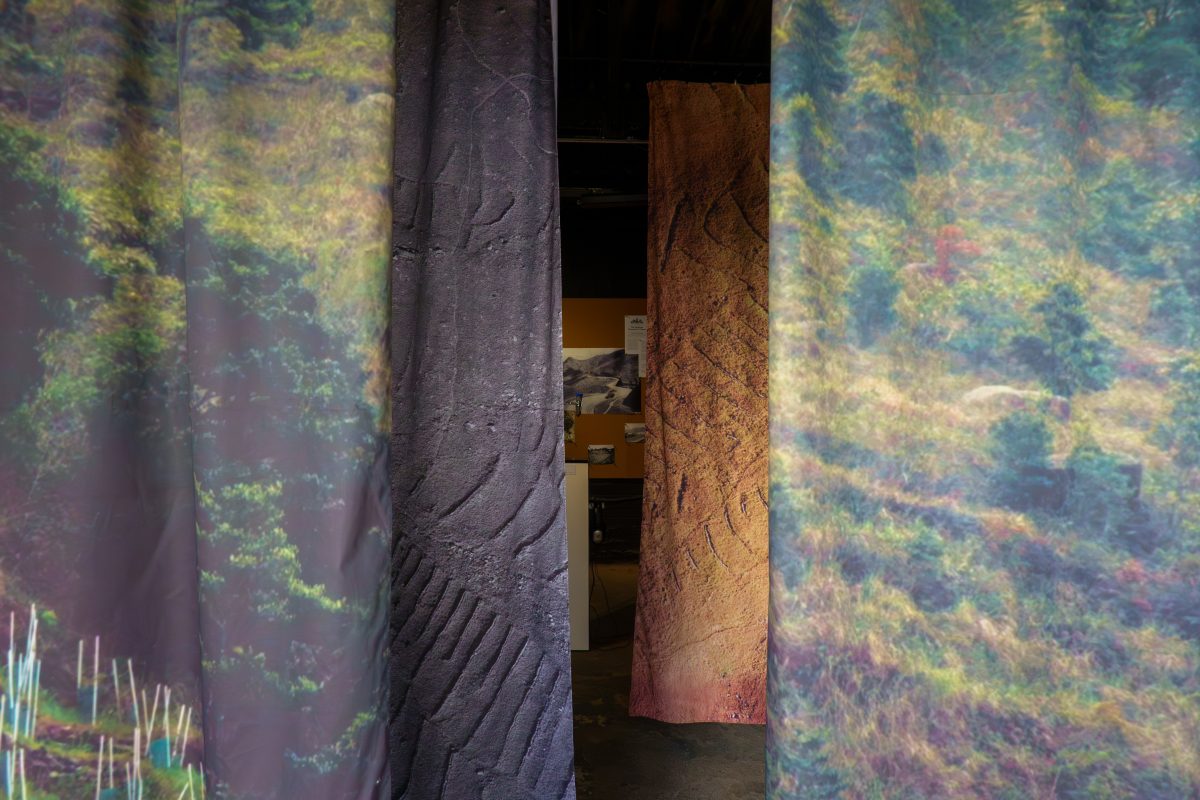
The film first begins with the image of a DNA fragment, extracted from mysterious tea terraces on Tai Mo Shan. We manage to perceive a human eye reflected back to us in the image, somehow announcing a scientific lens coupled with a situated human perception. The terrace’s creation is the central enigma we follow throughout the piece as they were built centuries ago, for presumed tea cultivation, by unknown people. These structures are said to resemble fishbones, lines scared into the mountain slope like writing we have yet to decipher. As the narrator of the film, Pun, details “they are a piece of writing demanding to be read”. Crucially, they are a fragment of history that is anonymous and unclassifiable, somewhat autonomous.
Previously submerged under vegetation, they reappeared through a hillfire twenty-four years ago, making this revelation an act only possible through devastation–the collapse of one element marking the re-emergence of another. Time is cyclical and becomes its own character here, the mountain materialising its variations. We meet the paradoxical phenomenon at the center of this show when we learn that the terraces are now a site of restoration. Indeed, this act denotes a certain aspiration to turn back time. To shape, re-write and bring back a former past. This is a site of strained coexistence, a stratification and collision of history. A re-generation of land where renewal and reversal are caught with one another, perhaps conflated. Closer to a re-arrangement, or a form of overwriting, restoration suggests an inherent contradiction in that it implies a certain undoing. Although contemporary restoration is usually done in an ecological effort to preserve and revitalise nature, in order to mitigate the increasingly threatening global climate catastrophe, it still contains conflicting contradictions worth exploring, as demonstrated above. The paradox lingers throughout the piece, like a diffused seasonal haunting, a weather refusing to clear itself.
The impossible purity, or the time paradox
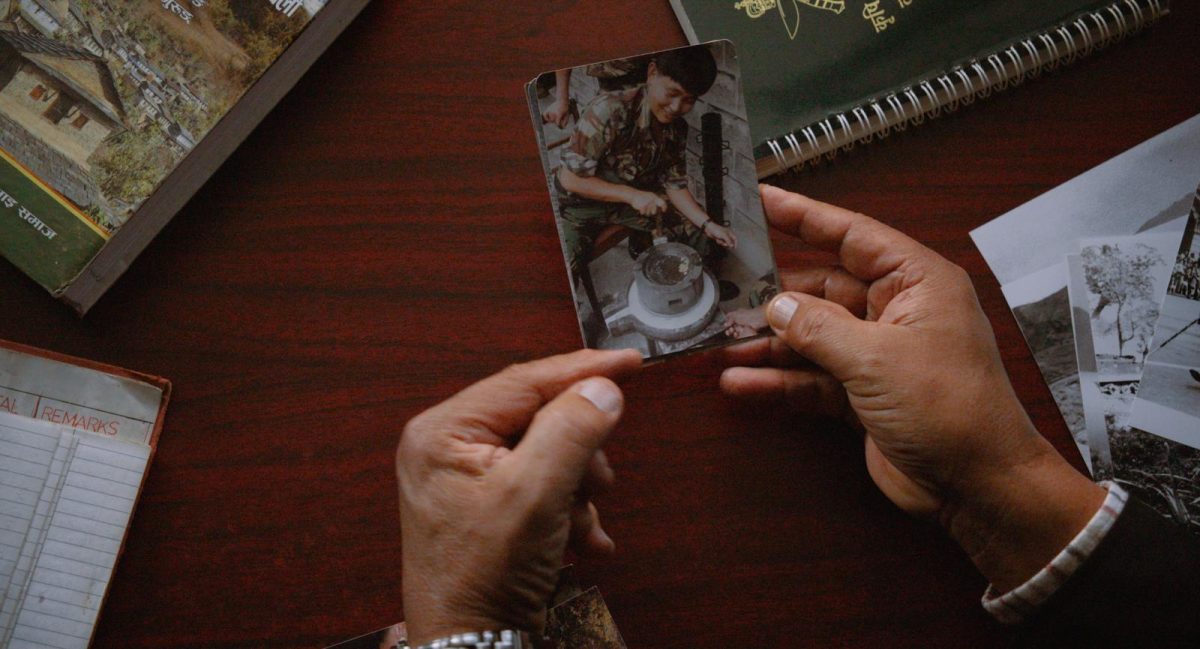
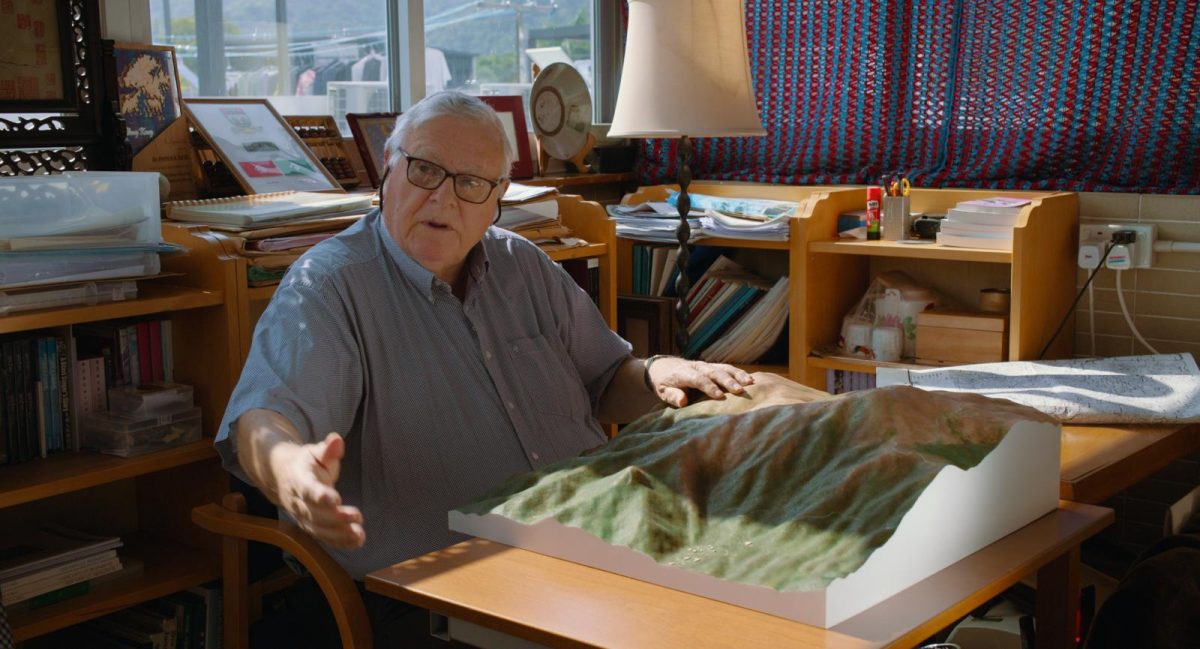
“People try and forget, I think. They try to pretend the past was other than it was” offers Patrick Hase, a historian featured in Pun and Güçlü’s film. Commenting on memory and how “erasure is very dangerous”, he shines light on what seems to be an unspoken subject, and the potentially destructive aspect of this inversion. We are hovering over the notion of originary points and nativity, as restoration demands a source to return to. It demands a pure lineage whose ancestry can be decoded.
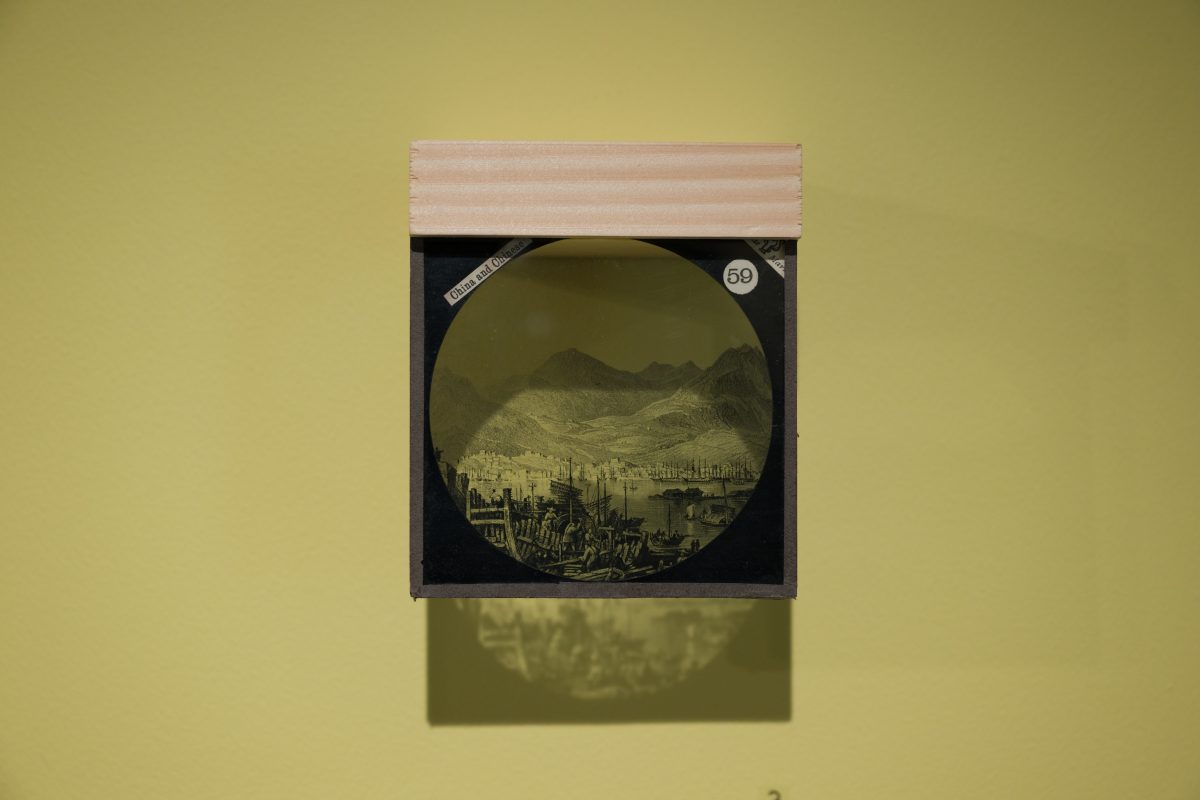
The city was a subtropical forest an estimated 500 to 700 years ago. Throughout the centuries, it has been shaped by alternating cycles of cultivation, burning, clearances and varying degrees of human intervention. The British colonial administration undertook massive afforestation efforts in the 1870s, thirty years after their arrival, following observations that vegetation was rather depleted at that time. The majority of Hong Kong’s present-day greenery is recent, and follows two main afforestation efforts[2]. The first effort was led by the Superintendent of the Botanical and Afforestation Department Charles Ford, appointed by Sir Joseph Hooker of Kew Gardens. Meaning, the city was part of a larger imperial network of global plant trade meant to enrich the British Empire, both scientifically and economically–usually done through the establishment of a Botanical Garden.[3] All of this was going hand-in-hand with localised land regulations shaping control, access and ownership. The authorities began their work by following the European tradition of planting trees along boulevards, before expanding to private European gardens, then finally extending throughout the territory for aesthetic, leisurely and sanitary purposes.[4] This fact is not unique to Hong Kong however, since the city was embedded within a global context.
Indeed, our landscape itself is in large parts made up of other British settlements[5]. In its “efforts to introduce the beginnings of a tree vegetation, Hongkong owes much to the interest and kindness of sister colonies”, notably the “governments of Ceylon, Queensland, Mauritius, New South Wales, and the Straits Settlements” which all “helped by donating specimens for planting on the hillsides of Hong Kong”. [6] That means that even distant places can reflect Hong Kong back to us, as Hong Kong reflects them. For example, our forestry development “in many ways parallels that in Hawaii, particularly in the choice of species”[7].
Most notable in this process however, was the moral impetus to the greening of the colony, its ‘denudation’ being seen as something to correct. The city was often referred to as “a sexualized and gendered terrain, with the ‘naked’ and ‘barren’ landscape (Victoria) imagined as an indecently exposed and brutalized female body whose virtue and reproductive order were to be restored”[8]. Indeed, “while the destruction of the forests is attributed to the negligent Chinese, the replanting is implicitly equated with the restoration of a despoiled innocence and healthy (re)productivity by the British.”[9] The idea of restoration, therefore, is rarely neutral but rather closely tied to ideology. In the context of late-nineteenth century global colonisation, it can be understood as a visual and environmental assertion of ownership and property. Restoration is complex and its analysis can be processed through multiple frameworks, each with their own intricate circumstances–be they historical, theoretical or scientific. All three are intertwined in this exhibition which allows us a more generous reading of the issue at hand: what are we truly restoring, and for who?
Ecologist Richard T. Corlett has written on the subject, specifying that “even if the complete restoration of the primeval plant species composition were possible, this would not recreate a fully functioning ecosystem”[10]. That is something the duo understands and have pointed towards in the film by clarifying that “we can only imagine what the primeval forests which once stood here looked like” as “we can never look clearly into a distant and receding past”. Such a project would also require an indisputable point of origin, bringing forward questions of contested nativity (as detailed previously), while echoing a view of rooted purity, which has been challenged by Hong Kong poet Ye Si. Reflecting on the city’s colonial condition, he has described it as something “in relation to the inability to tell one’s past, to express one’s frustration about identity, and to articulate one’s feeling about this place”. It provides space for one “to reflect on the problems of a “pure” and “original” state”.[11] The territory’s environmental and administrative organising are both confronted with a similarly essentialist demand: to be solved against its past.
These terraces are a potent subject precisely because they are a receptacle for ambiguous history. As scholar and cultural critic Rey Chow has described before, Hong Kong, as a city, “did not evolve into its modern form of a commercial center from a long history of internal accumulation” just as the present luscious landscape did not produce itself naturally.Recovery implies a reversal, but when has this ecological or ideological past ever been at a solvable point?
Bio-elasticity and transfiguration
This ambiguity is addressed in the show at multiple levels, one of them being localised biological hybridity. Pun and Güçlü linger on the act of grafting, a horticultural practice consisting of inserting a plant into the tissue of another, effectively merging them together.
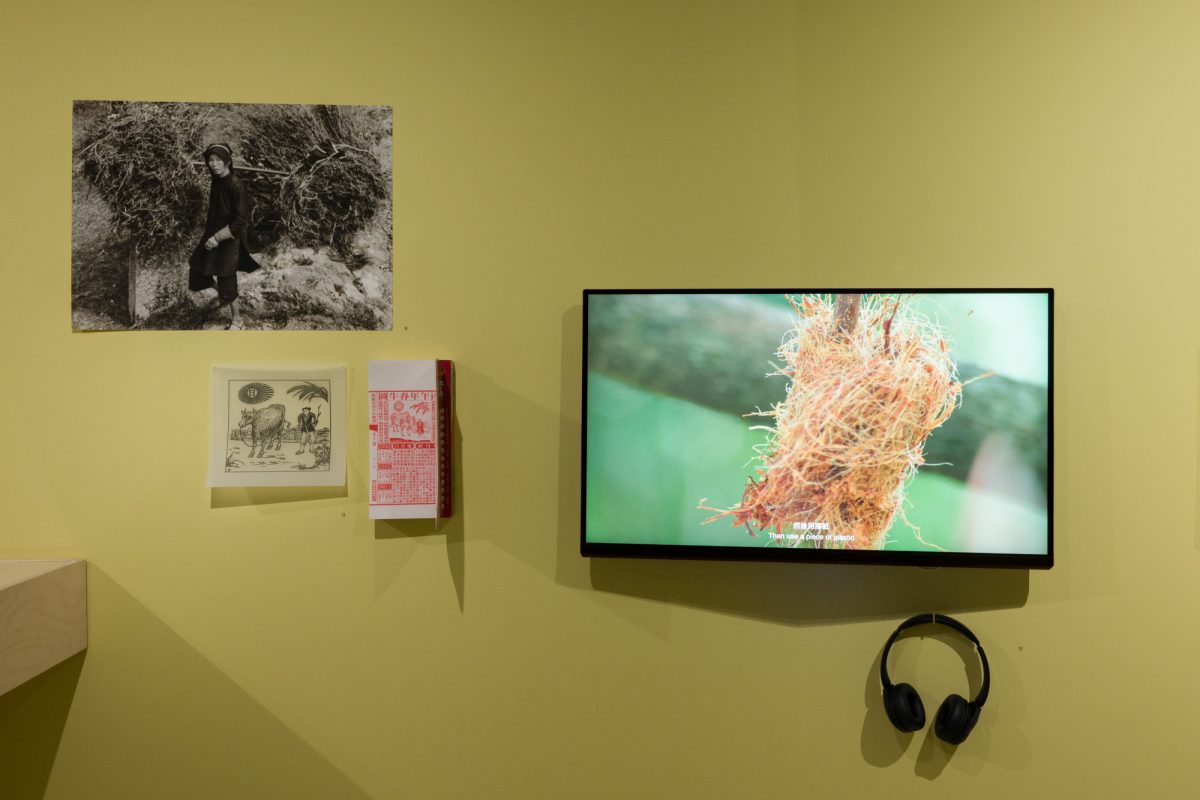
In the exhibition’s archival research section, a video shows Janney, a villager with whom the duo engages with. She explains to the audience how to graft and as we watch her carefully detail the steps, we switch from exploring creation through destruction (the hillfire) to witnessing creation through synthesis. In conversation with what we have discussed so far, this enables us to reframe the indefinite form as potent malleability. To see fluctuation and contradiction as an inhabited condition, and therefore one to operate from. While restoration foregrounded the difficulty in reviving or overriding a past–a paradox that looked at linearity and rectification–grafting is closer to synchronicity coupled with a refusal to succumb to an either/or narrative. One that allows elasticity to become a new form of survival. That is translated materially by the diorama in the exhibition, itself an enigmatic visual representation that is neither real nor fake, but situated somewhere in between.
Regenerative refusal: authenticity and its ghost
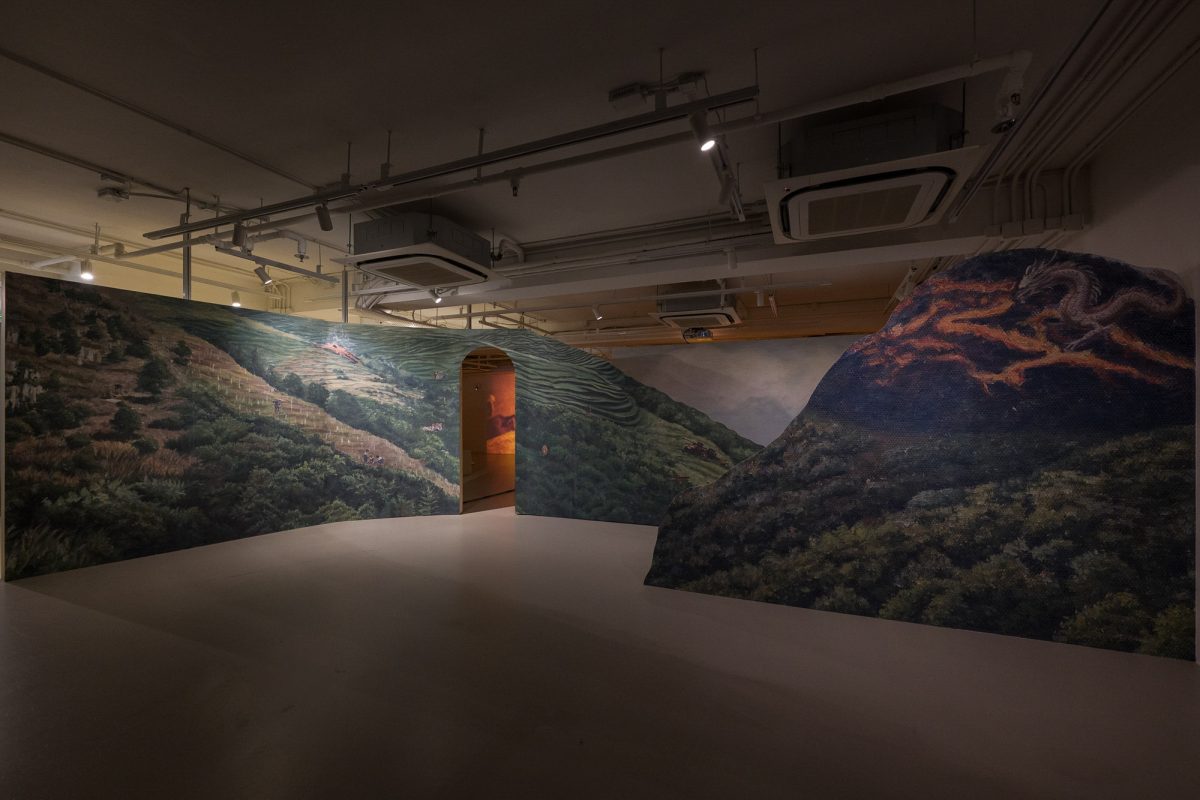
The diorama represents Tai Mo Shan and is split in three sections which one can pass through. It shows the mountainous yet foggy terrain, the terraces with its abundant greenery, and even a dragon spitting fire to illustrate the disaster from twenty years ago. This type of display signifies something without being the thing itself, making it a useful gesture in our context. There is an implied gap, a certain distance that is also a bridge–which is more than an aesthetic choice as it plays with inevitable partiality and the impossibility of complete authenticity. It is no surprise that dioramas are found in natural-history museums and theatre, two fields where mimicry and accuracy are enmeshed together. This tension is reflected within the film with the use of cutouts and shadow puppetry, an extension of the same logic.
Pun has a history of using such staging effects, playing with light and shadow to better explore poetic narration while questioning perception. She reveals and conceals, an act of creative agency. The artist uses her visual signature in sequences relating to historical events, where archives might have been. She looks at the transformative capability of fiction, and investigates the unlikelihood of perfect realism opening new possibilities, with transfiguration as a better representation. Fiction becomes a way to navigate reality with more generosity, with bewilderment. Pun uses it as a regenerative tool, rejecting essentialist representations and from that refusal, builds something more capacious.
Near the end of the film, Patrick Hase shares a childhood memory of pressing a warm penny against a frosted window in order to see into the street outside. That describes what the film, and the exhibition, is trying to do. To create an opening, offering a tunnel the size of a penny into a bigger unknown. What we see is not definite, yet that is precisely why it is precious. Aion, the hellenistic deity associated with cyclical time, keeps coming to mind. He is representative of the non-linear age untethered by human vision, orbiting and perpetual. He embodies a time that is both porous (in its expansiveness) and obscure (by evading capture). This makes us understand that the future is but a returning version of the past. The ghost we explore is a historical one, but its elucidation might not depend on clear-cut categories and absolutions. We might find glimpses of it in the palimpsest instead, within mutation or fiction. Bones of Our Land succeeds in holding a complex and human reading of Hong Kong’s scenery as a compounded record of its history, one that can remain opaque yet transformative.
Sources:
[1] Presented in partnership with Photoworks, Dreamy Place, Gallery Lock In and Arts Council England.
[2] Corlett, R.T.T.R. (1999). ‘Environmental Forestry in Hong Kong: 1871-1997’, Forest ecology and management, 116(1-3), pp.93-105. The first afforestation effort was enacted soon after the colony was seized, while the second one was done following the Japanese invasion during World War II, which led to a near complete deforestation. See pages 94-96. For more information over the succession of forests please consult Zhuang, X.Y., and Corlett, R.T. (1997). ‘Forest and Forest Succession in Hong Kong, China’, Journal of Tropical Ecology 13(6), pp. 857-866.
[3] Ho, V. and Ho, N.T-W (2024). ‘Imperial Botanical Network and the Formation of the Hong Kong Botanical Gardens’, Hong Kong Studies, 4(1), pp.17-35. Particularly: “In 1855, Governor John Bowring approached the colonial office, expressing the urgency for a botanist to support the Hong Kong government in answering numerous inquiries related to industries such as “dyes, oleaginous matters, fillies for textile purpose, materials for paper-making and other topics.” Besides, he hoped the Kew Gardens could nominate a suitable candidate while the colonial office would permit the use of colonial funds to establish a botanical garden. He argued Hong Kong was an essential gateway for the understanding of Chinese botany since the garden could “render valuable services, not to science alone, but to commercial interests as associated with science.” He also emphasized that the prospective garden could be useful in “sending useful plants and fruits to the mother country and the Colonies” ”. p.25.
[4] Pryor, M.R. (2015). ‘Street Tree Planting in Hong Kong in the Early Colonial Period (1842–98)’, Journal of the Royal Asiatic Society Hong Kong Branch, 55, pp.33-56.
[5] Hong Kong’s present landscape also includes pockets of pre-colonial greenery such as scattered secondary forests, some suspected remnants of its primary forests concentrated in inaccessible places (montane sites and others) and most notably Feng Shui woodlands. See: Zhuang, X.Y., and Corlett, R.T. (1997). ‘Forest and Forest Succession in Hong Kong, China’, Journal of Tropical Ecology 13(6), pp. 857-866. Feng Shui woodlands are patches of old vegetation traditionally situated behind Hakka villages. Although small, they tend to absorb more atmospheric carbon per unit area than other habitats in the city and are home to more than one-third of the total terrestrial biodiversity in Hong Kong. See: Lee, K. and Boyle, M. (2025). ‘Feng shui woodlands have protected Hong Kong; it’s our turn to care for these long-neglected, forgotten forests’. Hong Kong Free Press. Available at: https://hongkongfp.com/2025/07/10/feng-shui-woodlands-have-protected-hong-kong-its-our-turn-to-care-for-these-long-neglected-forgotten-forests/ (Accessed 1st October 2026).
[6] Peckham, R. (2015). ‘Hygienic Nature: Afforestation and the Greening of Colonial Hong Kong’, Modern Asian Studies, 49(4), p.1181.
[7] Corlett, T.R., p99.
[8] Peckham, R., p.1181.
[9] Peckham, R., p.1193.
[10] Corlett, T.R., p.100
[11] Ye Si quoted in Chow, R. (1998). Ethics After Idealism: theory, culture, ethnicity, reading. Bloomington and Indianapolis: Indiana University Press, p.185.
Amandine Vabre Chau is a French-Hongkong independent curator and researcher with a focus on Asian contemporary art. She is interested in postcolonial port-cities as contentious cultural sites, and as fruitful contact points to study South-South solidarity. Her research focuses particularly on botanical imperialism, urban planning and marine entanglements. Website