By Carolina Semprucci, 12 December 2025
Vernacular refers to the informal, spoken version of a language, often perceived as less prestigious than its standardised form. Next to photography, the term establishes an immediate contrast with the professional image, echoing the same hierarchies found in language, whilst also gesturing toward something collective. As a visual language, vernacular photography is built slowly, “assembled” over decades. In this process, the making, gathering, and sharing of everyday images blurs the traditional photographic boundaries of authorship and power, forming collective portraits of society.
Although an overarching term, vernacular photography tends to evoke a particular aesthetic mainly associated with the documentation of everyday life and subjects. Think of In Praise of Anonymous Photography at Arles 2025, one of the most recent and acclaimed exhibitions on vernacular photography. The presentation featured Marion and Philippe Jacquier’s impressive collection of anonymous found images, with themes spanning family, romance, travel, history, and science. Tied to a sense of amateurism, perhaps its most essential feature, this kind of image encapsulates the non-professional application of photography to daily life contexts. Originally not intended for public disclosure, its intention is rooted in personal documentation and memory-making rather than artistic ambition or commercial demand. In the making of vernacular photography, time is also a crucial factor, though not strictly in the conventional sense of marking historical periods or stylistic eras. Time is more a necessary condition for detachment rather than a defining factor: enough time must pass for photographs to separate from their contexts, for their ownership and intention to fade, for collectors to find them and, eventually, share them.
Found in places such as flea markets, estate sales, and online marketplaces, everyday photographs often persist far beyond their makers and intended purpose. For most of these images, vernacular meaning emerges from dislocation. So far, this process has largely relied on material separation, facilitated by the mobile and vulnerable nature of physical prints. Yet today, radical changes in the production and circulation of photography challenge the future of this very process. To speculate on what these future forms might look like risks being shortsighted, particularly for someone who is neither a photographer nor a collector. Instead, it seems more productive to consider how these changes have already begun to unsettle the very criteria that shape vernacular photography.
For most of the two hundred years since its invention, technological advancements in photography have incrementally reduced the level of specialised knowledge required in the process of image-making. From the introduction of the Kodak camera in the late 19th century, to the mid 20th century development of automatic exposure and autofocus systems, and to the more recent rise of digital and phone cameras, each step increased accessibility in photography. The distinction between professional and amateur has its roots in the early days of photography, when, given the high level of specialisation required to operate a camera, anyone who could take images was considered a photographer. Compared to the present, the distinction carried a different weight, which was also informed by the individual’s ambition or lack thereof. Today, although everyone takes pictures, most people would not consider themselves as photographers. From a contemporary perspective, image-making has shifted from learned practice to everyday gesture, and the notion of amateurism has acquired a negative connotation, closer to incompetence than to passion.
At the same time, although we take more images than ever before, we print far fewer. In its vernacular understanding, photography has become rooted in immediate social circulation rather than in archiving or memory-making. Our reliance on devices has transformed not only how we store images, but also why we take them. Printing has given way to uploading and sharing; most people store their photos only on phones or computers, rarely backing them up elsewhere. The motivations for taking photographs are numerous, of course, but increasingly performative. With social media functioning as a kind of curated personal archive, each image we share is inevitably tailored to an audience.
Reflecting on my own participation in everyday photographic culture within this vernacular framework, I was reminded of Andrea Palásti’s work Márta’s Flowers. I came across the work in May 2025, when it was exhibited at the Cologne Photo Pavillon as part of Internationale Photoszene Köln. The title of the series playfully refers to a book by Martha Stewart, Martha’s Flowers. Andrea writes, “Martha Stewart knows how to grow, gather and enjoy flowers. My mom, Márta, knows how to arrange and enjoy my dad.” There is a subtle complexity to the wordplay, especially when set against the meticulously curated, aspirational aesthetic promoted by Stewart’s lifestyle guides, which were largely marketed to women of Márta’s generation and influential in shaping their domestic ideals.
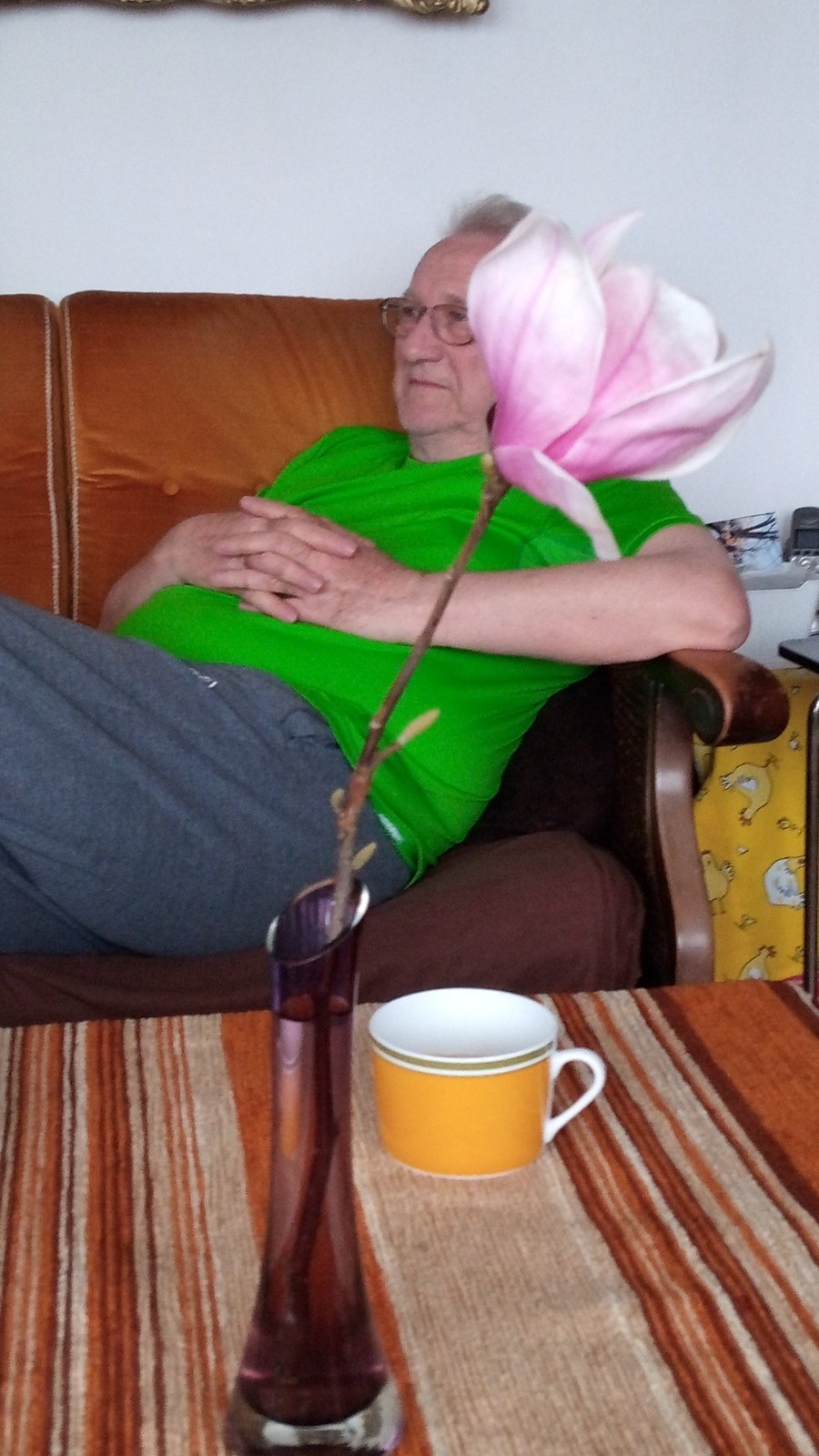
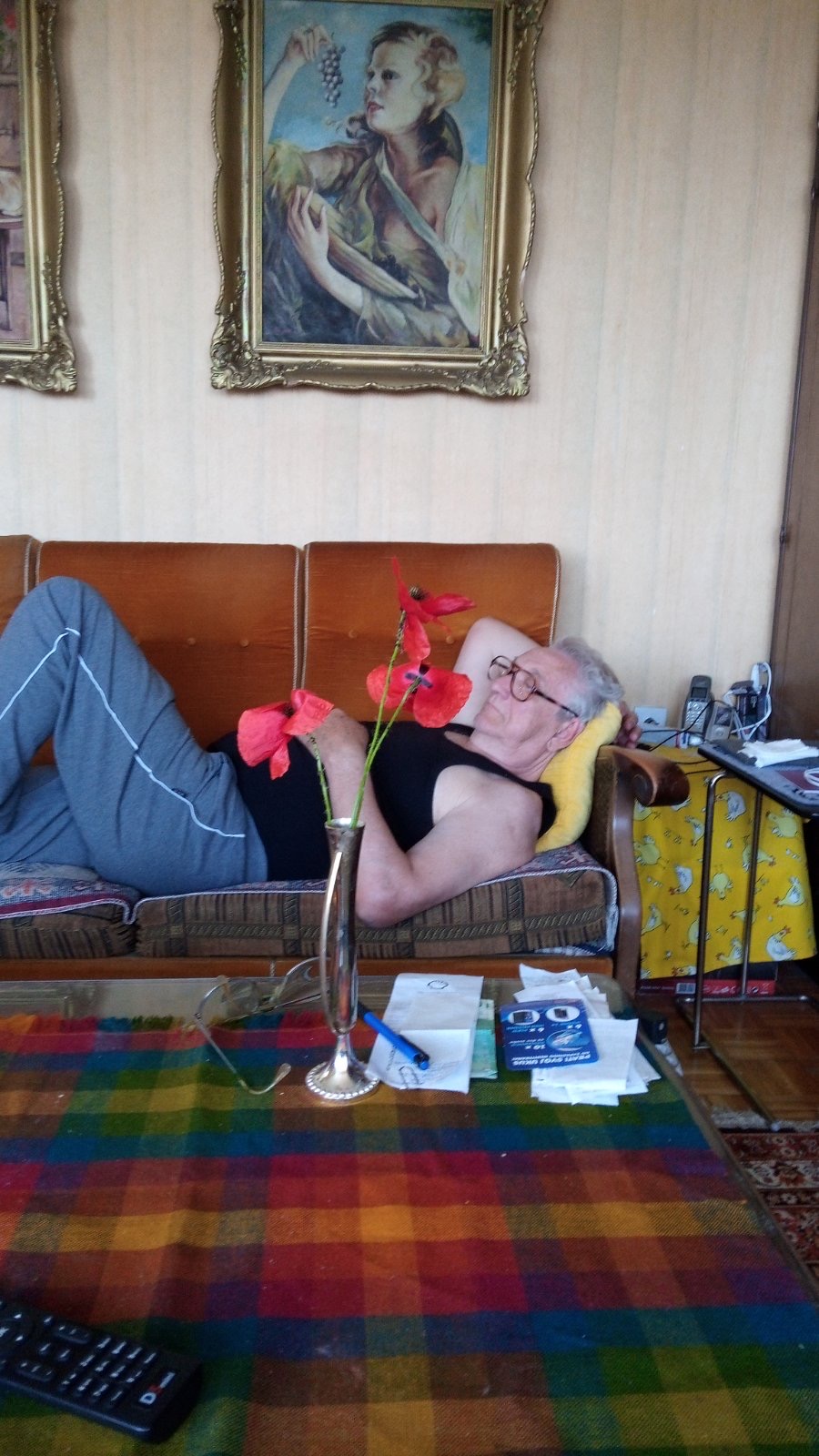
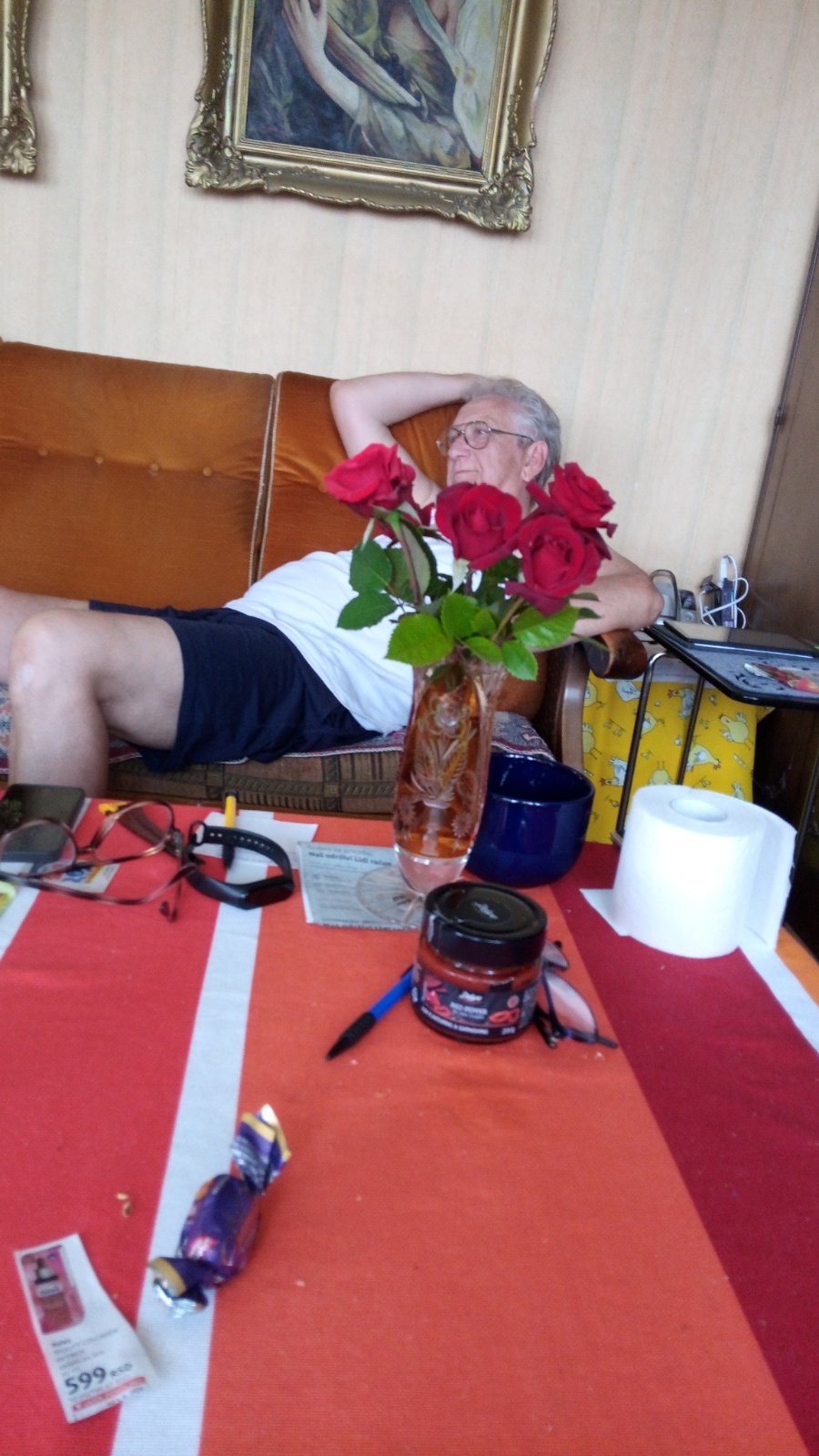
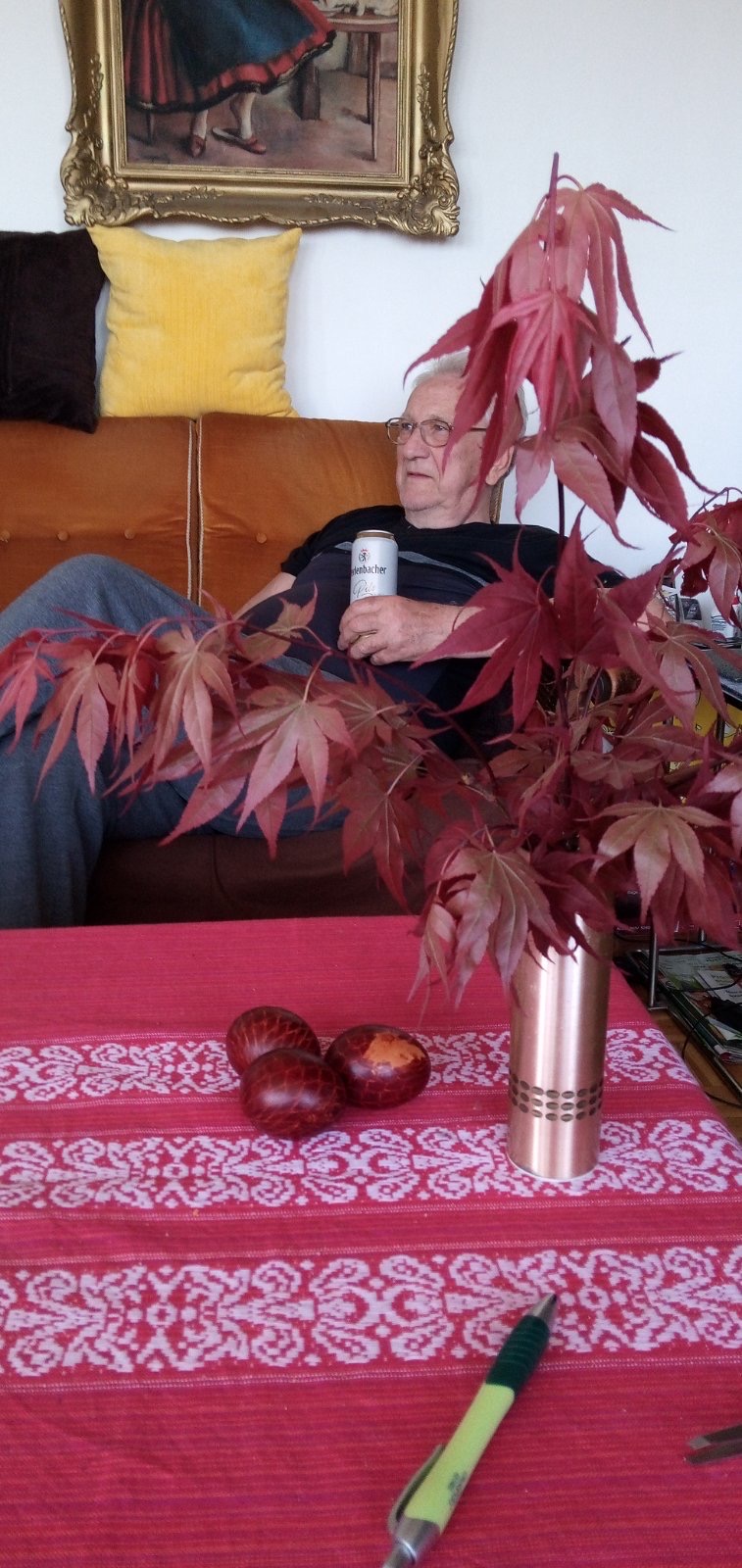
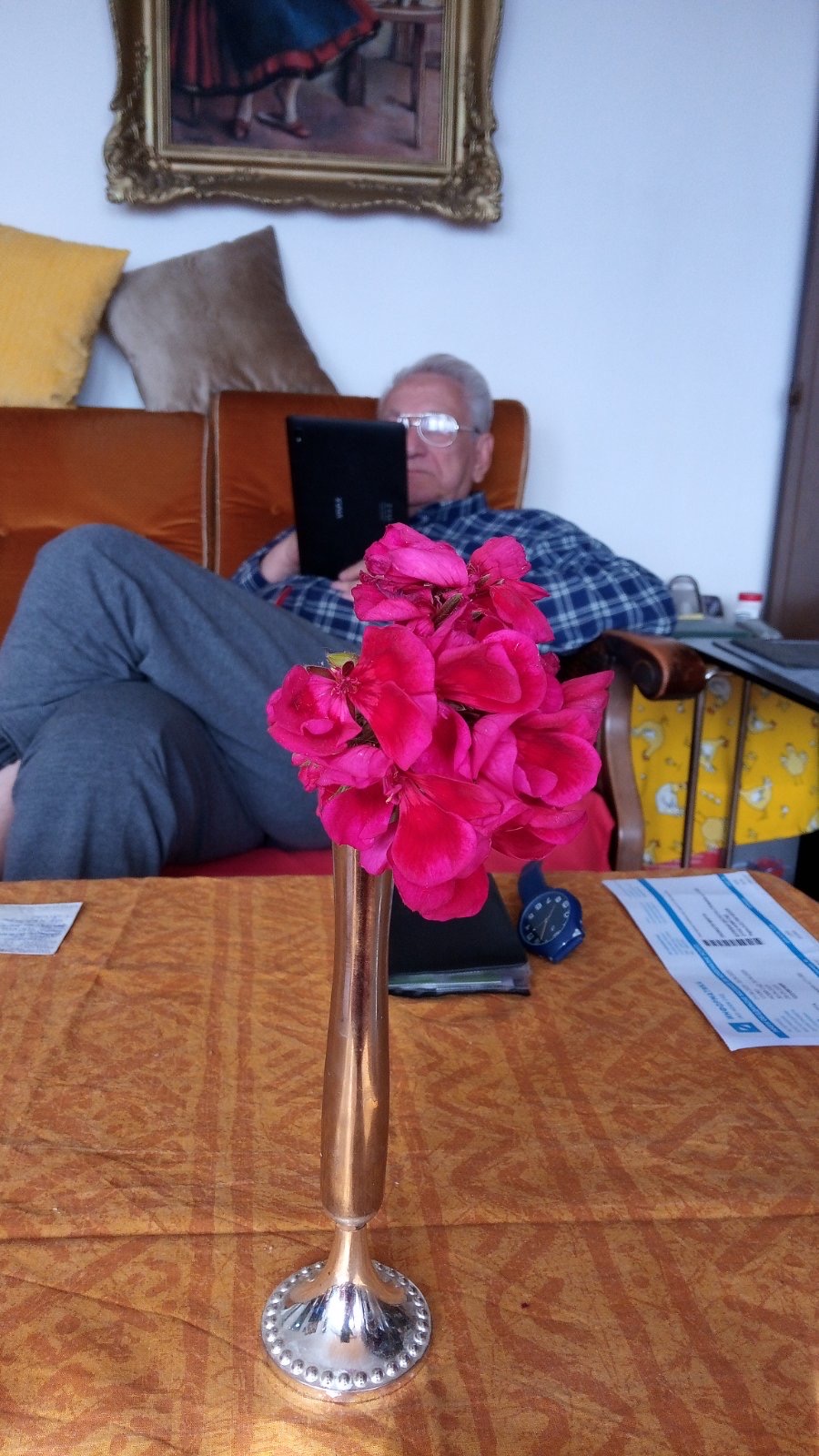
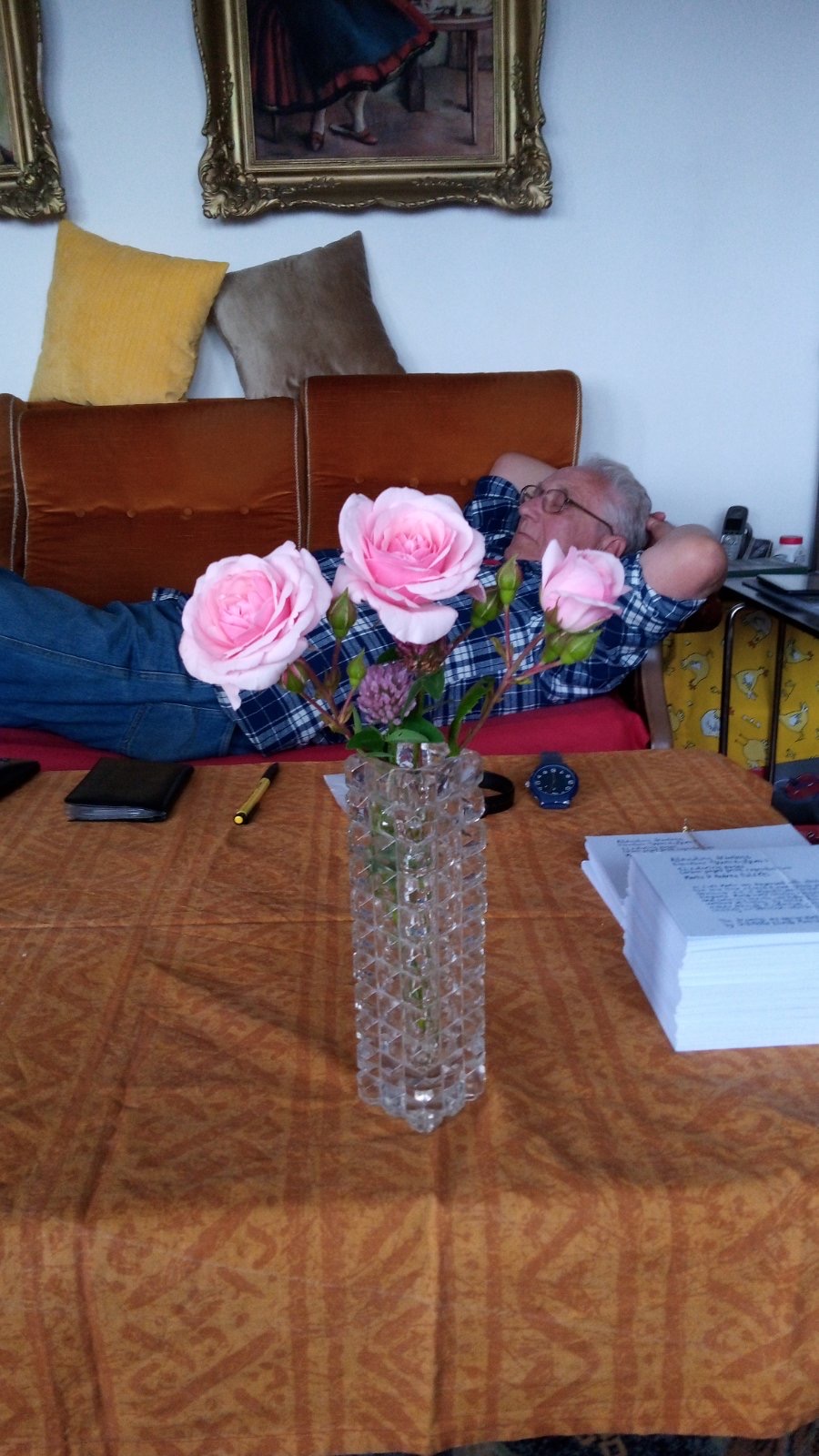
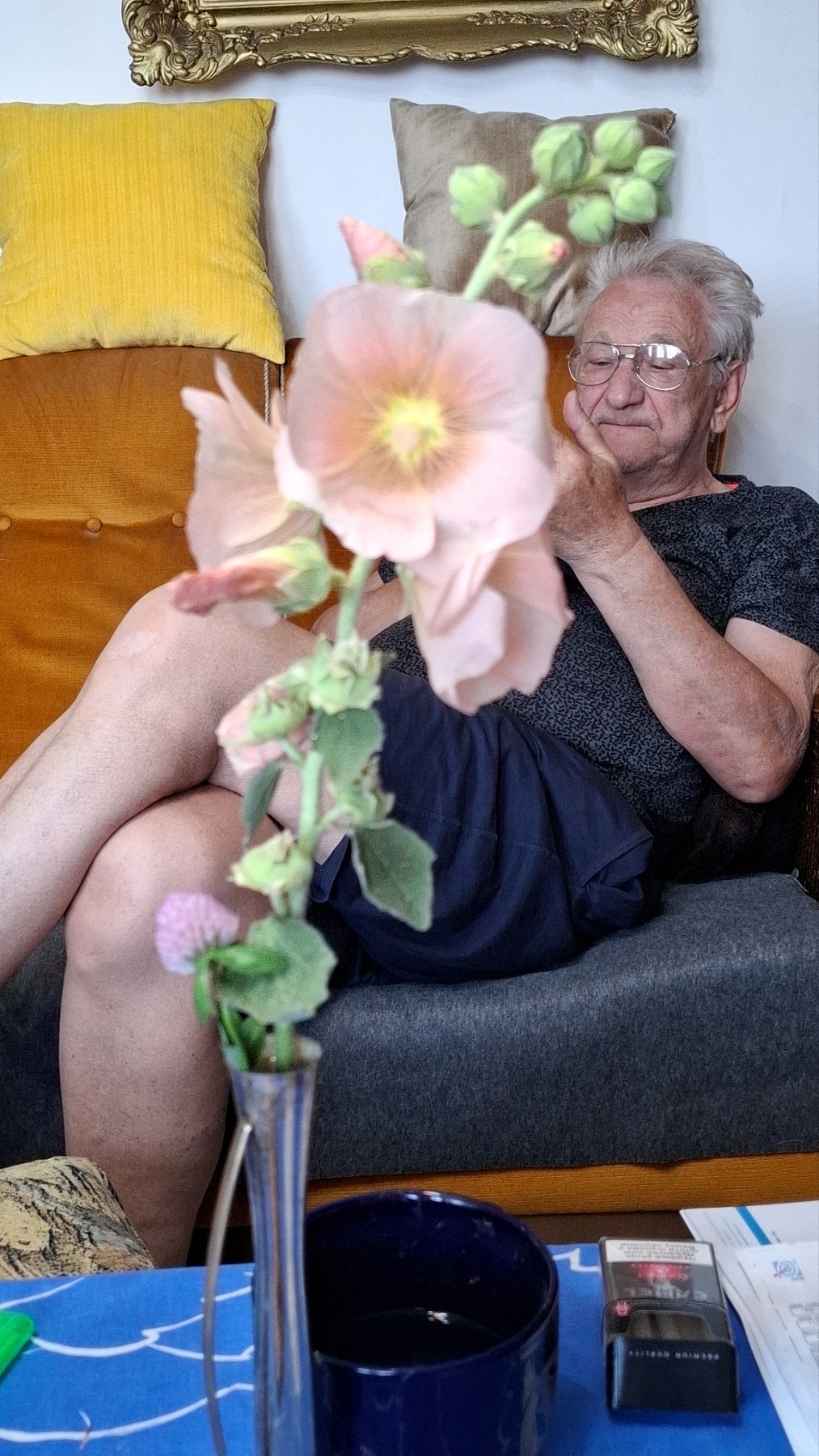
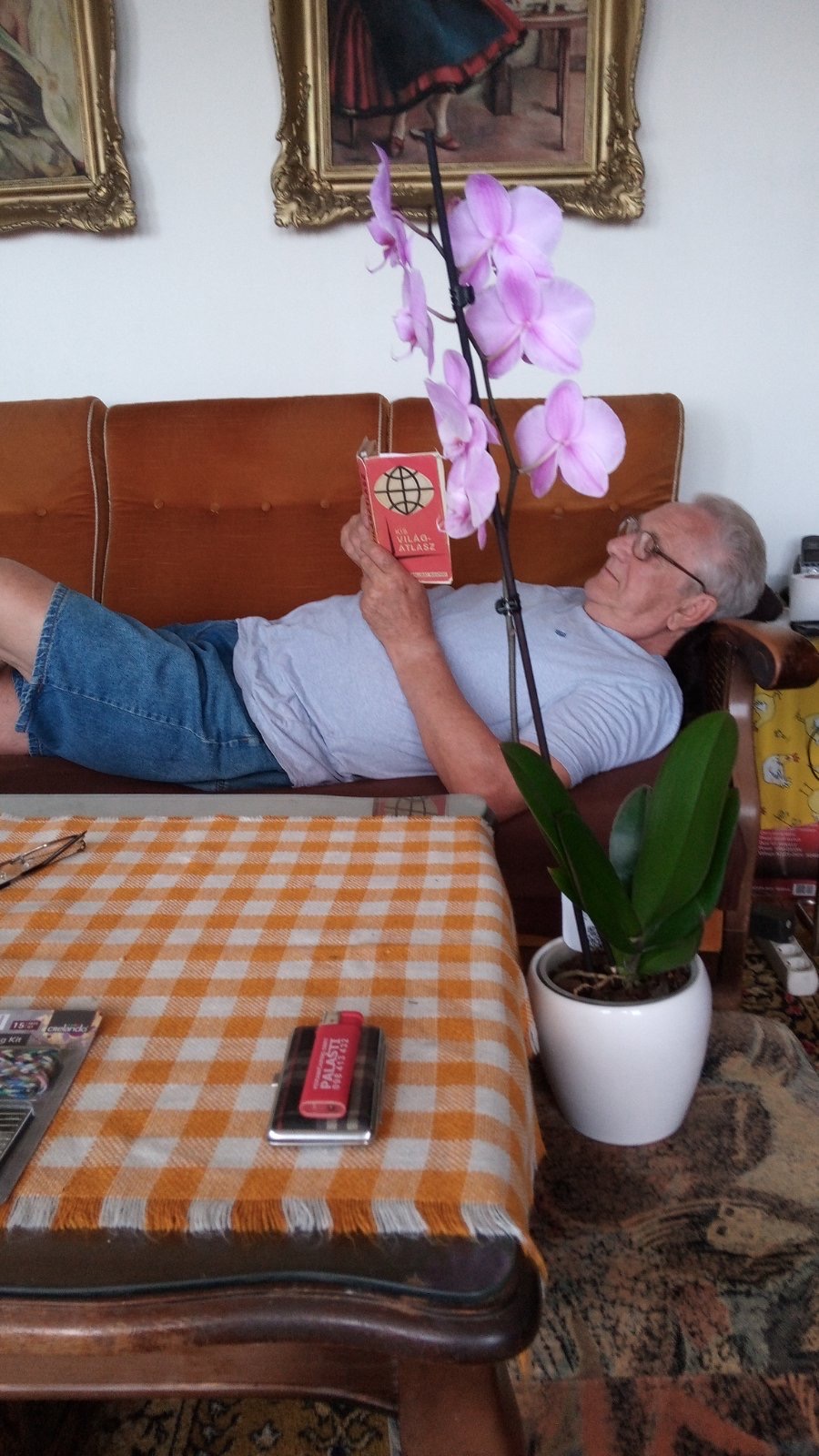
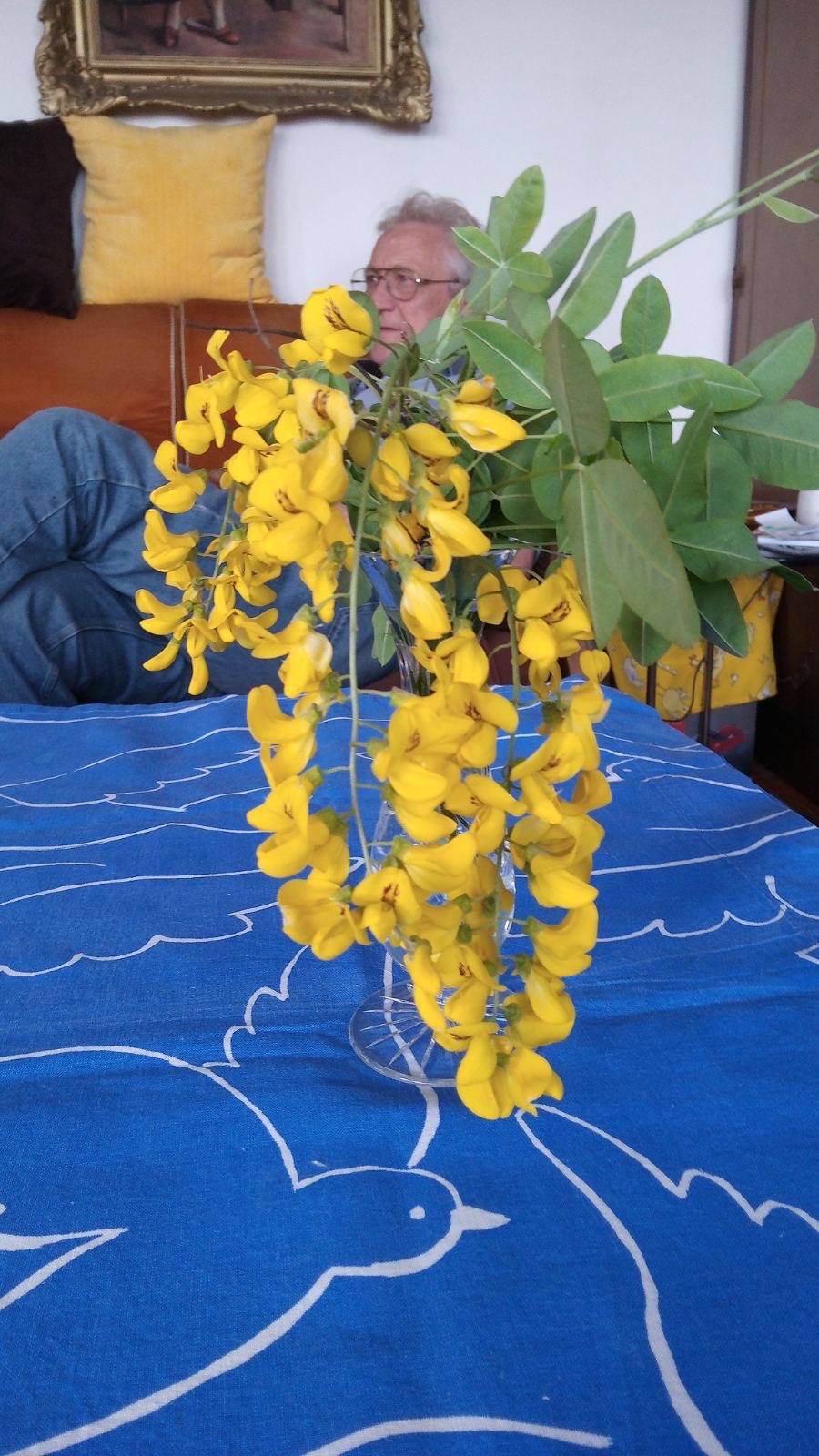
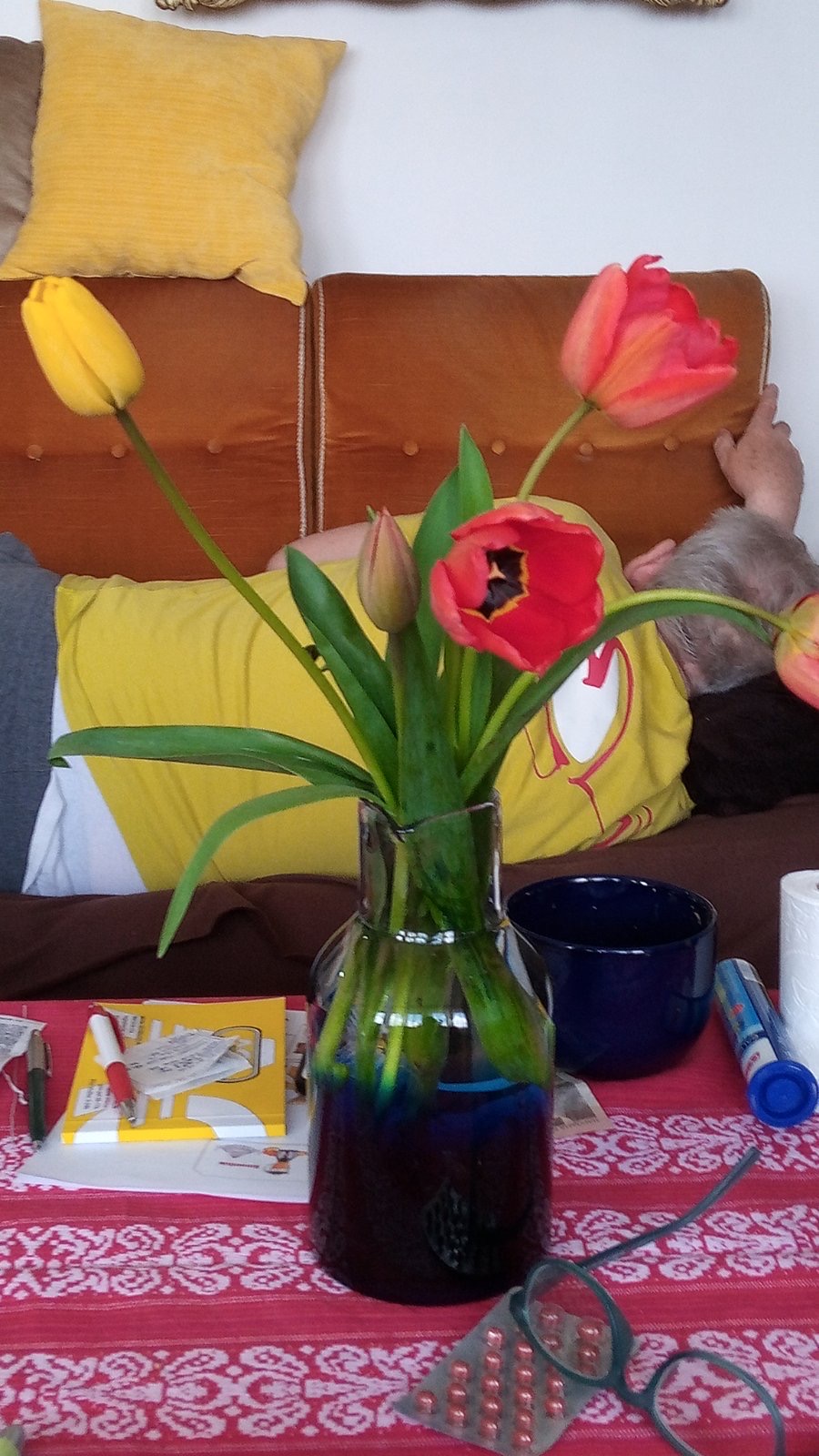
In stark contrast to that imaginary, Márta’s Flowers (2023-ongoing) is a series of smartphone images that Andrea regularly receives from Márta via Viber, a messaging app. Across the pictures, the composition remains the same. The coffee table at the front, each time hosting a different floral arrangement, accommodates a rotating array of objects including remotes, snacks, coupons, reading glasses, medication, mugs and glasses, and chocolate wrappers. In the background, the sofa where, most times half-hidden by the flowers, Andrea’s father is caught engaging in various mundane activities. Low-resolution, blurred, tilted, and often awkwardly zoomed in, these photographs are not curated for an audience; rather, they are made for the intimacy of the chat. The relatability of these mother-daughter exchanges, presented in Cologne as 52 prints lined up across four wooden shelves next to a selection of floral compositions, is emblematic of a widely shared everyday form of image-making that is more message than photographic object.
Andrea writes, “For the past years, my mother has sent me these images via the Viber app – an ongoing attempt to keep me informed about their lives and well-being. Although her intention is to capture the beauty of the flowers, my father Ivica remains a passive figure in the background”. What we do not see in the frame, we can imagine. A rolled-up belt on the table suggests the relief of returning home and shedding the outside’s discomfort. While it is not in the picture, the viewer can figure that Ivica is watching TV and assume that Márta’s vantage point is probably another sofa, possibly a matching one to her husband’s. Beyond the surface of everyday life, the snapshots register an emotional dimension between Andrea’s parents: the quiet portrayal of a generation marked by the Yugoslav Wars, displacement and personal loss, still carrying the weight of their unspoken reality. Andrea continues, “Most of the flowers here are stolen from other people’s gardens or public parks. My mom steals the flowers. My dad steals the background. I just receive the evidence.“
Márta’s Flowers bridges canonical aspects of vernacular photography with newer, increasingly networked ways of understanding this category. In this series, vernacular meaning does not emerge through the traditional mechanisms of distance, loss, and dislocation. Instead, it appears immediately, as a form of accelerated vernacular enabled by the intimacy of private chat exchanges and personal archiving. Andrea Palásti’s work reasserts agency in the archiving of everyday photography, often entrusted to digital and online platforms. The project explores the collapse of the temporal gap between the instant an image is taken and the moment it becomes vernacular, offering an optimistic glimpse into future forms of vernacular photography.
Carolina Semprucci (b.1999) is an Italian writer and designer based in London. She received a BA in Magazine Journalism and Publishing from the University of the Arts London in 2022. Her published writing, focusing on the intersections of the digital image, surveillance and new technologies, has appeared on Photography+, PhMuseum’s Annual, Der Greif, and has been published by Kult Books. In her design practice, Semprucci has collaborated with a range of clients including ArtULTRA, the Future Justice Project, and The Justice Gap. Semprucci is the 2025 Photoworks Writer in Residence alongside Hannah Geddes. Read more here.
@Cachius
Andrea Palásti (b. 1984) works across artistic, curatorial, and pedagogical boundaries, testing different positions to create spaces of learning through photo exhibitions, historical research, illustrated lectures, and participatory workshops. She received a BA in Photography from the Academy of Arts in Novi Sad, and a PhD in Art and Media Theory from the University of Arts in Belgrade. She works collaboratively and interdependently with her partner, Daniel Popovic, her parents, Márta and Ivica, her students, and fellow artists. Recently, she presented at Internationale Photoszene Köln (2025); Anthology Film Archive, New York (2025); Amsterdam University of the Arts (2024); KontextSchule, UDK Berlin (2024); Bern Academy of the Arts (2024); Royal Academy of Art KABK, The Hague (2023); ISEA2022, MACBA Barcelona (2022); University of Applied Arts Vienna (2022); Ars Electronica Garden Belgrade, Linz (2021), among others. Since 2016 she has been teaching as an associate professor at the Academy of Arts, University of Novi Sad.
andreapalasti.com
@sem_dzouns