By Taous Dahmani, 12 December 2025
‘Laughter is a way of placing or displacing abjection.’
Julia Kristeva, Powers of Horror: An Essay on Abjection.
As we turn the pages of this book, we discover images that are familiar, at least to the Western viewer. These photographs, which once populated family albums, depict those who share our intimate space: parents, children, grandparents, friends and colleagues. Among them, there is always an amateur photographer who seems to think that the situation deserves to be immortalised. And so they proceed to capture our everyday celebrations with their camera: the holidays in the mountains or by the sea, the boat trip, the visit to the zoo and the dip in the water, but also the proud angler, the new car and the birthday cake – the little things in life that we revisit out of nostalgia, because, let’s face it, family albums are formidable lies depicting a naively peaceful and happy life. These snapshots record the private sphere, yet by definition omit the context, that societal backdrop against which the life of the radiant family plays out. The familiarity they suggest is by no means innocent; it is normative, disturbing neither the order nor the system, and respects the rules and regulations of the family cell. And yet, after the carefully arranged candles on the cake were blown out, the parents, who were about to divorce, started arguing and no one thought to immortalise the row. So we have to ask ourselves what these little coloured rectangles are hiding and concealing. We have to ‘read between the lines’ of the traditional representations of the ‘average family’ living in the United States in the 1950s.
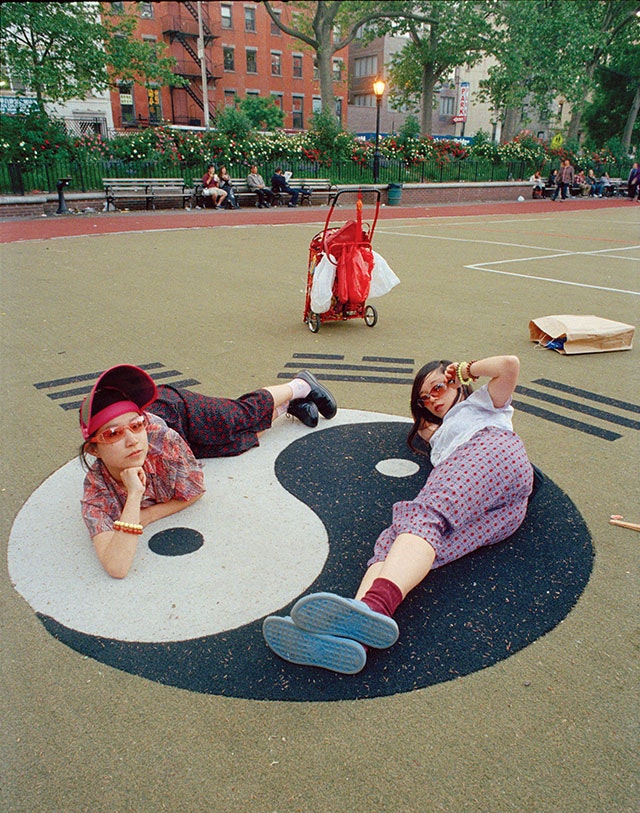
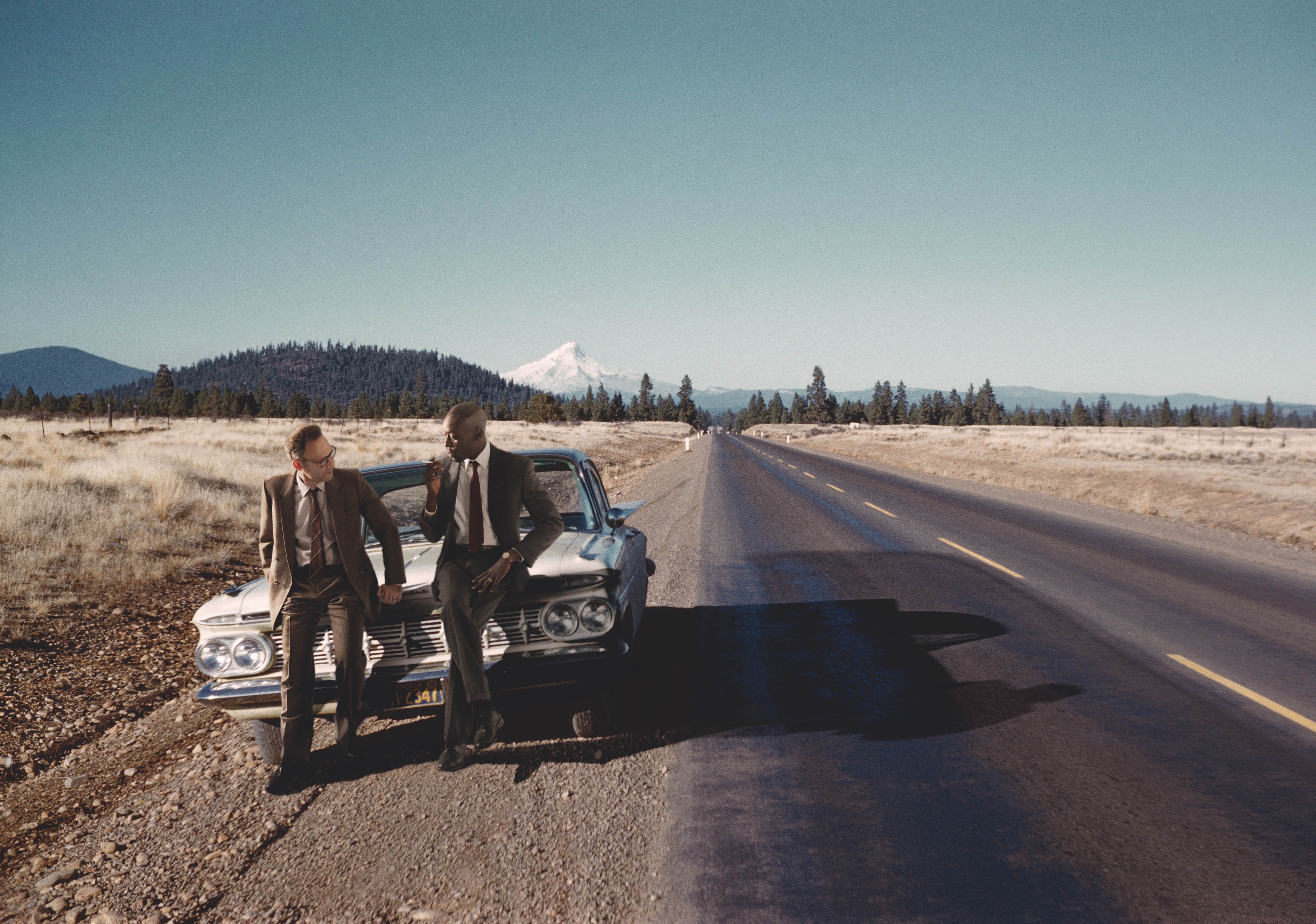
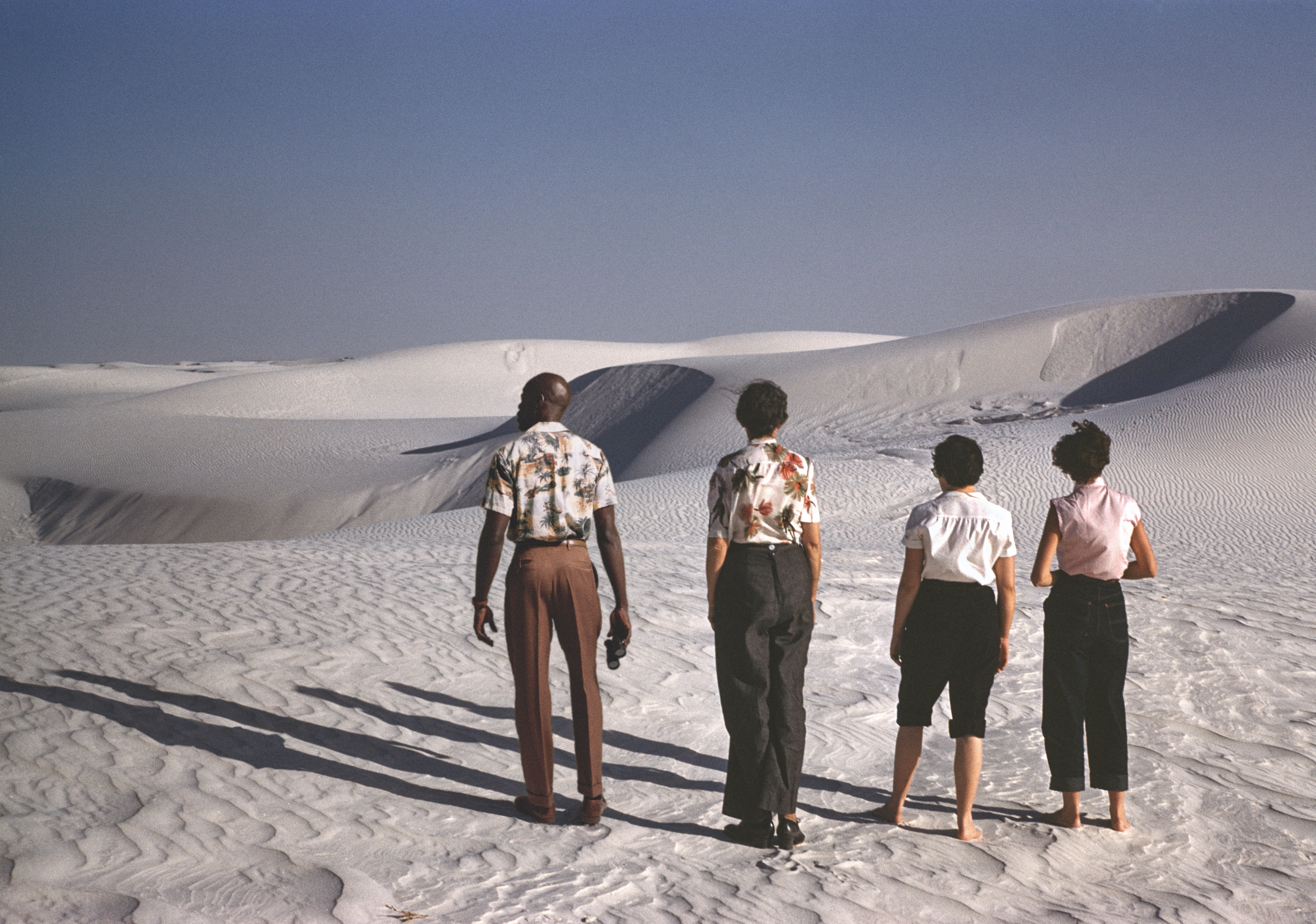
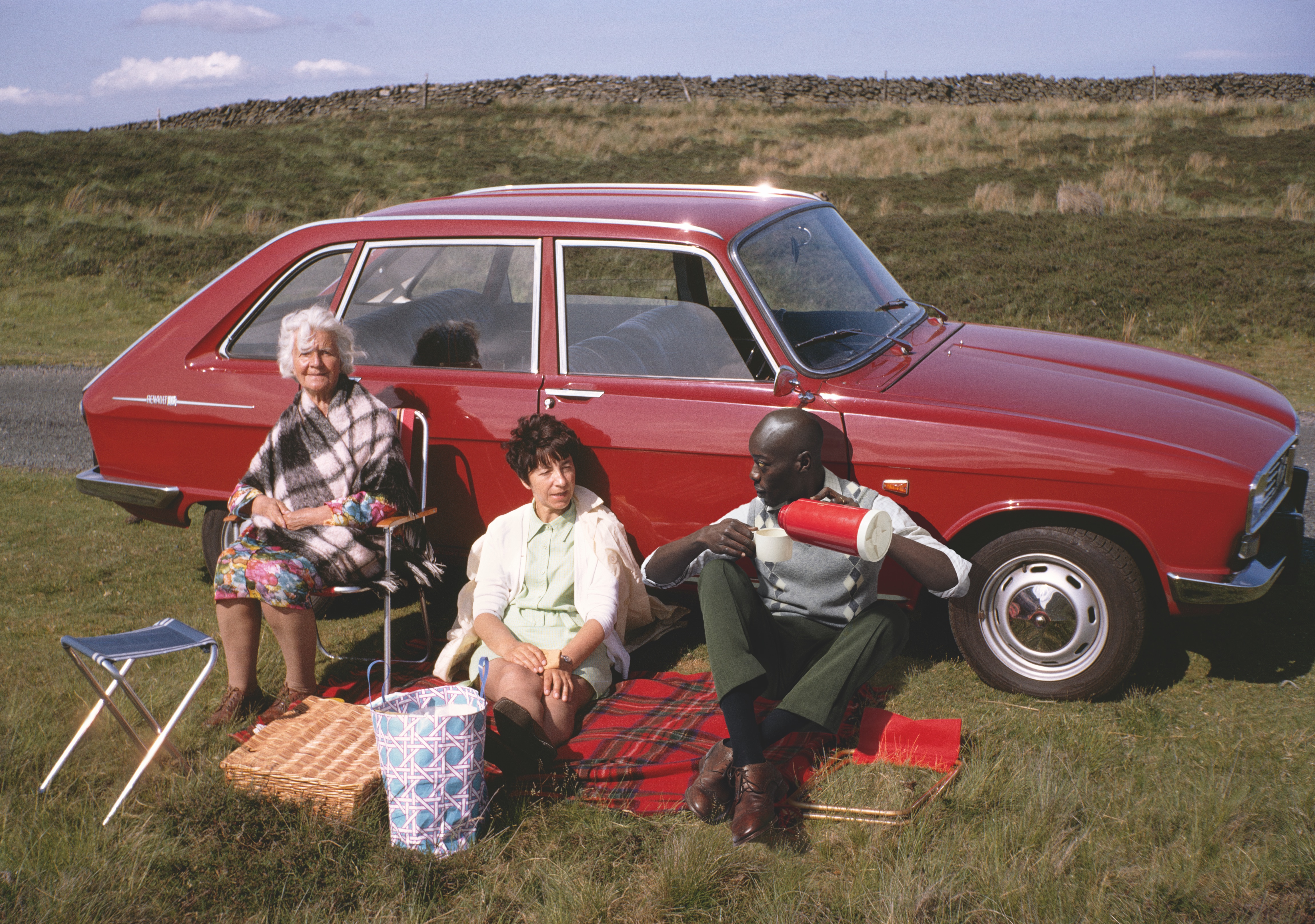
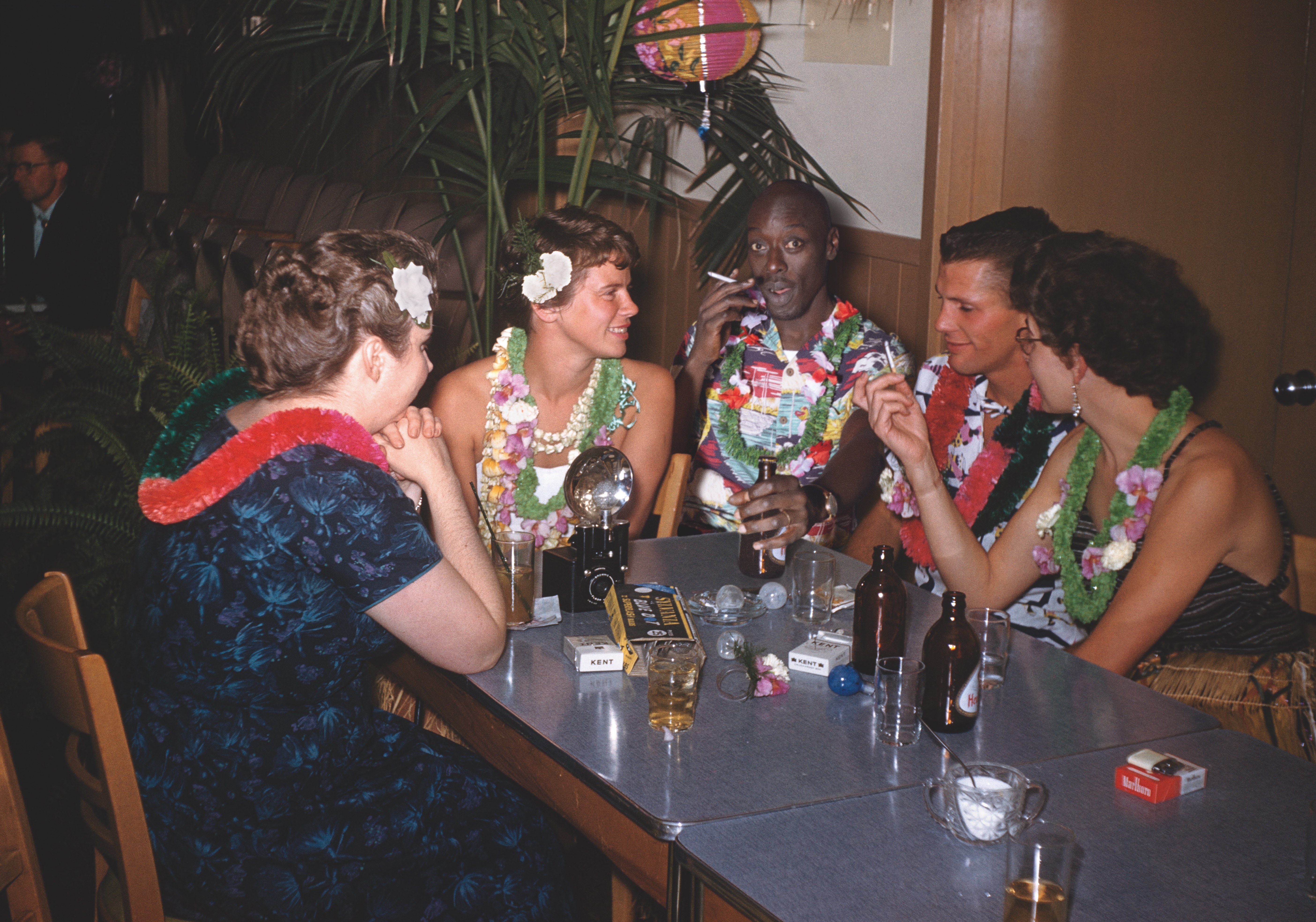
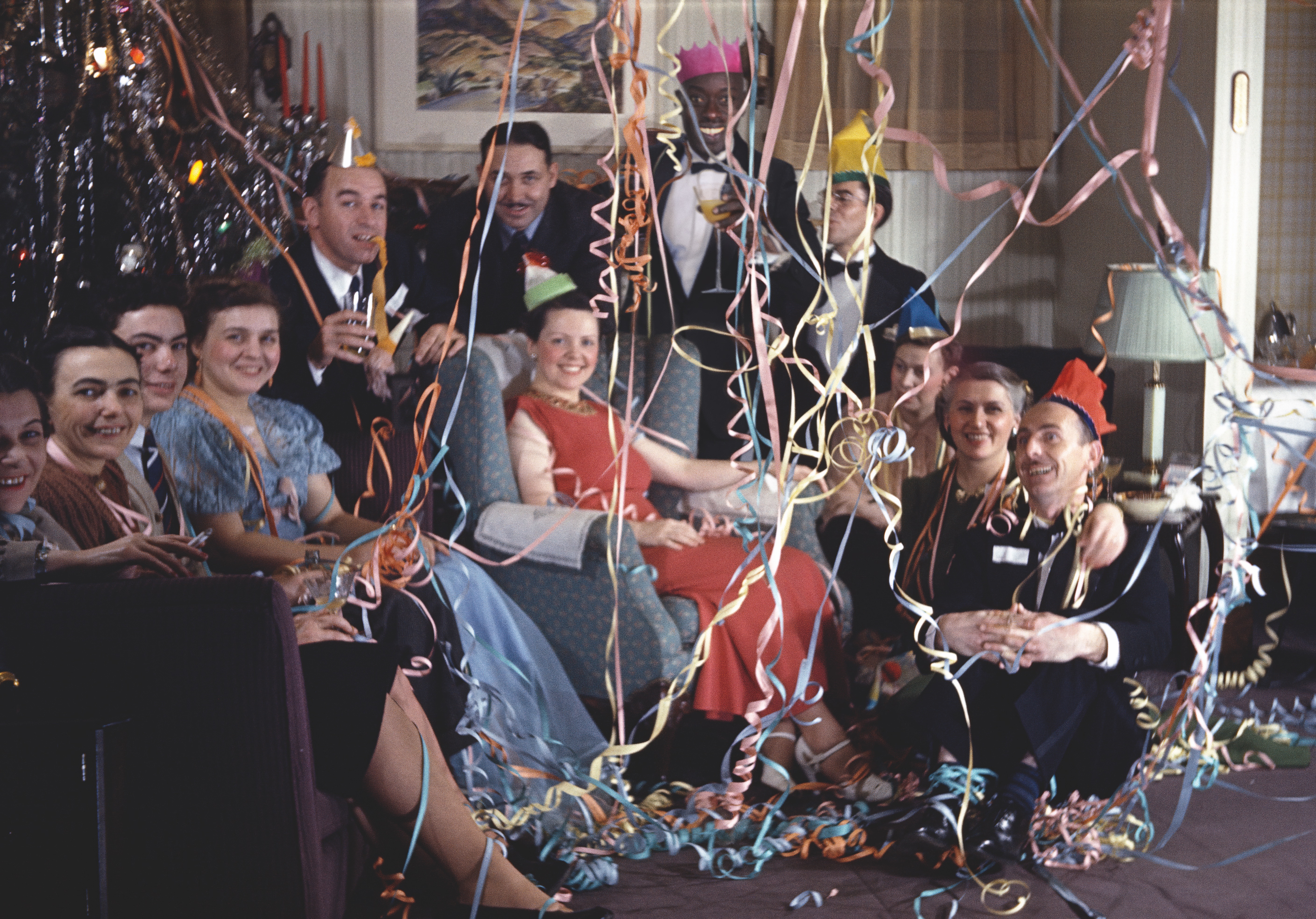
It’s this embarrassing silence that Lee Shulman (The Anonymous Project) and Omar Victor Diop are addressing by extracting orphaned and found objects from their domestic environment and reinscribing them in their social and political context. Quite the unorthodox approach. Within the precisely delineated frame of these overlooked snapshots, Shulman and Diop highlight a historical absence by means of a contemporary presence. Shulman, as the director of these new confidential scenes, has collaborated with the photographer and self-portraitist Diop to compose new images that disrupt yet do not interrupt the flow or cohesion of this reinvented family album. Although the photographs are anonymous, we know that they date from the 1950s and 1960s and were taken in North America. This was the era of Presidents Truman (1945–1953) and Eisenhower (1953–1961), but also of the Korean War (1950–1953) and the beginning of the Cold War (1945–1991). The United States were starting to feel the effects of the New Deal, Roosevelt’s economic recovery plan aimed at countering the effects of the Great Depression on the country’s poorest. The grand national narrative was famously illustrated by Norman Rockwell, among others, but that America was far from perfect, a segregationist country where part of the population, because of the colour of their skin, were deprived of fundamental rights and freedoms. The 1950s also witnessed Rosa Parks on the bus,[1] the Little Rock Nine protest[2] and the Civil Rights Act of 1957.[3] This is why, in 2018, the African-American artist Hank Willis Thomas, in collaboration with photographer Emily Shur, restaged Rockwell’s Four Freedoms series (1943) as images that emphasise inclusivity and diversity in a country still troubled by its past.
Shulman and Diop, in turn, wanted to stay faithful to the aesthetic of the original snapshots, to the point of recreating the surface texture of the photographs and the exact grain of the images. To do so, they took their cue from the Kodak colour palette, since nearly all the colour film rolls used in the United States at the time were produced by that company. But Kodak enacted a kind of segregation itself, a photographic bias of sorts: until the 1990s, the so-called ‘Shirley’ card used by its laboratories as a reference to calibrate colour tones, shadows and light during the printing process was based on a white model (who went by the name of Shirley). Whiteness is considered ‘normal’: it is the norm. When black people stood next to white people in the same shot, they were either partially underexposed or overexposed, as black skin was not rendered with as much nuance as white skin during the printing process. Albums of African-American families exist, but they do so outside the norm.[4] With this in mind, we come to understand the duo’s decision to harmonise the skin of the characters impersonated by Diop with that of the WASP (White Anglo-Saxon Protestant) families who populate these pages as a potentially subversive gesture.
The collection of images that Shulman and Diop have appropriated and manipulated is commonly assigned to the genre of ‘vernacular’ photography because it belongs to a specific community, from which it has emerged: the photographs are informal and domestic; they are mundane and banal for white, predominantly Protestant, sometimes Catholic North American families. Both utilitarian and emotional, they record ephemeral but cyclical social rituals. The Australian historian of photography Geoffrey Batchen describes vernacular images as ‘boring’,[5] mainly because they are ‘about conformity, not innovation or subversion’.[6] This traditionalism also carries with it a form of conservatism – both formal and political. As non-neutral manifestations, these photographs are active objects of the State’s ideological apparatus that materialise the structures of oppression – she is in the kitchen, he is driving the car – but also, and more specifically, promote the concept of a uniquely and universally white America. The innocent snapshot, the ingenuous album produce powerful models of social appearance, whereby the main divisions of ethnicity, race, class and gender are presented as ‘natural’. This leads the African-American author Tina Campt to ask: ‘What happens when, for example, the family portrait captures a configuration of family that does not enjoy the privileges of middle-class, heterosexual, white sovereignty?’[7] In their project, Shulman and Diop narrate the privilege of the banal, the asymmetrical access to the prosaic.
The duo play with this fluctuation between the trivial and the extraordinary that makes it possible to comment on and question history. The fictional scenarios created by Shulman and Diop rewrite history and recount the past. The French philosopher Henri Lefebvre wrote: ‘In our era, one of the most recent forms which criticism of everyday life has taken is criticism of the real by the surreal.’[8] This contemporary ‘surrealism’ is activated by the transformative power of performance: the pose becomes an intervention that denounces appearances and makes history explicit. The playful embedding reveals the isolation of the Other; the body becomes a sign of resistance to conformity as well as to political and social regulations. The outsider forces himself on an ‘inside’ previously inaccessible because of the homogeneity of the milieu. In this respect, it is interesting to note that, as early as the nineteenth century, the abolitionists Frederick Douglass and Sojourner Truth demanded that Black Americans be granted the right to representation by being allowed to access portrait studios.[9] In these circumstances, one easily understands the disturbing power of Diop’s presence in these images.
It’s odd, it’s surprising and, as a result, even makes one smile: the unpredicted in a rigidly predictable world. It’s important not to underestimate the power of humour to talk about serious matters. The flash of wit sparked by the performance works as a revealing agent – at least on the first few pages, because eventually, the accumulation of images – nearly fifty in all – triggers another feeling, horrific rather than comic. After a few pages, a sense of unease and discomfort sets in, similar to Jordan Peele’s film Get Out (2017), and you begin to worry about the physical integrity of the characters played by Diop. As in Peele’s horror film, you fear for this black man who is strolling through the everyday life of the inhabitants of white America. Is he a threat to the normative stability portrayed in these images, or are they a threat to him?
The question remains open. What is certain, however, is that with this collaborative gesture, Shulman and Diop are proposing a new way of making images that stir the imagination, by setting their targets on questions of representation and the assumptions – stereotypes? – surrounding them. There is nothing comfortable about deciding to address difference and racism, and this project is a case in point. Yet it also affirms that discomfort should not be a reason to give way to silence. Make no mistake: its lightness of tone does not prevent Being There from being a savage social critique, a satire without fear or dread.
[1] On 1 December 1955, Rosa Parks refused to give up her seat to a white man on a bus in Montgomery, Alabama. Through her gesture of protest, she became an emblematic figure in the fight against racial segregation.
[2] On 4 September 1957, nine African-American pupils were refused access to their high school by the Governor of Arkansas, despite an earlier ruling that school segregation was unconstitutional.
[3] This bill, which was signed into law on 9 September 1957, was the first step in the process of desegregating US society.
[4] See Deborah Willis, Family History Memory: Recording African American Life (Irvington, NY: Hylas Publishing, 2005).
[5] Geoffrey Batchen, ‘Snapshots: Art History and the Ethnographic Turn’, photographies 1, no. 2 (2008): 121.
[6] Batchen, ‘Snapshots’, 125.
[7] Tina M. Campt, ‘Troubling Portraiture: Photographic Portraits and the Shadow Archive’, Imagining Everyday Life: Engagements with Vernacular Photography, ed. Tina M. Campt et al. (Göttingen and Neu-Ulm: Steidl and The Walther Collection, 2020), 113.
[8] Henri Lefebvre, ‘Foreword to the Second Edition’, Critique of Everyday Life, Vol. 1 [1958], trans. John Moore (London: Verso Books, 1991), 29.
[9] See John Stauffer, Zoe Trodd and Celeste-Marie Bernier, eds., Picturing Frederick Douglass: An Illustrated Biography of the Nineteenth Century’s Most Photographed American (New York: Liveright, 2015) and Darcy Grimaldo Grigsby, Enduring Truths: Sojourner’s Shadows and Substance (Chicago: University of Chicago Press, 2015).
Dr Taous R. Dahmani is a London-based French, British, and Algerian art historian specialising in photography. She has curated both group and solo exhibitions internationally, including the 2022 Louis Roederer Discovery Award at Les Rencontres d’Arles (France) and the 2024 Jaou Photo Biennale in Tunis (Tunisia). Her solo curatorial projects include SMITH at NOUA (Bodø, Norway), Anastasia Samoylova at the Saatchi Gallery (London, UK), and Adam Rouhana at Kyotographie (Kyoto, Japan). Since September 2025, she is Curator at The Photographers’ Gallery (London, UK).
Dahmani’s writing has been widely published in photobooks and journals, with contributions to titles by Phaidon, Loose Joints, Textuel, and Tate Publishing, as well as features in Aperture, FOAM, Camera Austria, The British Journal of Photography, Dazed, GQ, and 1000 Words Magazine. She is the associate editor of Shining Lights: Black Women Photographers in 1980s–90s Britain (MACK/Autograph ABP, 2024), a critically acclaimed, award-winning publication. In November 2025, in collaboration with FOMU, she is releasing a publication titled Assemblies. From 2023 to 2025, Dahmani was associate lecturer at UAL/LCC.
Being There by Omar Victor Diop & The Anonymous Project (Éditions Textuel) brings archival photographs and Diop’s self-insertions together to explore identity, memory, and representation. This excerpt by Taous Dahmani is republished here in collaboration with Éditions Textuel and Photography+, highlighting their shared commitment to celebrating photography’s power to question and reimagining everyday life.
Being There can be purchased directly from here.