During the first part of his residency, Jermaine Francis shares about his research on the archival imagery of the transatlantic slave trade, developed together with his colleague Deborah Ireland. In presenting the work, he reflects on the role of social media in circulating and propagating violence. In response, the images he shares on Instagram are redacted, accompanied by a short description. A link to this page is provided, where people can decide to view the images in a fuller context. Jermaine adds sound as an intervention, offering a way to view the images and events shown beyond institutional categorisation.
Week 1
Tuesday November 18
“It is said that the camera cannot lie, but rarely do we allow it to do anything else, since the camera sees what you point it at: the camera sees what you want it to see. The language of the camera is the language of our dreams.”James Baldwin, Devil Finds Work essay, Congo
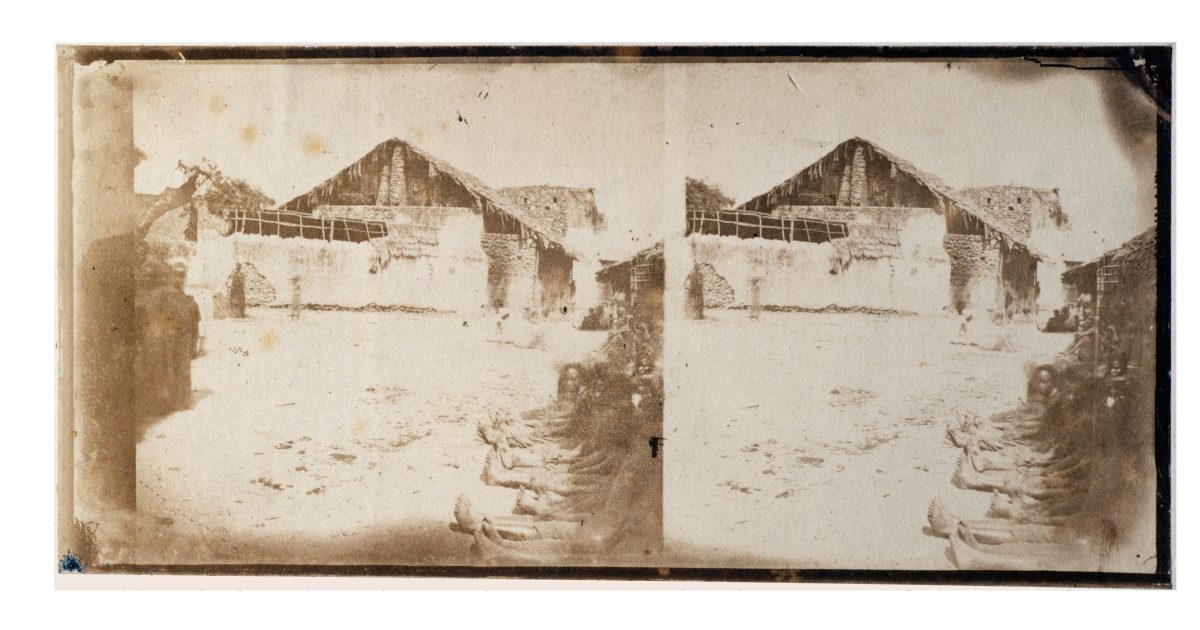
The image credit is Stereograph Slave Market Zanzibar by James Augustus Grant, year 1860. Source: Royal Geographical Society. This journey all began when Photo Historian, writer, curator & researcher Deborah Ireland approached me with a set of photographs related to a violent history. This imagery was related to the slave trade of the transatlantic. These images originated from a particular period between 1800 to 1900 of a slavery trade that existed on the East African coast and the interior way before. In this project, specifically to Zanzibar and the routes from there. A history that Deborah and myself would find these stories has been left dormant, voices silent in the archives. The screams of the voices may be registered, but are abstracted, fragmented, and never fully their own.
Slave market-place, Zanzibar - very difficult to take - slaves & Arabs kept running away leaving only a line of women slaves whose legs and a face or two may be observed - the women's entire dress is a little blue cotton sheet or cloth tied tight under arms and extending as far as the knees - their heads are cropped as short as scissors can crop them - very often they have for ornament a hole through the upper lip - at the market they come out very clean - houses are blocks of coralline partly plastered - an indistinct wily Arab squats to the right eyeing the women. James Augustus Grant (1827 - 1892) Stereograph photograph taken with the dry collodion process. Using a Bland & Long stereoscopic camera with prepared dry collodion plates Bland & Long, Opticians, photographic Instrument makers to the Queen. Measurement 3 1/4 x 6 1/2 inches, 1860. Source: Royal Geographical Society
The images for the platform I have decided not to show the captions adjusted, and intervention, an act of refusal to replicate, reanimate the violence of the images. To flatten the people to spectacle in an online context felt problematic. The links to the images are provided for your viewing, the context of the images is provided. The adjusted captions are both descriptions, combined additionally with the sonification as interventions to consider beyond the categorisation of the Institutional caption and the violence of the images. How does one deal with such material, myself the underlying premise was the people in these images considered beyond the caption, reduced to a single being. Instead of centring on just asking what we think, I have positioned the question to speculate what ‘they’ think when they are looking into the lens. How does the camera function within the archive, how can reimagine such material to suggest ideas beyond the categorisation and flattening of those in the frame. While also confronting the historical injustices that have been inflicted on the people within the frame.
How do they identify themselves, beyond the reduction of Black African Slave? Can we look towards Glissant’s plurality & difference of the ‘consent to be more than a single being’. How did the people categorised as Black African Slaves see themselves. Ethnicity, A Tribe, a Land a Home? They are lovers, kin, mothers, fathers, sisters, brothers, sons, daughters, cousins, people, HUMAN.
Thursday November 19
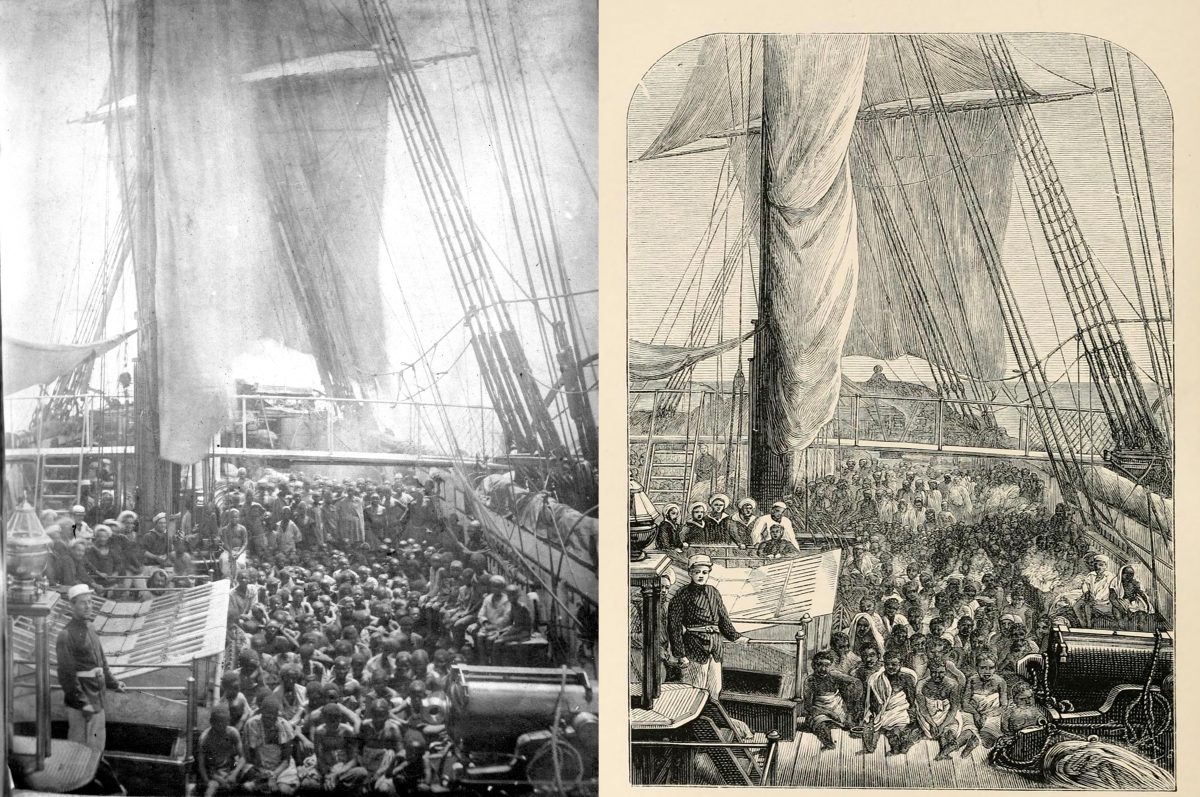
The image illustrates the industrial nature of the slave trade; people are dehumanised and reduced to commercial products. Like the Transatlantic trade, the East African slave trade’s priority, in regard to transportation, was the maximisation of cargo.
The image shows the stowing of slaves originating mainly from East Africa and parts of Central Africa in “Arab dhow” ships, packed on top of each other in many rows, in what could be described as crouching positions. The sea was just part of the transportation; there are technically two middle passages in the forced migration of black, darker-skinned people from their lands: the passages of the desert and the ocean. The question I ask is: what is the philosophical mediation of the wreckage of the two middle passages?
Illustration of Arab Dhow Ship Dhow Chasing in Zanzibar Waters and on the Eastern Coast of Africa, by Captain George Lydiard, 1873 Royal Geographical Society