

Part of Photoworks Festival 2026
A resource inviting you to try new things through playful experimentation using the printed image as starting point.
Introduction
My name is Alma Haser. I am a multimedia lens-based artist. It’s hard to describe what I do, because I tend to fall into a lot of fine art categories, but since I use a camera or photograph at some point in my production, I sometimes call myself a photographer too. I like to make work that is both challenging for me and the person viewing it. Questioning how it is made or what is real and where does the photograph begin and end. I use paper manipulation techniques such as folding, cutting, weaving, and layering. I will often re-photograph my work, layering my imagery within the camera, sometimes it’s hard to know when to stop! My practice is very playful and I like to have fun with it, trying out new things and experimenting with different mediums. The printed image is a starting point to a lot of that play.
I thought it would be nice to set up a few tasks based on how I work.
Create a 3D photograph sculpture:
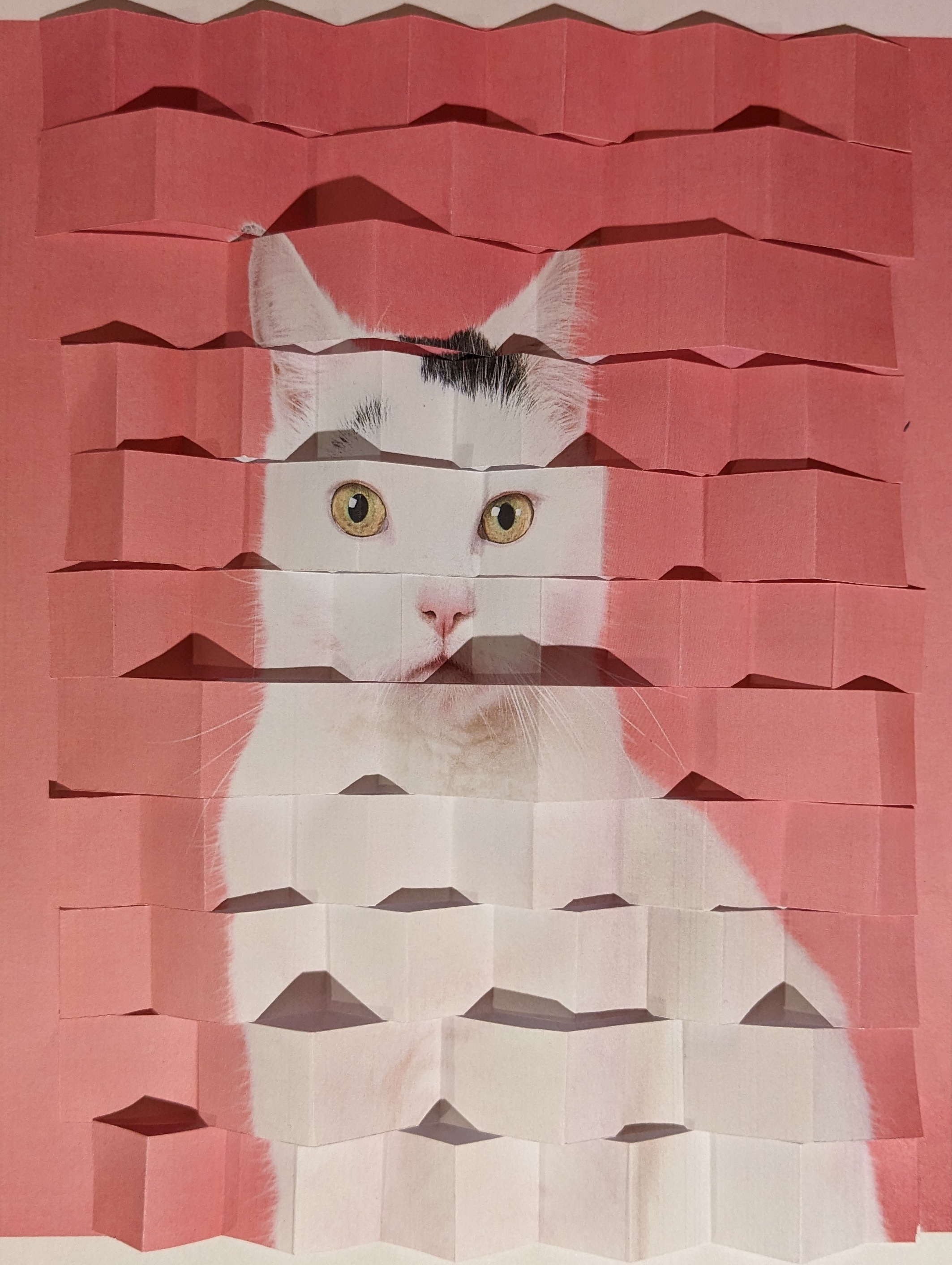
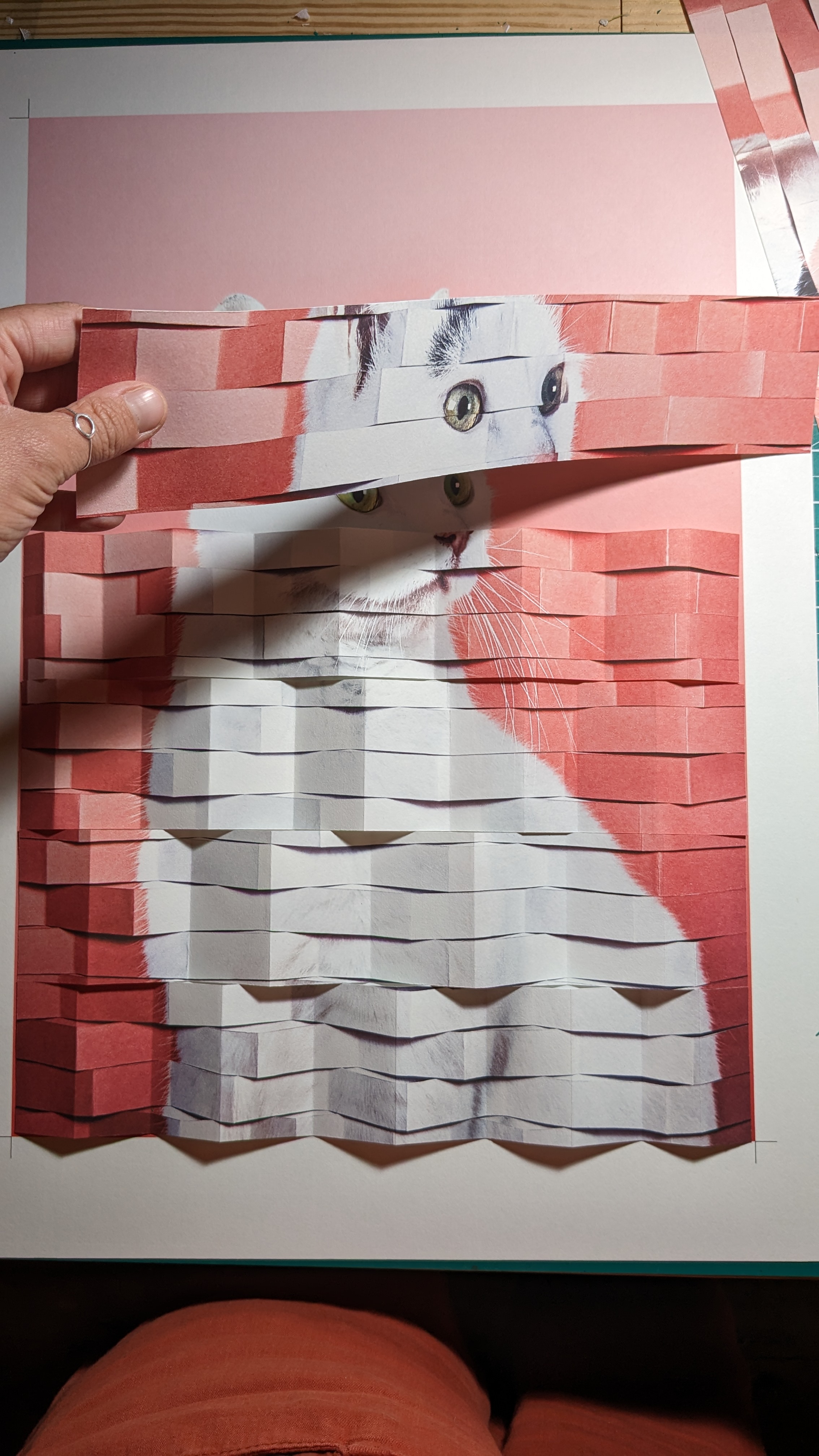
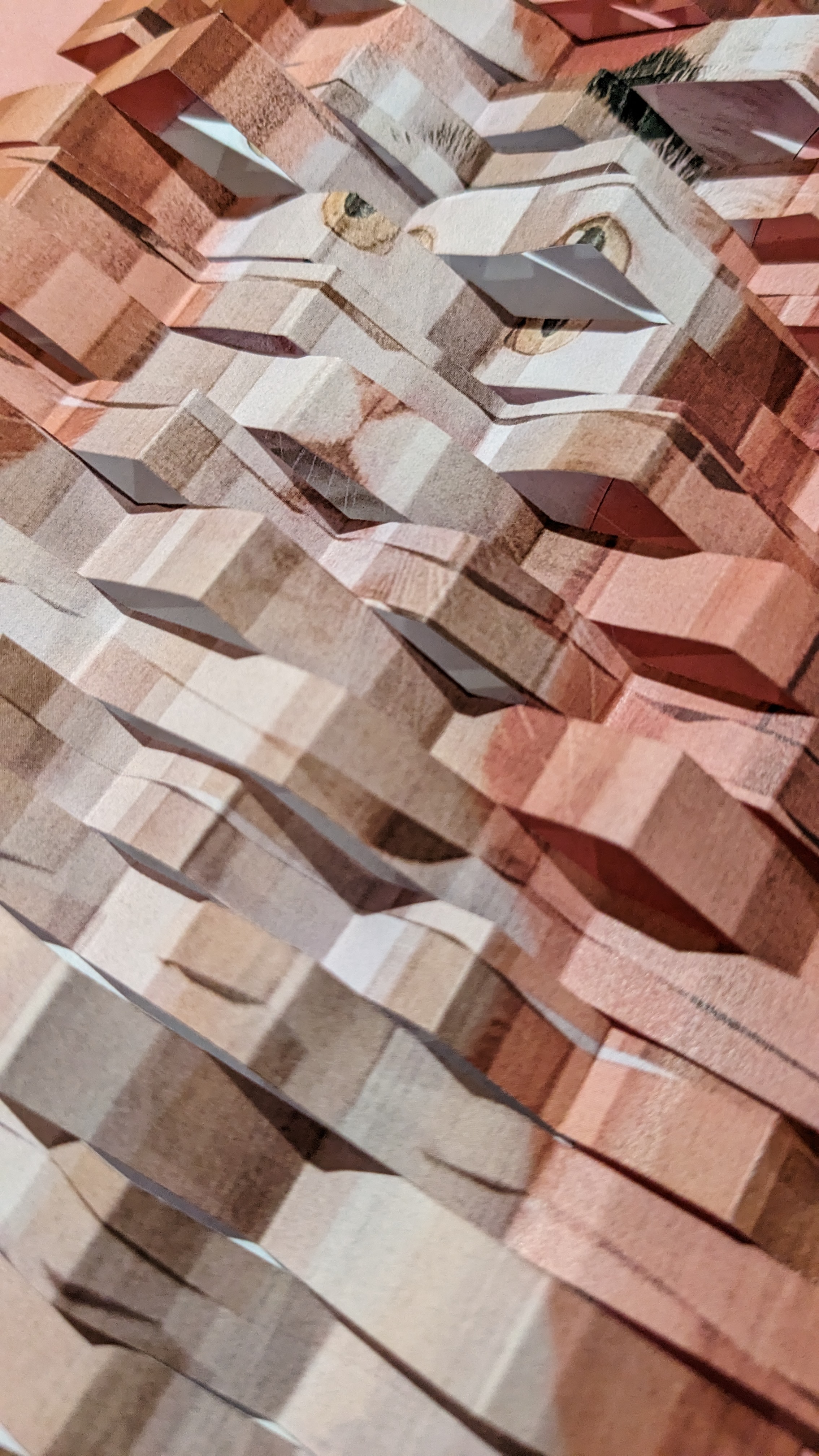
Using a photograph, cut, fold and reshape the image, then stick on top of the print. Try photographing your sculpture with hard light seeing where the shadows fall. If you want to create even more intrigue and confusion, why not print off the picture of your sculpture, fold and reshape it again. The original cuts and lines will be visible and make it harder to decipher where things begin and end.
Here is an example of one of my pieces using this technique. The final artwork is framed as a 3D photograph, which can be seen at Hove Museum of Creativity until January.


Inspiration
A good example of an artist who plays with photographic imagery and the 3D sculpture element is Daniel Gordon. He photographs still life, printing them off and shaping them back into their original form before photographing again. Really pushing the boundaries of what is 2D and 3D.
Vanessa Woods, is another useful reference. She cuts her black-and-white photographs to create collages that can feel three-dimensional through the use of hard shadows.
Creative prompts
- Fold
- Cut
- Remove
- Duplicate/Repeat
- Weave
Activity
Breaking into the photograph
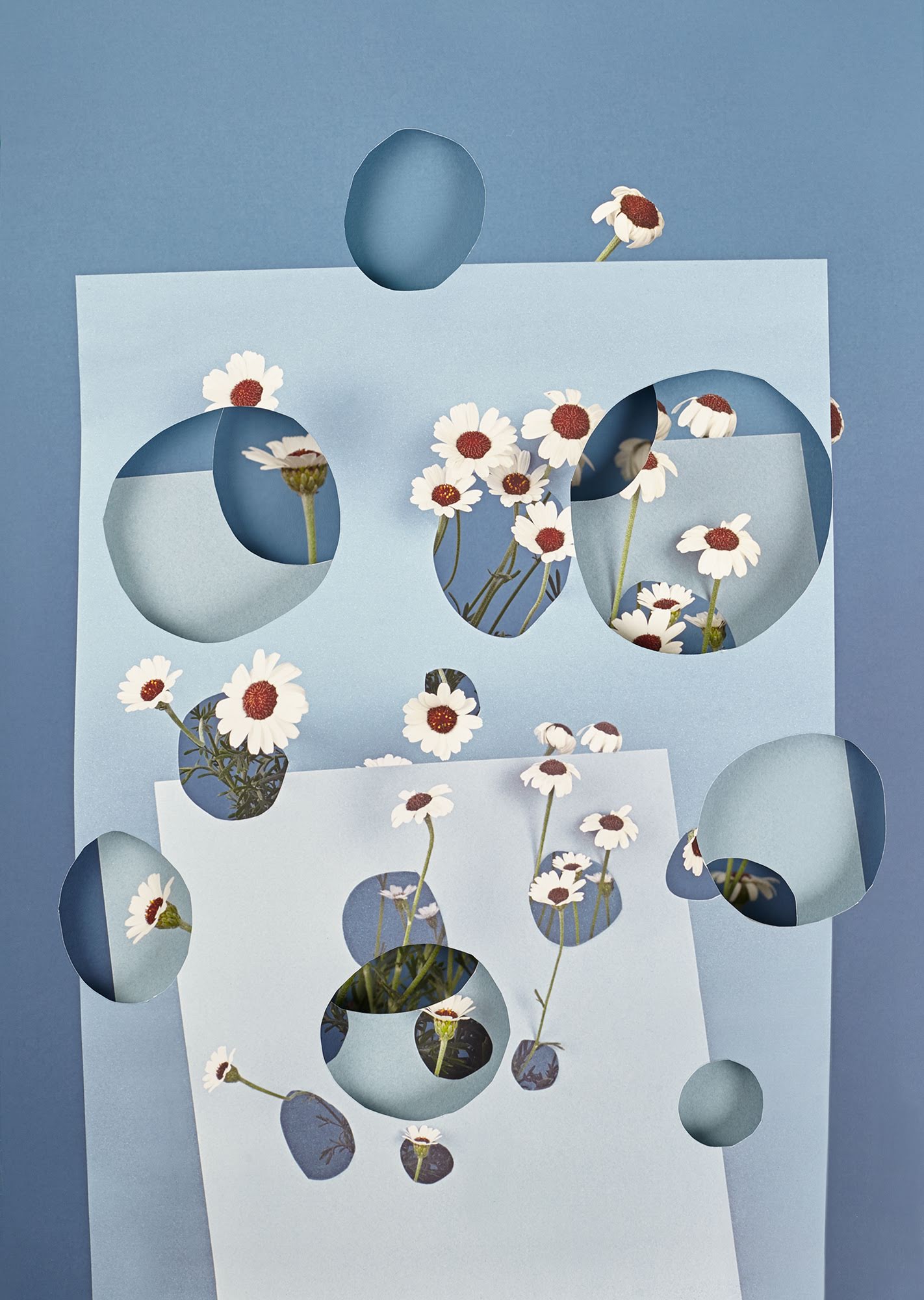
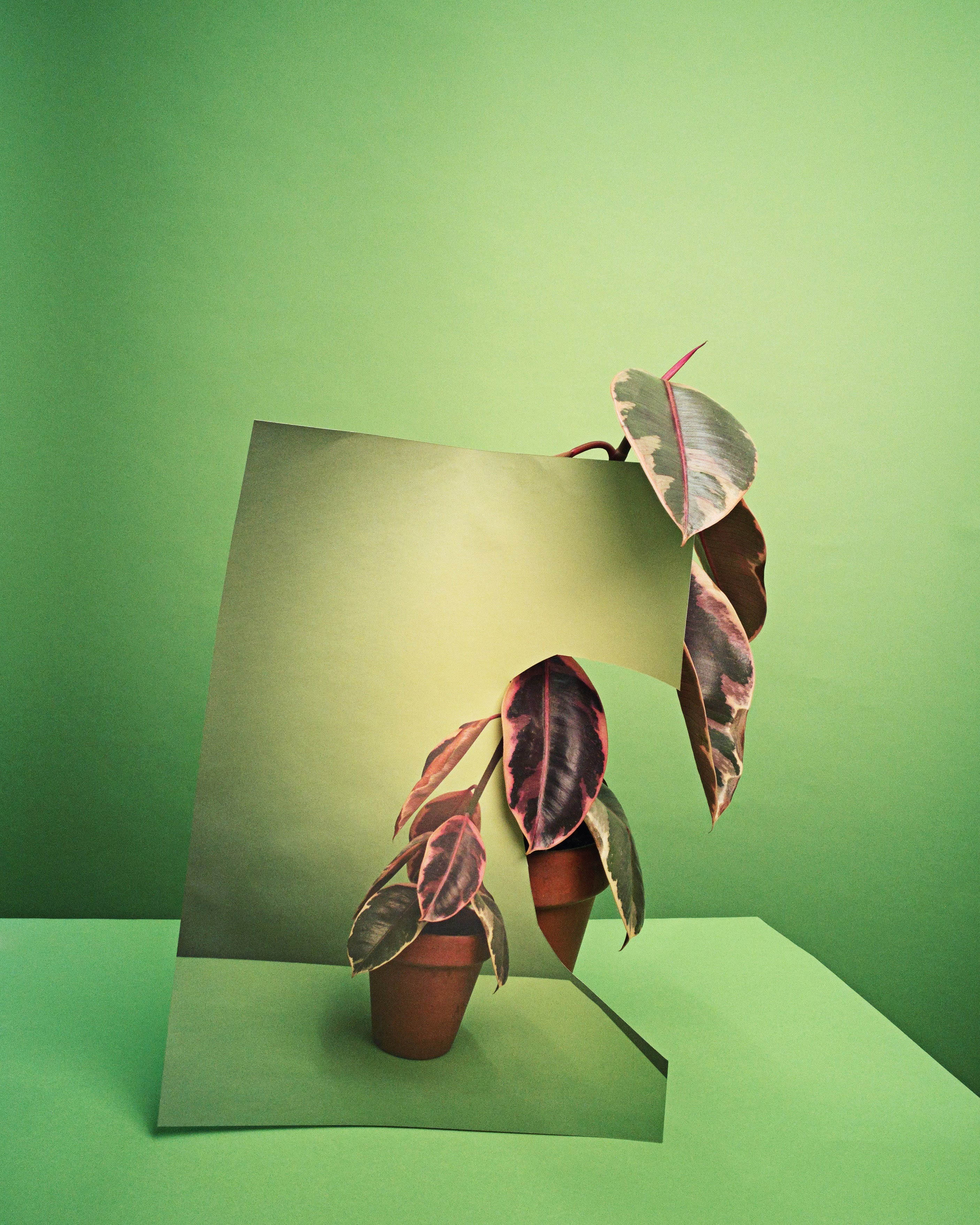
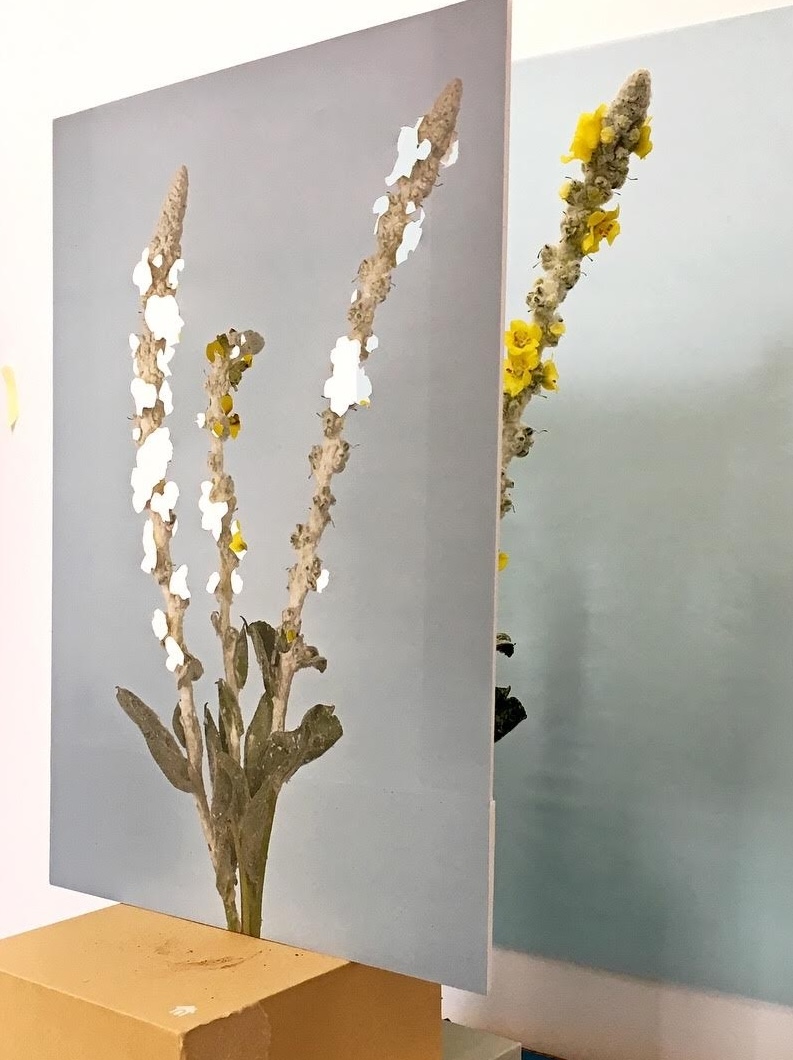
Why not try this out, the subject can also be still life. I have used this technique in my series ‘Pseudo’ using plants. I tend to do a few layers, printing and re-photographing, but as you can see, one layer can also be enough to have an impact.



I have also used this technique in my series Everything has an end only a sausage has two, a project about German idioms directly translated into English and then turned into photographs.
And, for my series on Motherhood, I photographed mothers and their children as they grew and changed. I had my photographs printed onto fabric and brought them to my shoots with the mothers, getting them and their children to interact with their past images. The outcome is both beautiful and claustrophobic and slightly messy, which feels fitting to what motherhood can feel like.
You don’t have to use fabric to create images like this, but why not get students to interact with their images. Johnny Briggs is another great example of an artist who does this and a great inspiration to me as is Hicham Benohoud and his project and book ‘The Classroom.’ Carolyn Drake is another huge inspiration. In ‘Glorify Yourself’, the camera captures her physical interactions with a beauty and charm guide that proliferated widely in the US during the 1940s and 50s.
Challenge
Understanding your identity through collage
Here’s a playful challenge: invite students to create a collage of themselves.
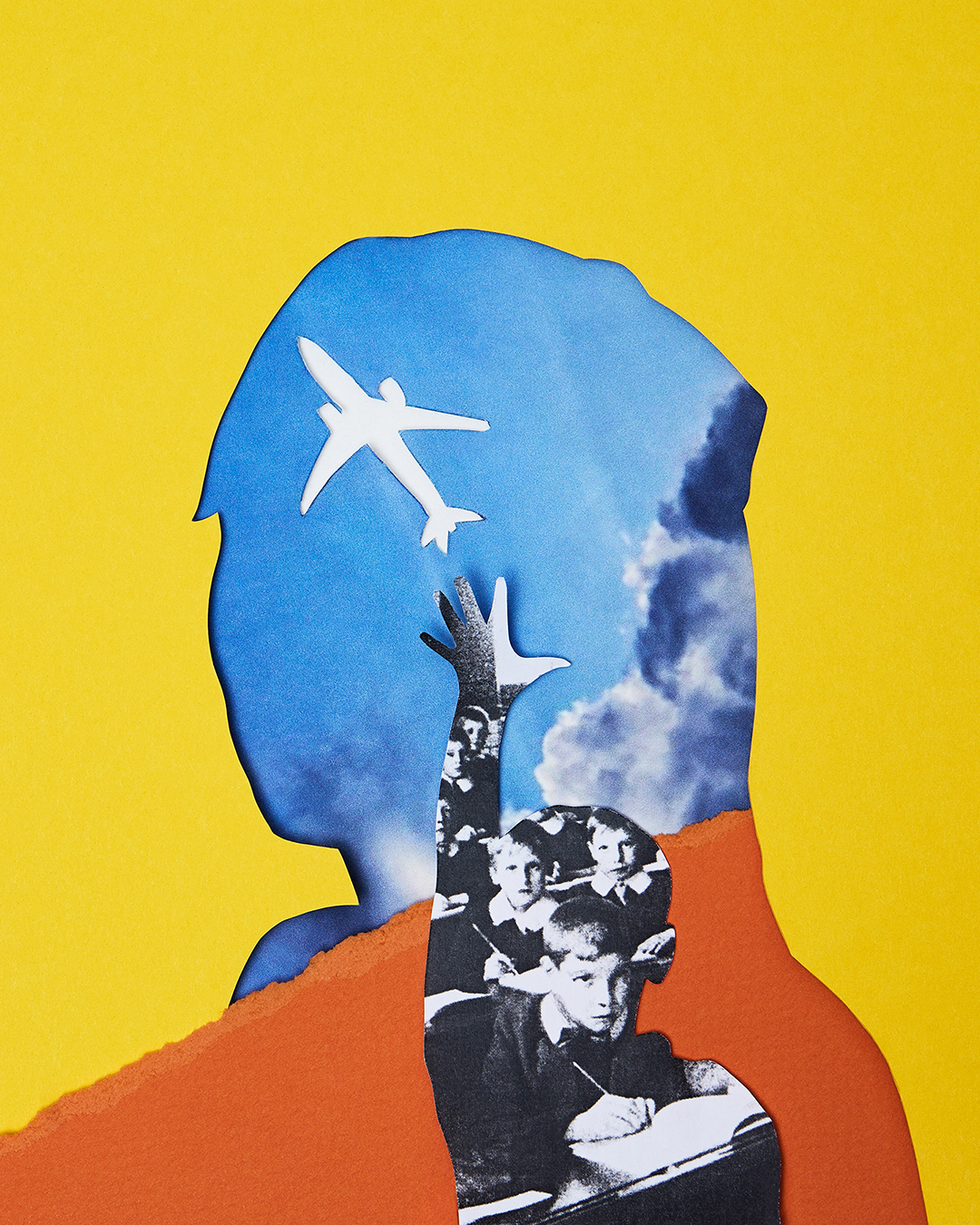
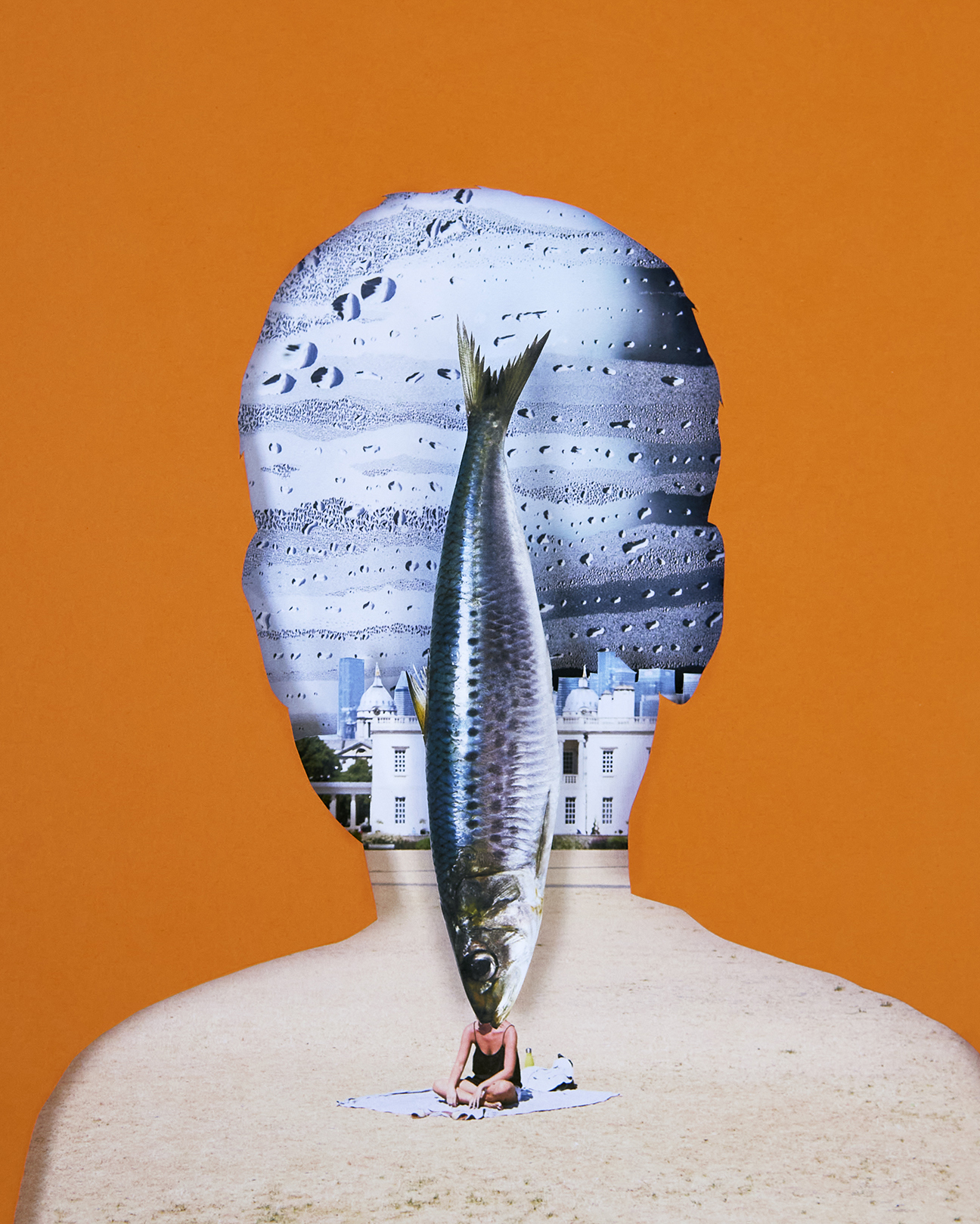
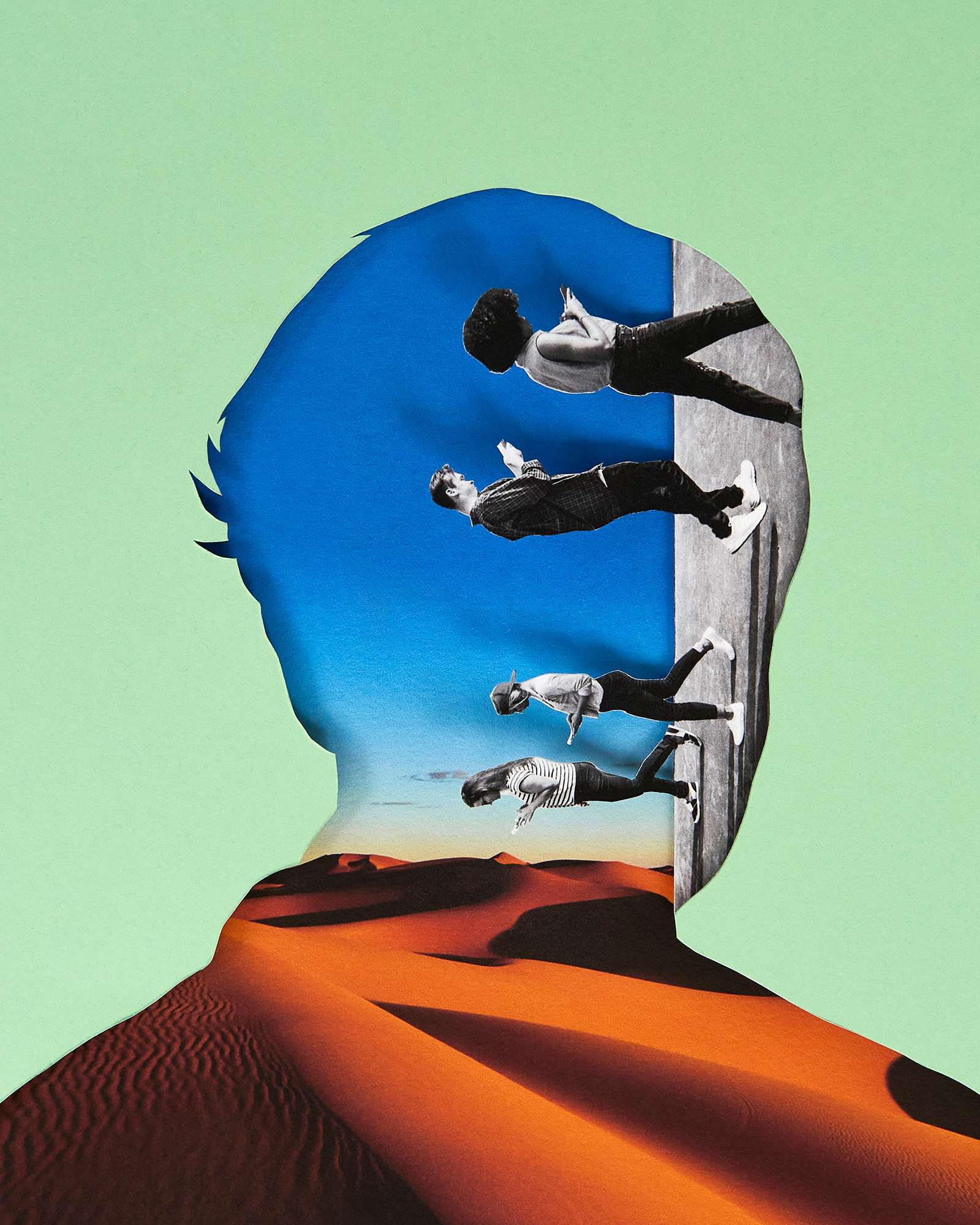
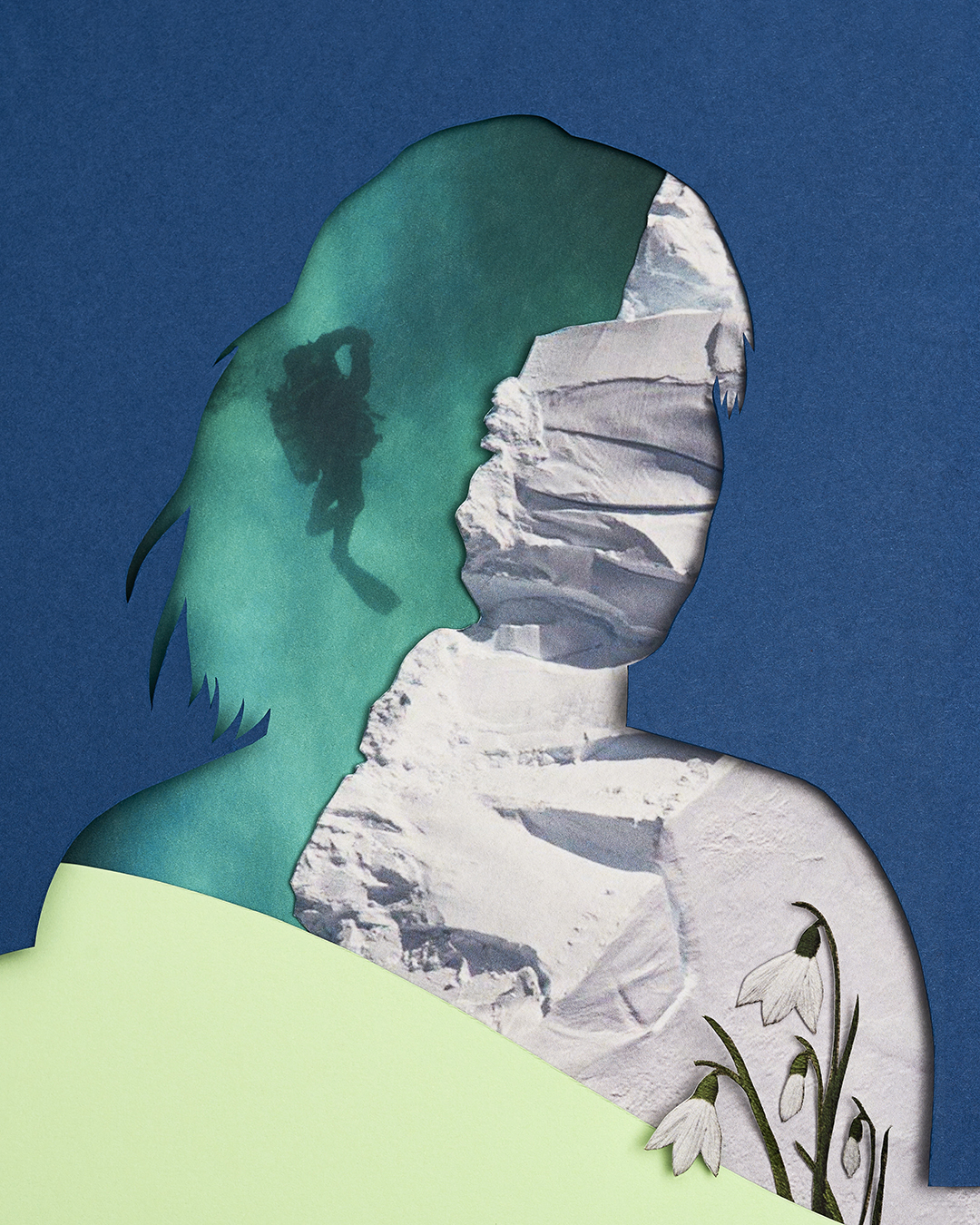
Here are some examples of my commissioned collages.




Get the student to take a head on portrait and use this as their silhouette. They can use the actual photograph or use it as a template and cut from coloured card much like my images.
Students should then find images of things they like or feel represent them. Or to make it more abstract, represent what’s on their mind. Next, students cut and place these things within their silhouette using it as a frame and help them structure their collage.
Top tip: the less they put inside their portrait, the easier and more graphic it will be.
Students then either stick everything down when they are happy or add bits of foam board or card under parts to raise them up, so they create shadows between the layers.
Artists that use interesting techniques to manipulate photographs through cutting
Research and inspiration
You don’t always have to get it right on the first attempt, don’t worry about messing it up, sometimes your mistakes will turn out to be a success. Erik Kessels Book Failed it! is a great little book to use as an example of this. Try and use your mistakes or offcuts to create some new work.
About the Contributor
Born in 1989 into an artistic family in the Black Forest, Germany, Alma Haser is now based in South East England. She is known for her complex and meticulously constructed photographs, which are influenced by her creativity and her background in fine art. Alma creates striking work that catches the eye and captivates the mind, often calling in question the nature of what is real.
Expanding the dimensions of traditional photography, Alma takes her photographs further by using analogue techniques, such as inventive paper folding, collage and mixed media to create layers of intrigue around her subjects; manipulating her photographs and blurring the distinctions between two-dimensional and three dimensional imagery.
Since having children, her work has evolved and adapted to the time constraints she now faces. The experience of Motherhood has become a daily source of inspiration and has incorporated itself into her practice as well as inspiring one of her most recent bodies of work ‘Tired. Warrior. Defeated. In Love.’ Alma’s work often makes us question our sense of what is real, seeking to expose the pretend. Through the use of her unique paper collage layering and re-photographing techniques, Alma’s analogue process liberates the potential of paper and the human hand.
Alma has won many awards for her work, including the Magenta Foundation’s Bright Spark Award for her Cosmic Surgery series (also the basis of a successful self-published book project). Her piece The Ventriloquist won fourth prize for the Taylor Wessing Portrait Prize at the National Portrait Gallery. Alma also won the PDN Photo Annual Award for her Eureka Effect series. Her work has been exhibited worldwide.