
Part of Jerwood/Photoworks Awards 5
A resource exploring themes of memory, community and change through the work of Sayuri Ichida.
Introduction
When we lose a community space, sometimes we aren’t fully aware of its impact on people. What does it mean to lose a space? What happens to the memories, and how does it affect the future?
One space can hold numerous memories, carrying a different story for each person. How can we look past factual representation and bring to the surface the intimate stories and memories shared that brought these spaces to life.
This resource is written by Phoebe Wingrove and invites students to explore themes of memory, community and change through the work of Sayuri Ichida. Students are encouraged to visualise the loss of a space that holds meaning for them. To share their personal story and connect others to understand and acknowledge the impact of its disappearance.
All activities can adapt to take place both inside and outside the classroom.

Sayuri Ichida 空席 (Kūseki) – Empty Seats
Growing up in the rural landscapes of Niigata prefecture (district) in Japan, photographer Sayuri Ichida’s project, entitled 空席 (Kūseki) – Empty Seats, tells a compelling social narrative of her native country — one that threads together memories of her childhood, place, the shifting face of rural life, and the quiet disappearance of population.
Japan is currently facing a fast-growing decrease in population especially in rural communities. Between 2002 and 2020, nearly 9,000 schools closed with an average of approximately 450 per year. The lowest birth rate on record, combined with the accelerating shift of migration and cost of living, has amplified this loss. Places for youth, specifically schools, are vanishing, swallowed up by the surrounding landscapes.
From the early stages of conception, Sayuri’s concern has deepened into a desire to connect this phenomenon between both her homes, from Japan to the UK where she has lived for nearly a decade. In England, in 2023, over 90 primary schools were closing or at risk of closing and 88 were more than two thirds vacant. Her project reveals a striking transnational dialogue about the scarcity of younger populations.
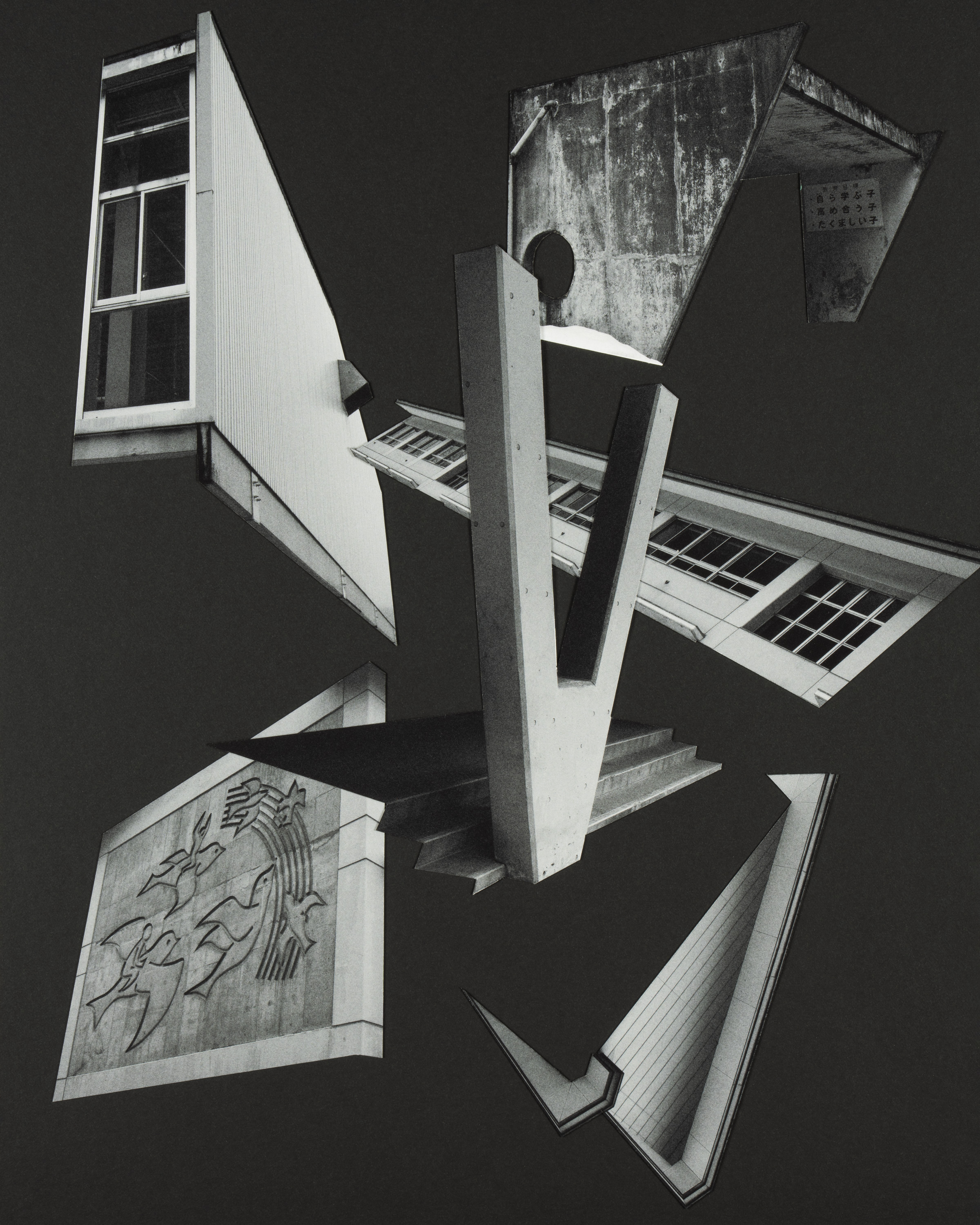
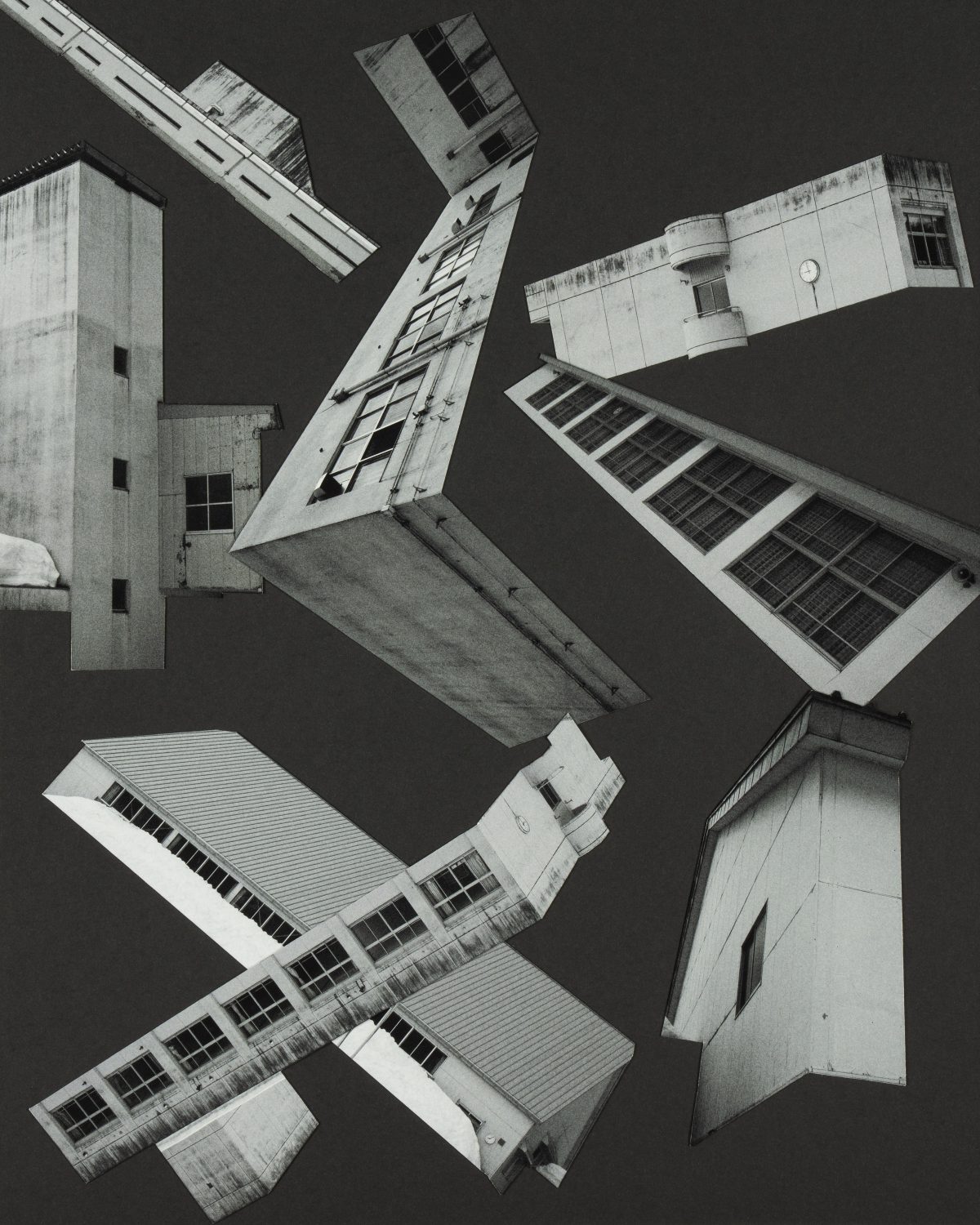
空席 (Kūseki) – Empty Seats consists of a gallery installation spanning photography and collage, sound and drawings. By merging these mediums, Sayuri constructs an immersive environment where sound and image intersect. It grapples with the implications of a story often reduced to statistics and data, translated from Sayuri’s research, into photographic collage, and applied to this large-scale piece.
I. Investigate
Activity: Local Research
In pairs or groups ask students to research a space in their locality that has closed, is closing or could close in the future that means something to them personally. It might be a community hall, park, nursery, youth club or hospital. Use newspapers and websites to research this space.
Whilst researching, here are some prompts students can think about and make notes on:
- Why is it personal to you?
- What memories do you have in that space?
- Has the space changed over the years?
- Why is it closing?
- Who does it impact when it closes?
II. Make
Activity: Research / Photographs / Archives
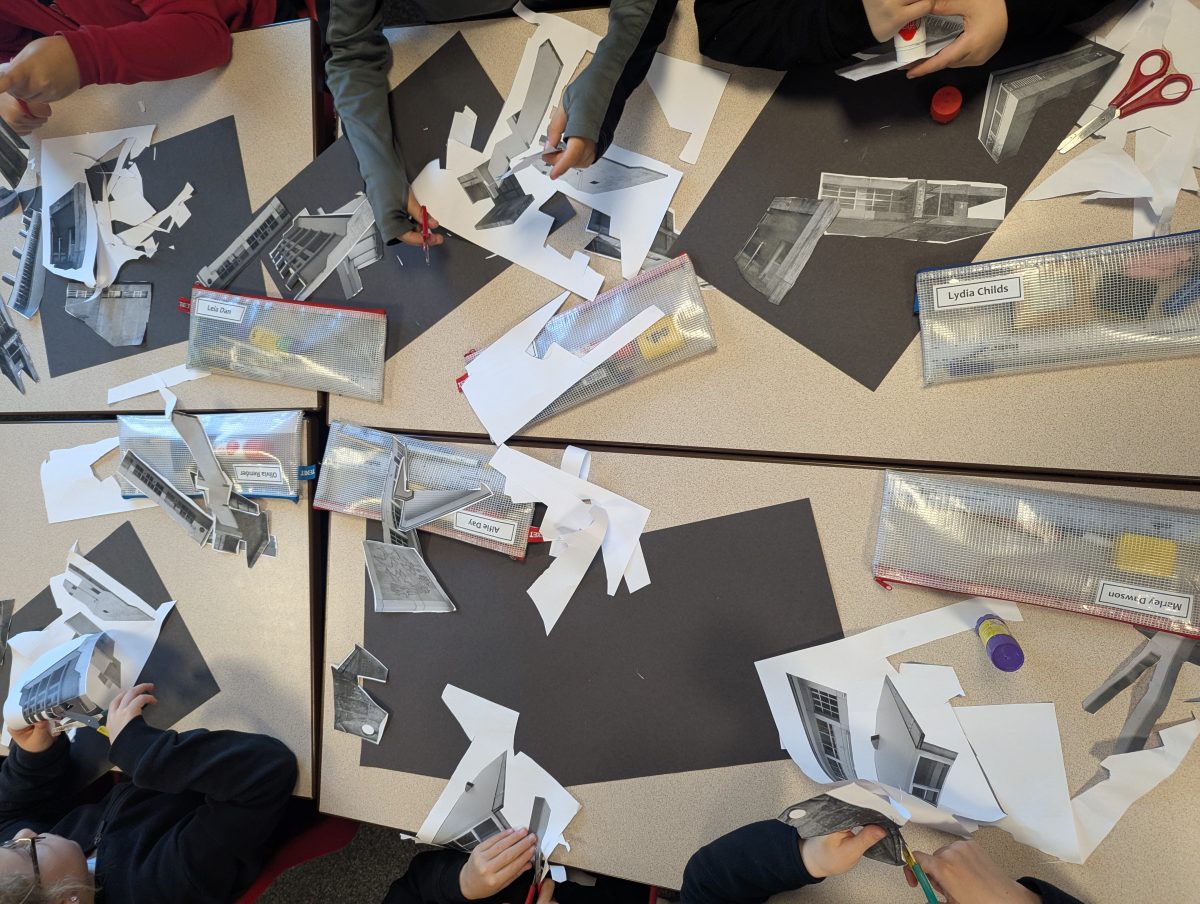
Ask students to find photographs in newspapers, local archives or online of the space and print copies of them. This activity could also happen outside the classroom – ask students to visit the space and photograph it, making sure to capture different angles, both wide and close-up so that they have a variety of images to play with to tell the story.
Note: ensure students ask permission if they want to take photographs inside a space or on private land.
Activity: Drawing
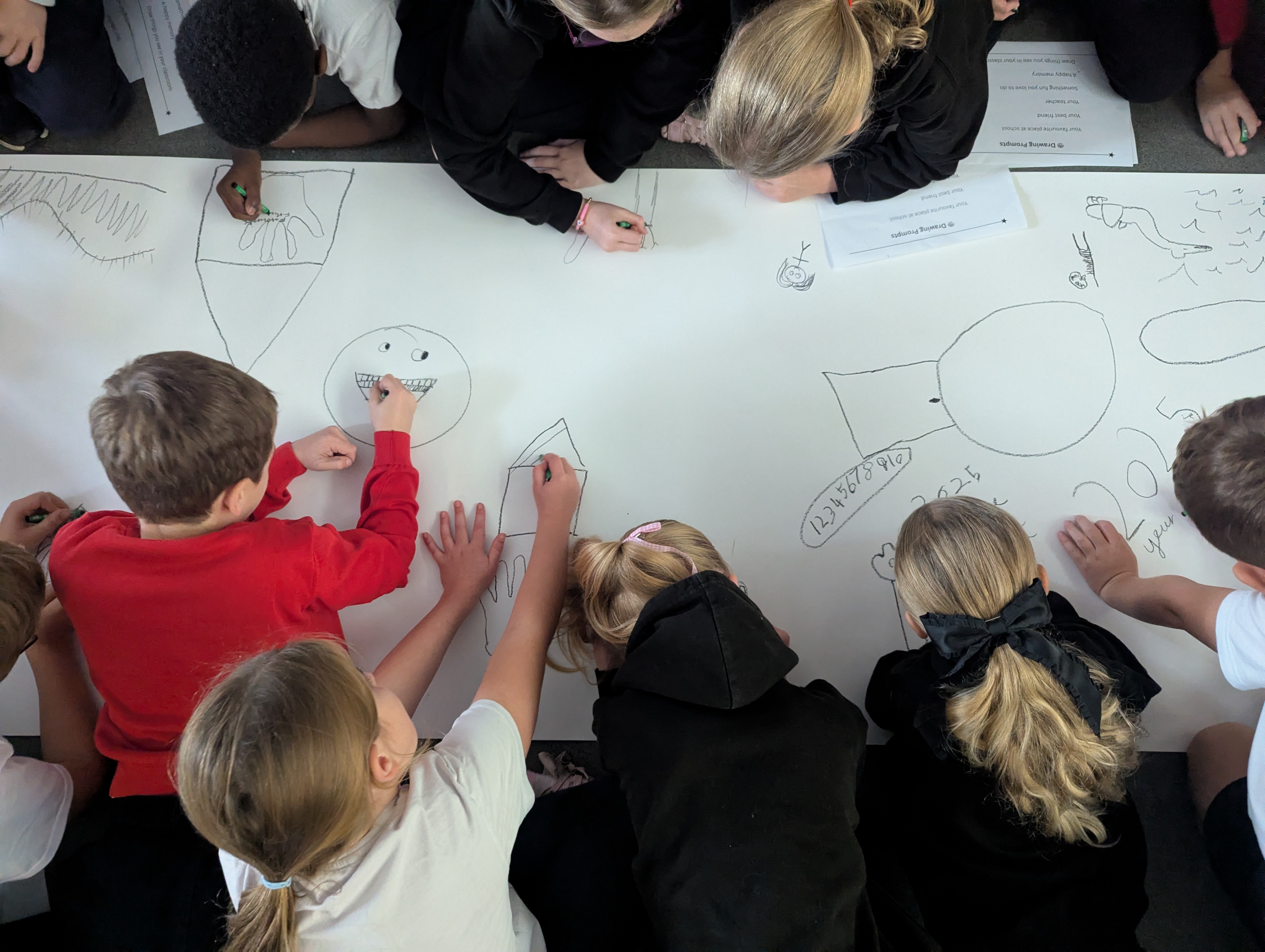
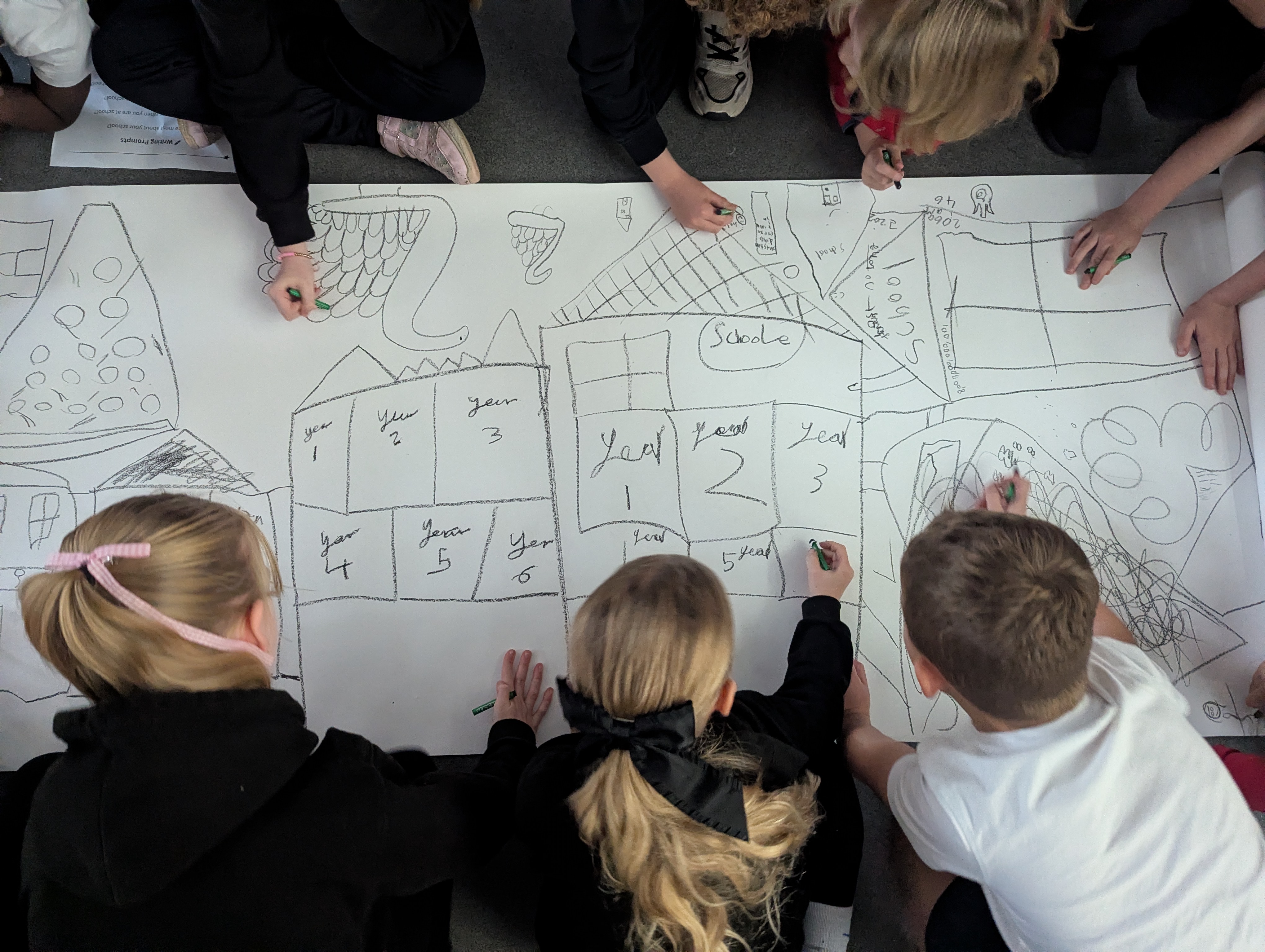
As part of the 空席 (Kūseki) – Empty Seats project Sayuri worked with school children to bring their voices and experiences back into the conversation, creating a living bridge between the empty schools in Japan and today’s classrooms in the UK.
Ask students to write messages or make drawings in response to these prompts:
- Think about the memories you have of this space; how do they make you feel?
- What objects, words or symbols could represent your memory?
- Try illustrating the words, bringing them to life through colour and texture.
- What emotions do you feel when thinking about the space closing?
Materials: Provide different types of pens, crayons and pencils, as well as a range of papers like tracing paper and newsprint so students can overlay the drawings onto the photos in the next activity.
Activity: Collage
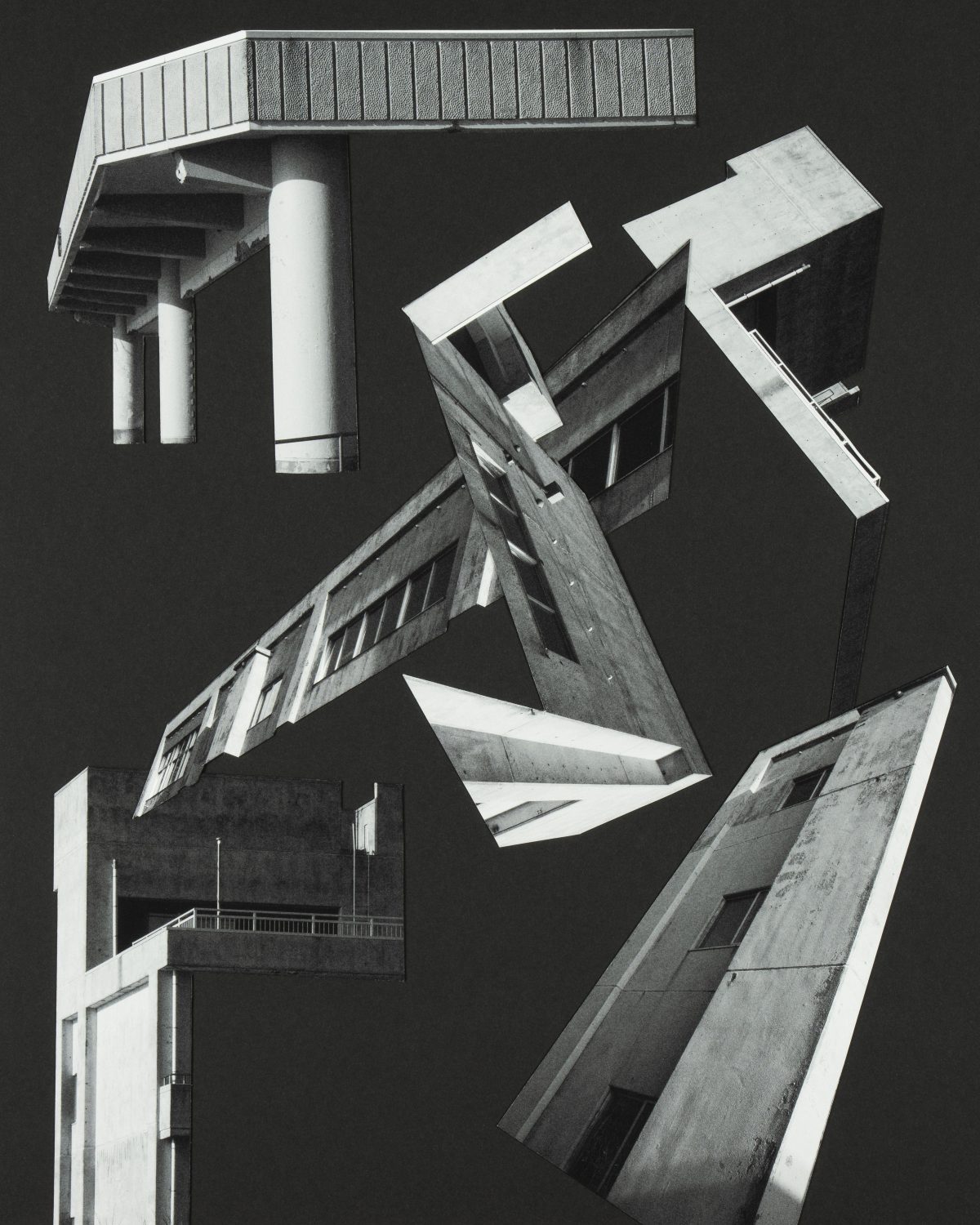
Sayuri aims to share her shocking experience and create visual impact through collages of the empty school buildings, showing them decaying and falling apart and conveying the lack of care that’s been shown to them. It’s a powerful way to present the buildings, pulling them apart visually in a way that playfully contrasts the seriousness of the topic.
Invite students to create collages using the photographs that were found or taken, and the drawings they created. Cut them out and playfully arrange and layer them.
Ask students to consider:
- How do you want the space to be remembered? What’s it’s story?
- What happens if you layer your drawings or words over the photographs?
Try experimenting:
- What happens if you remove the background or other objects in the photographs?
- How does it change the emotions surrounding the space?
- If there are people in the photograph, try cutting them out and see what the image feels like without them. Could you place them elsewhere?
Activity: Sound recording
Sound can help bring artwork to life and take the audience on a journey.
Ichida collaborated with Japanese composer Satoshi Fukushima. Field recordings gathered from his own children’s primary school were collaged together. Fragments of sound are layered and arranged into the 20-minute piece. Using music software, each individual recording is placed one after the other, giving space for every sound to breathe and be experienced.
Interspersed with piano melodies that punctuate the running steps and voices in school hallways – at times accompanied by a reassuring teacher, blurred, as if recalled from afar, these are sounds no longer heard in the ten schools presented in Sayuri’s installation.
Listen to The Sight of Cline – several sticks of chalk sound recording.
Ask students to use their phones to capture sounds themselves that represent their spaces. You could introduce the idea of Foley sound (creating and recording everyday sounds). If you’re doing this in the classroom, ask students to think about creating sounds they remember using their voices, or use objects and instruments if you have access to them. If students can go back to the space, ask them to record the sounds they hear.
Here are some prompts to guide students’ recordings:
- In your memories of the space, what can you hear?
- What sounds would help the audience know they’re in that space?
- Are the noises soft or loud?
- What feelings do you want to create and present alongside the collages?
III. Presenting outcomes
Activity: Present
Through photography, collage, and installation, Sayuri explores the traces left behind in these empty schools, as well as the wider question of what it means when a community disappears. The work will tour to four UK venues in 2025–26, presented as large-scale screenprints on chalkboards, evoking the presence of classroom materials within a gallery space.
By presenting the collages on large chalkboards, Sayuri is expanding photography into a spatial and sensorial experience. The sounds become the lost echoes of the disappearance of children from these spaces.
Materials to help present the work:
- Blue tac
- Plasticine
- Fishing wire
- String
- Pritt sticks / glue gun
- Old picture frames
You can also ask students to bring objects in.
Ask students to think about how they could present their collages alongside their sound recordings using these prompts:
- What does it look like if the pieces hang?
- Could the collages stand up, how could you do that?
- Should they be in frames?
- Are there any objects that link to your space that could be part of your installation?
- Should they be presented up high or low? How would their placement effect the way the audience felt about the space?
- What would happen if you distorted the collages? Try scrunching them up or ripping parts of them.
Activity: Discuss
Once students have presented (curated) their work, ask them to present their work to each other. discuss the stories they are telling, sharing how the closure of their chosen space would impact them.
Prompts to facilitate discussion:
- What would you lose/have you lost from this space?
- Why is this space important to the community?
- If the space disappears, does the community also disappear?
- What does it mean when a community disappears?
- How will the loss of this space impact the future?
- What will happen if multiple spaces like yours close?
Other Artists:
- Maria De La O Garrido – Collage / Playful presentation https://www.mariadelaogarrido.com/projects-7
- Daryna Tyshchenko – Collage https://bredaphoto.nl/photographer/daryna-tyshchenko/
- Theo Simpson – Collage https://theosimpson.co.uk/
- Shana-Lee Ziervogel and Yonela Doda – Collage https://photoworks.org.uk/unveiling-visibility-shana-lee-ziervogel-and-yonela-doda/
- Noemi Goudal – Sculptural Presentation https://noemiegoudal.com/works
About the contributor:
Phoebe Wingrove is the Learning and Engagement Administrator for Photoworks. She is an artist using abstract photography and mixed media to ethically visualise health experiences of women, non-binary people, trans-women and AFAB (assigned female at birth) people. Her work serves as a conduit for exploring her own health experiences as well as those of her friends and family. She holds a BA in Graphic Design from Nottingham Trent University, where her design expertise significantly influences her visual creations. In 2022, she completed a PGCE at the University of Brighton, fuelling her passion for raising awareness and creating educational opportunities about women’s health through art.
In 2024 her exhibitions In the Dark: Vaginismus and In the Dark: Birth were featured on the BBC News. She lives and works in Brighton, England.
Instagram: https://www.instagram.com/phoebewingrove/