

Part of Jerwood/Photoworks Awards 5
A resource exploring themes of transness, queerness, class and belonging through the work of Roman Manfredi.
Introduction
This teaching resource takes the work of Roman Manfredi as a starting point for exploring how photography can hold stories of transness, queerness, class and belonging. These exercises encourage students to unpick language and create their own ways of expressing themselves rather than offering fixed definitions of identity.
About the artist
Roman Manfredi is a London-based photographer whose practice is informed by lived experience and the connection between queer histories both in the UK and Italy. Through portraiture and socially engaged projects, Roman creates images that centre people whose stories are often overlooked or underrepresented.
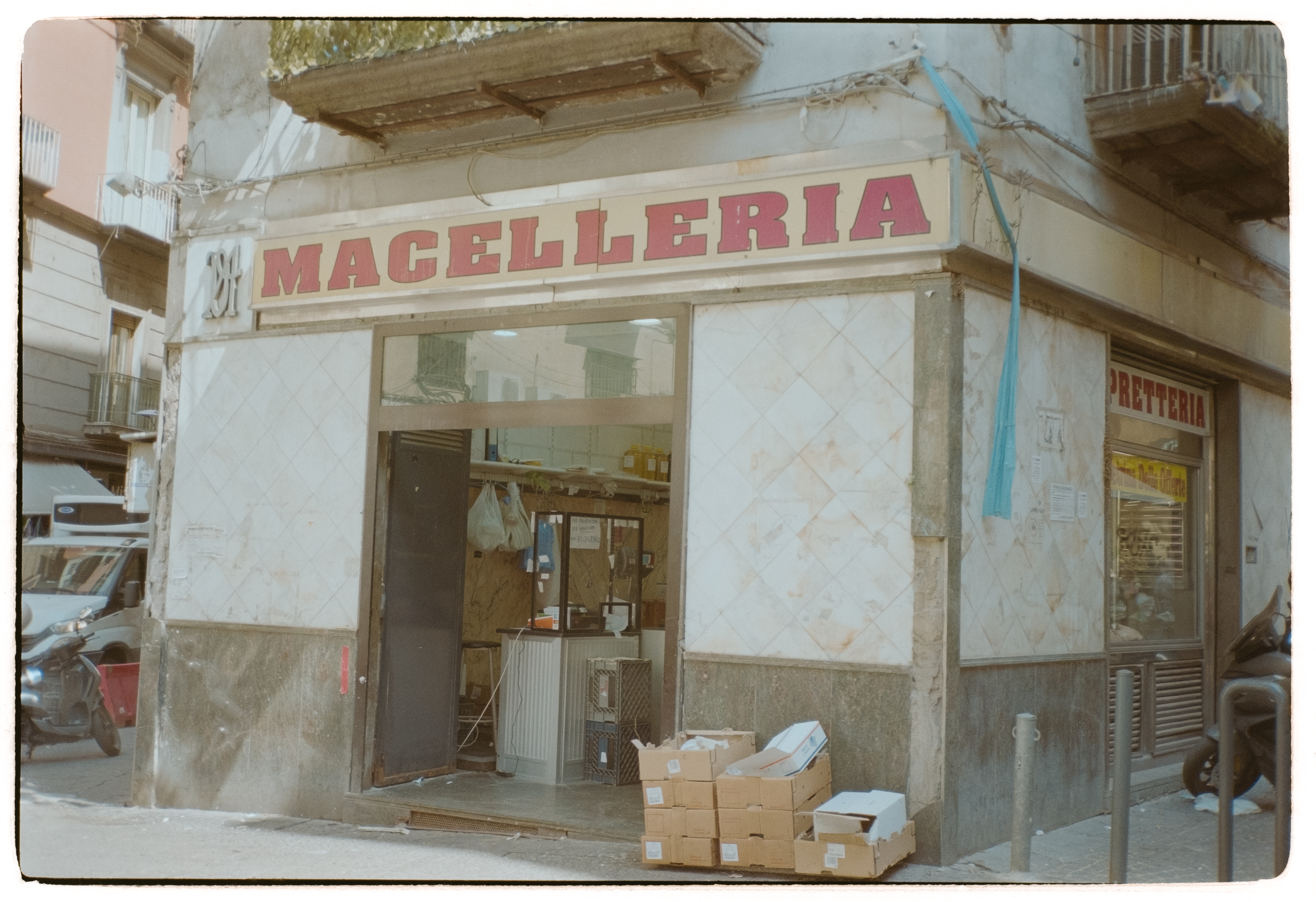
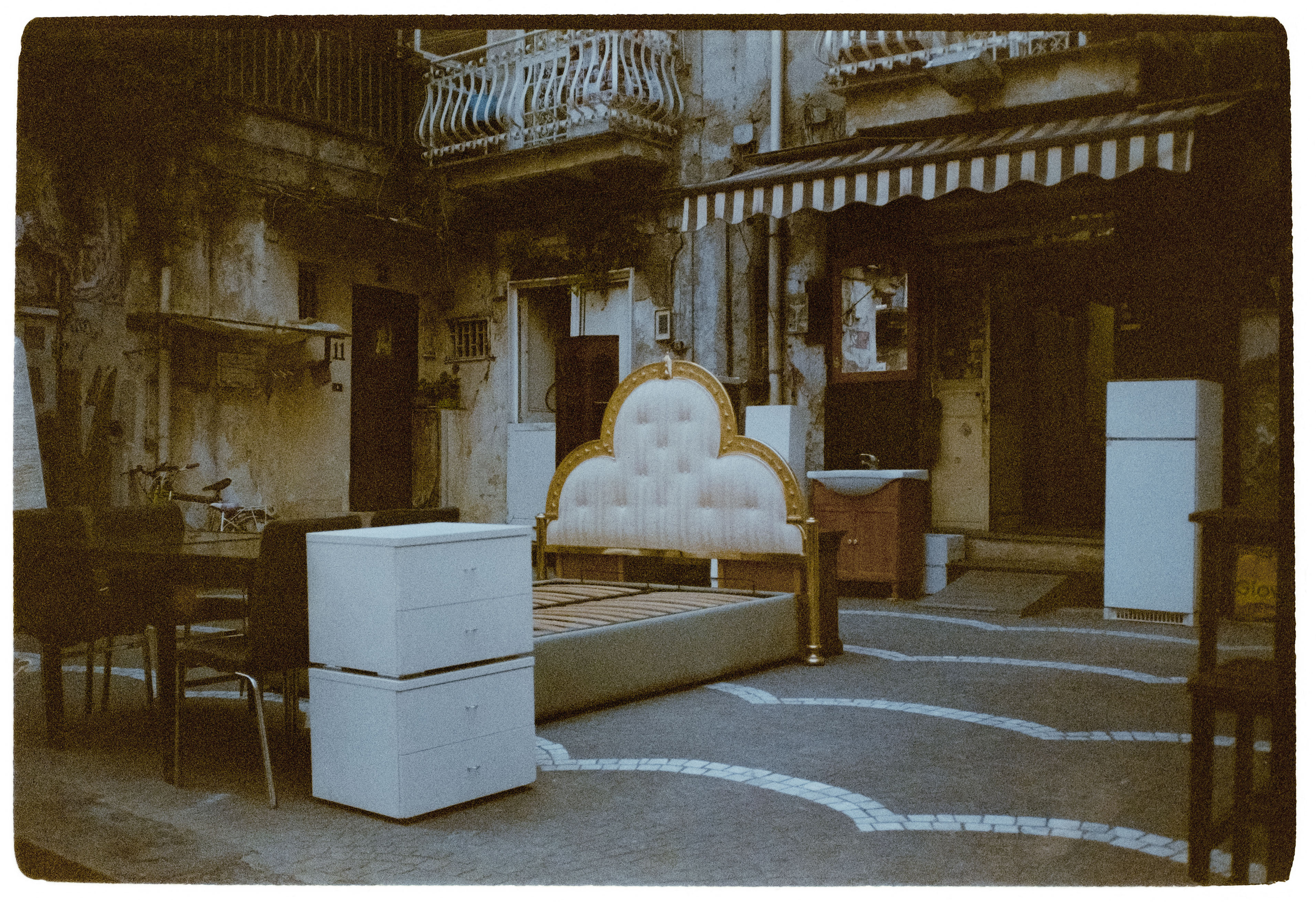
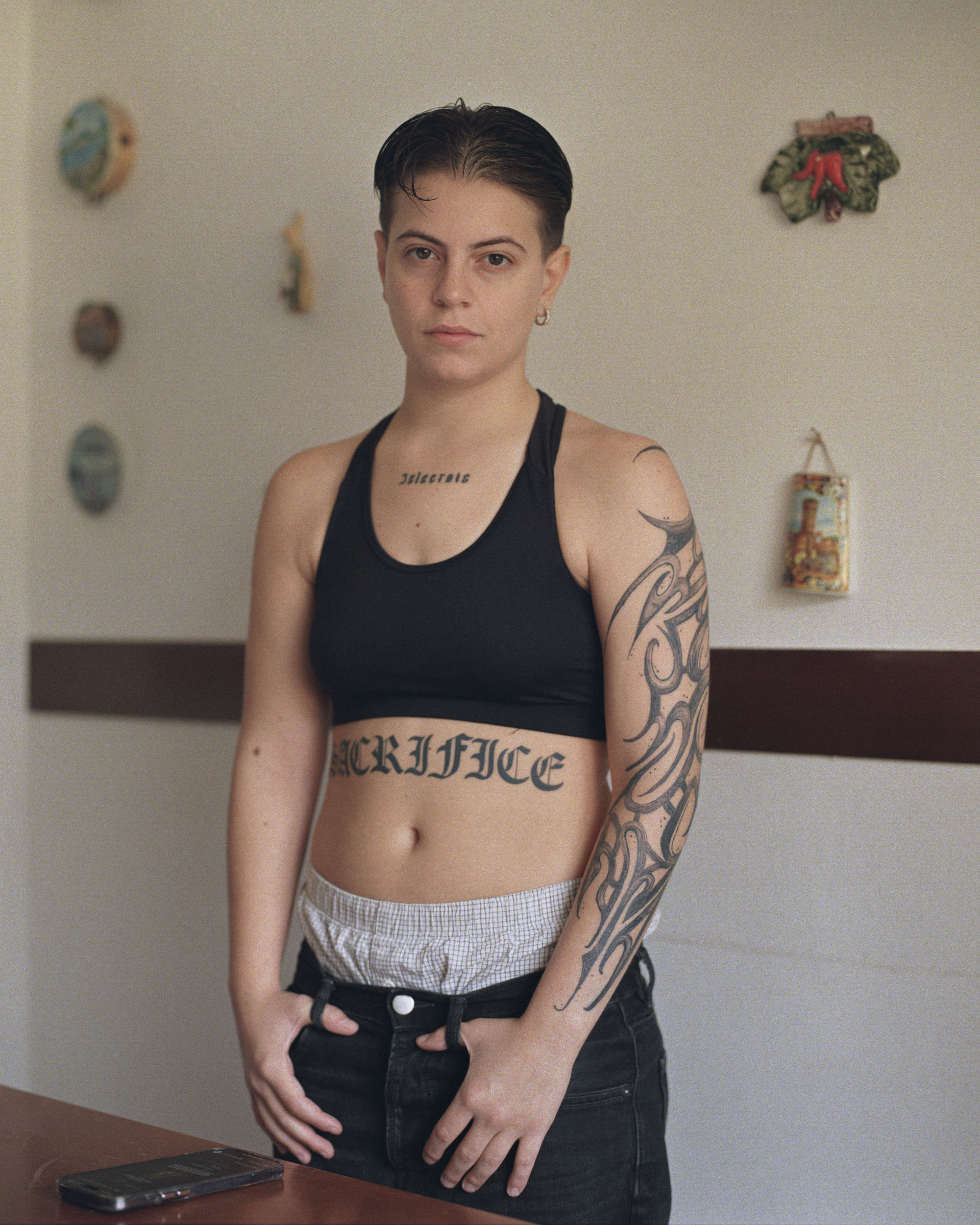
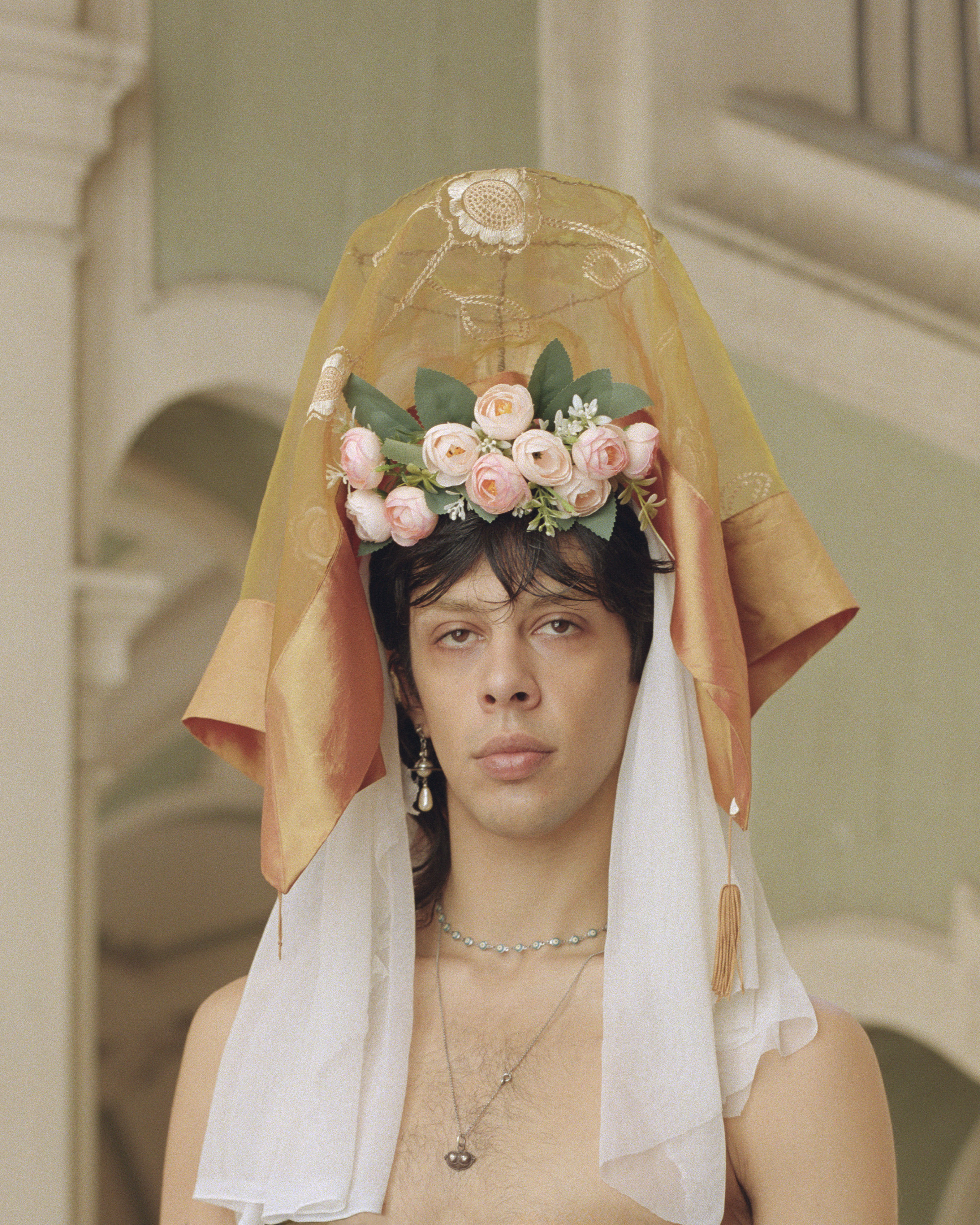
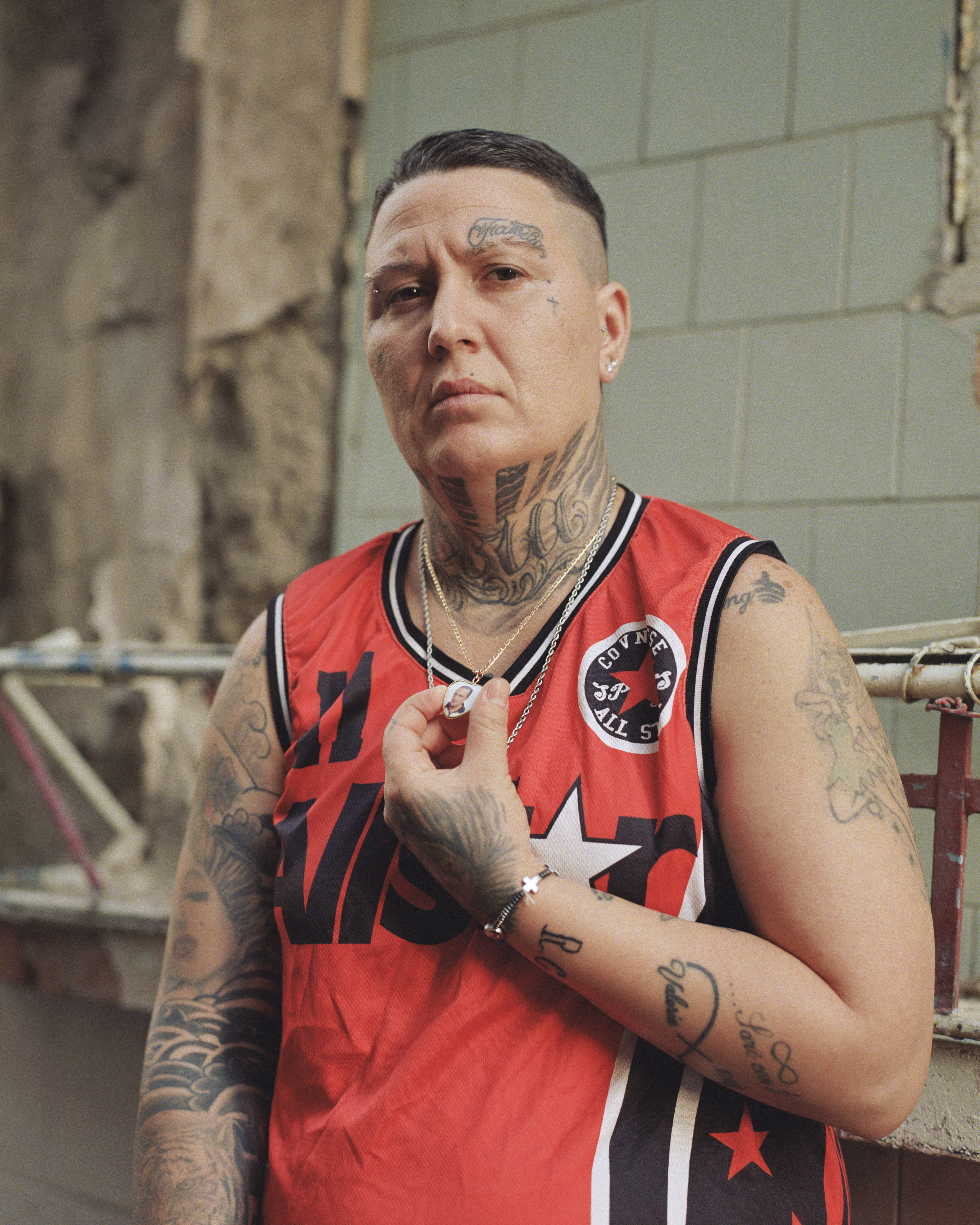
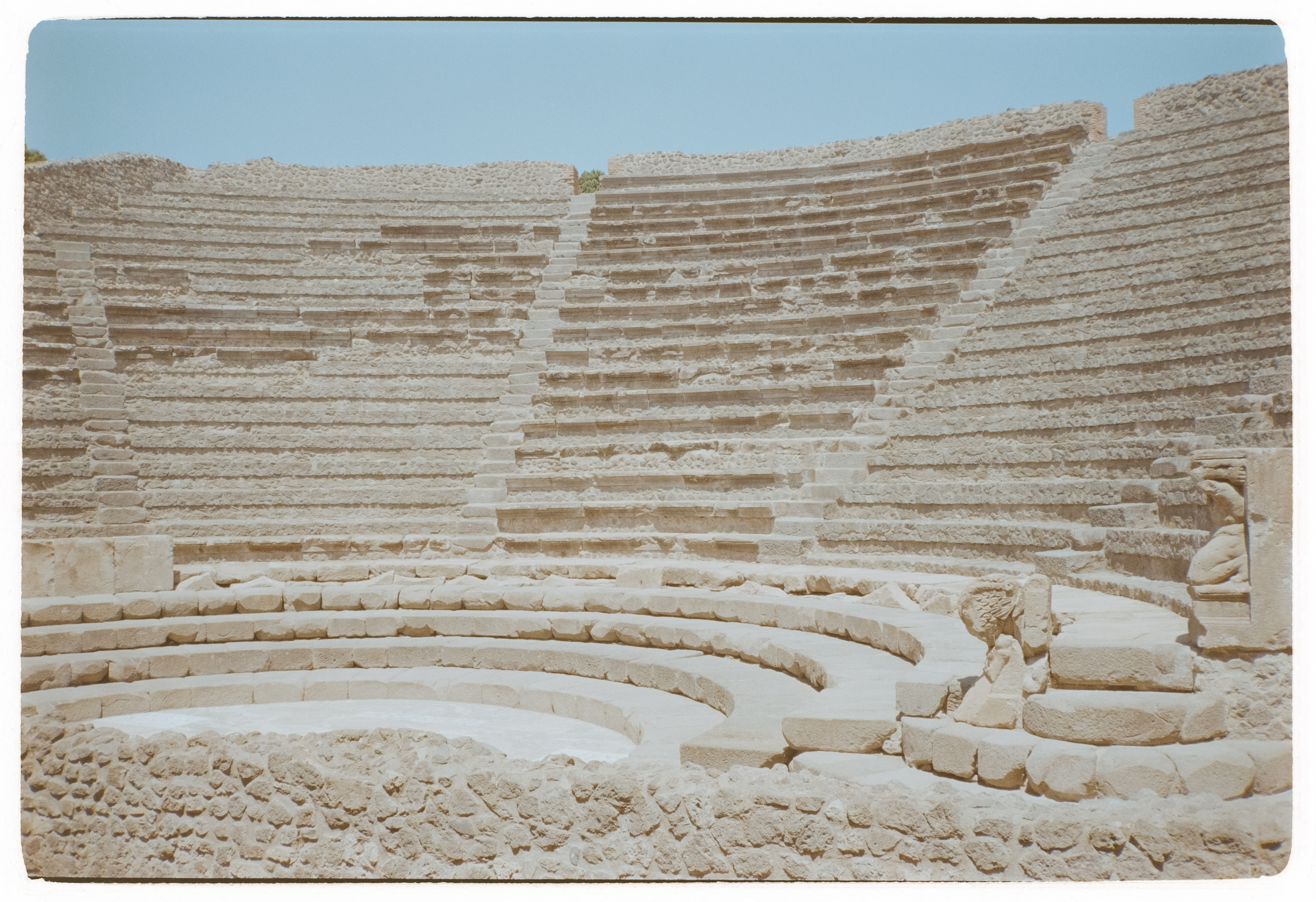
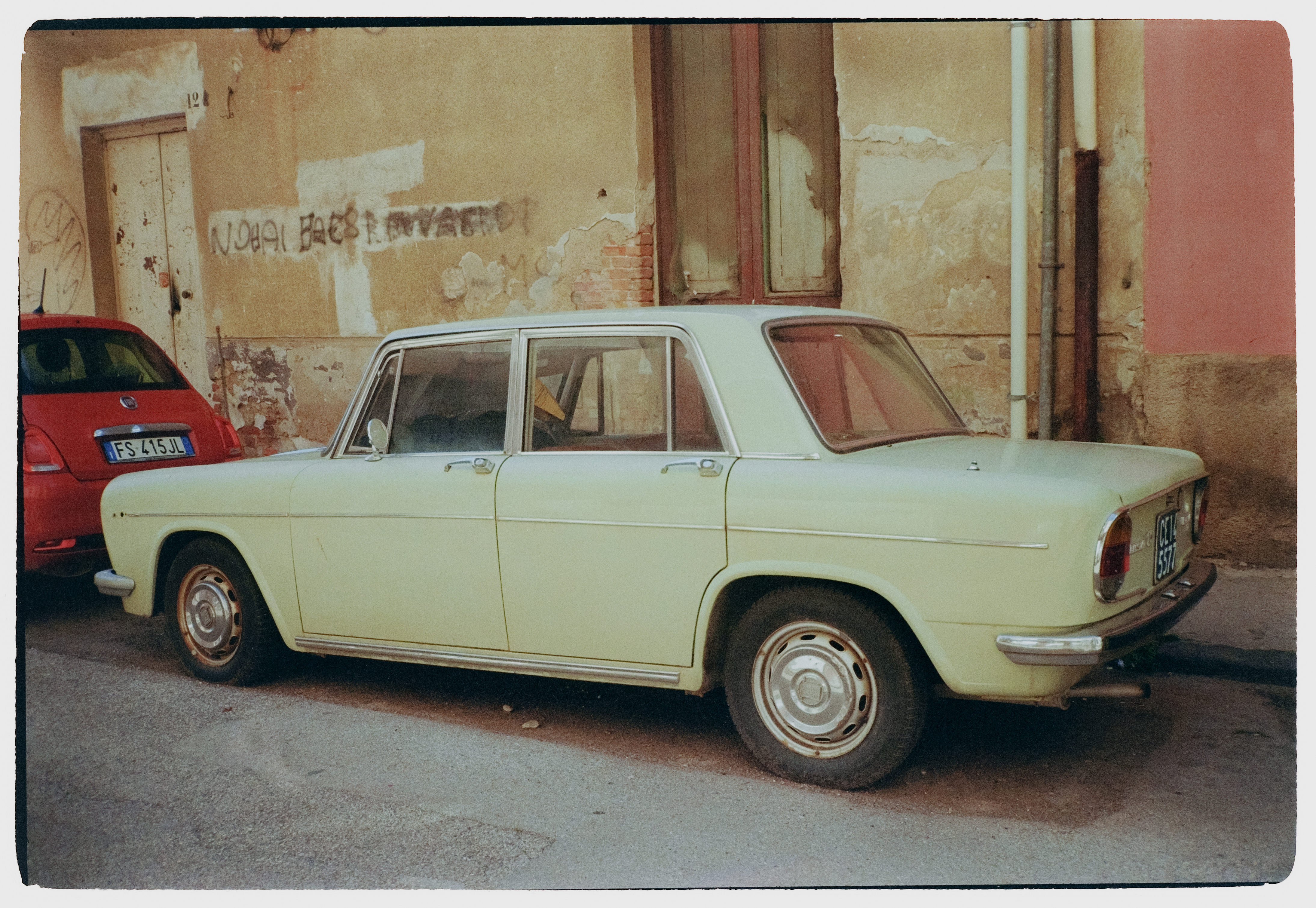
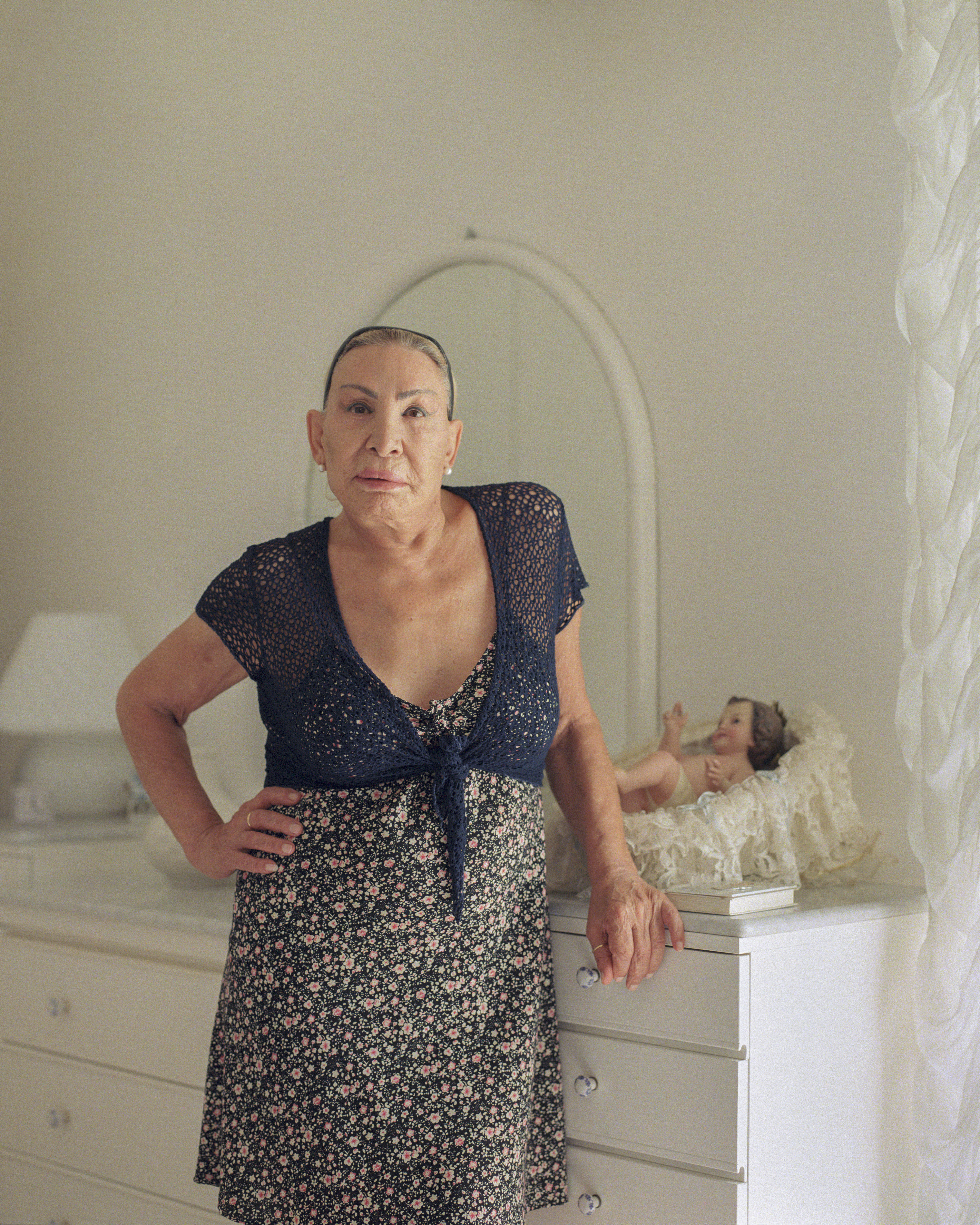
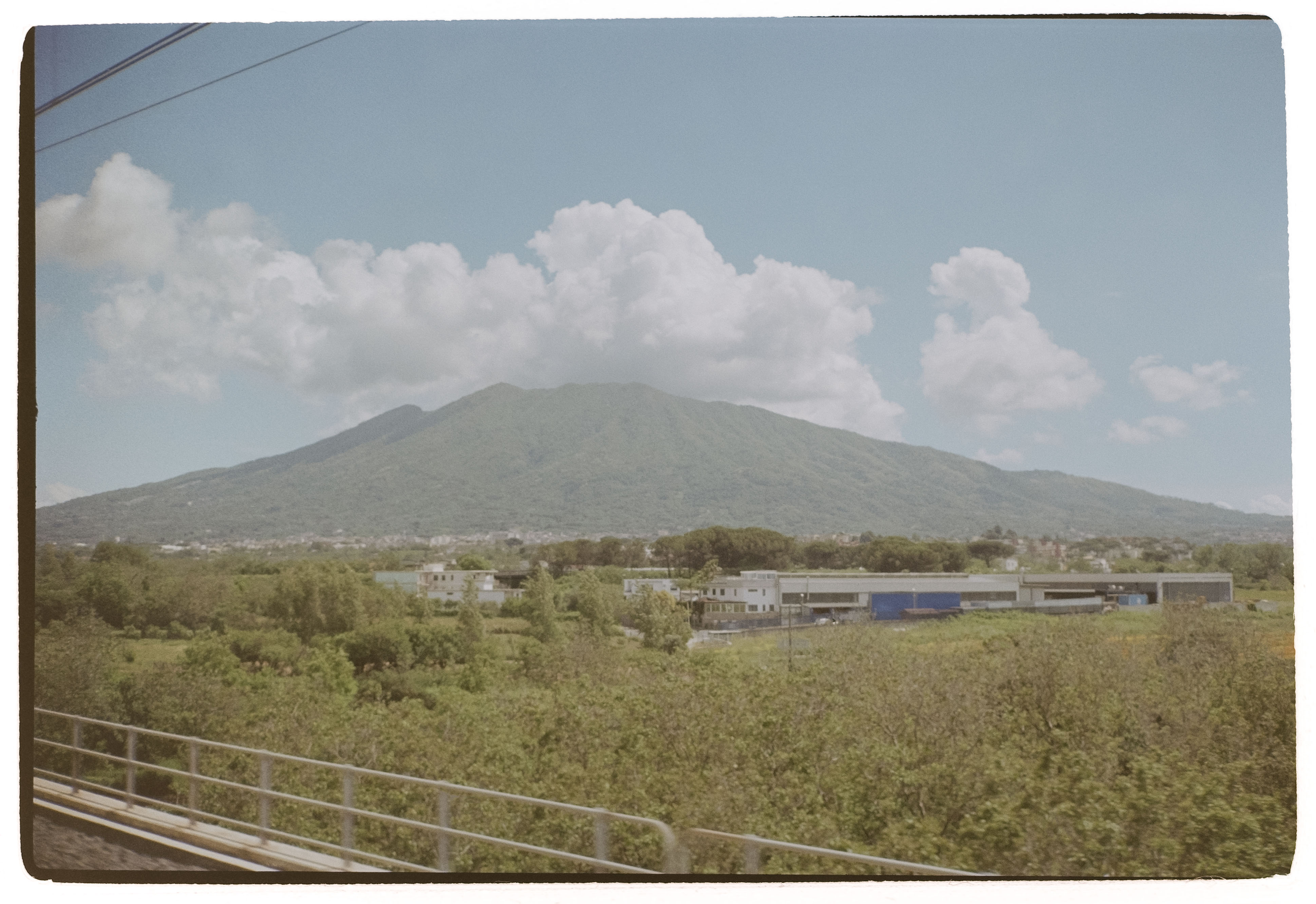
Roman’s work titled ‘TRA’ sits in the in-between spaces, hinting at transformation without a fixed destination. It follows the artist’s journey from Emilia-Romagna (Italy) and eventually leading to Napoli. In Napoli, Roman meets with members of the Neapolitan queer community, creating portraits that echo the region’s history of gender fluidity whilst also engaging with its contemporary landscape.
Themes of duality – a home away from home, the masculine and feminine – run throughout Roman’s work. The prompts in this resource invite the students to consider how belonging, self-reflection and connection can be explored through photography.
The themes explored here are too broad to contain within just this writing. Therefore, this resource is a starting point, delineating examples of how you might approach these subjects in a classroom.
Glossary of terms
Tra – ‘Inbetween’ in Italian. A state of in-betweenness.
Lived experience – refers to when somebody speaks about their own personal experience, something that they went through in the past or that touches them personally.
Embodied practice – creative work that starts from experiences and feelings held in the body.
Queer – a person who is gay, lesbian, bisexual, pansexual, or otherwise not heterosexual.
Queering – to ‘Queer’ something is to take something and look at it through a different lens, often as a process of questioning mainstream ideas of what we consider normal.
Femminiello (femminielli in plural) – a person who embodies a ‘third’ gender role in traditional Neapolitan culture. This term is not used as derogatory, femminielli have been historically known as bringing good fortune to their communities.
Diptych – a set of two photographs or works next to each other.
Dual nationality – being from two different countries.
Class – social and economic position, relating to access to resources and opportunities
Intersectional – understanding identity through overlapping systems such as gender, race, class, disability and sexuality
Statuesque – resembling a statue.
I. An Invitation to Return
Ingredients: paper, pen, the present moment
On a piece of paper, draw a figure, a scene, or write down a past memory that reminds you of the place you are from. This could be the place where you grew up, a second home you visit in the summer, or a memory from somewhere that makes you feel connected to your homeland.
This prompt is an invitation to consider and remember how you might carry the place you are from with you, even when you may not physically be there.
Directions to give your students
Grab a pen and a piece of paper in front of you.
Close your eyes for a moment (invitation – no pressure).
Feel the chair where you are sitting. Wiggle your toes a little bit. Notice if there is any tension in your body. You do not have to come close to it, just make a mental note from a distance.
Now I want you to go back in time, a moment in which you find yourself at home. Focus on one element from this memory; it could be an object, the sound of music, or simply a word in your language. Perhaps it is the way the sun lights your face, the sound of birds from a distance, the music being played from the radio.
After a few breaths, when you have identified what you wish to hold onto, you are invited to open your eyes (if they were closed) and draw or write this down on the piece of paper in front of you.
Discuss (as a group)
- What memory did this prompt take you back to?
- What words did you use to describe it – is it one word or a longer sentence?
Translating Memory into Image
Consider how you could translate this memory into an image. Where might you start? Could it be that you find an object like the one you wrote about and photograph it? Or perhaps it is the words that start you off on a visual journey. If it’s a sound or a song, could you listen to it as you’re photographing?
II. Photographic Prompt: The Statue
Ingredients: two people, one camera, two (or more) ideas
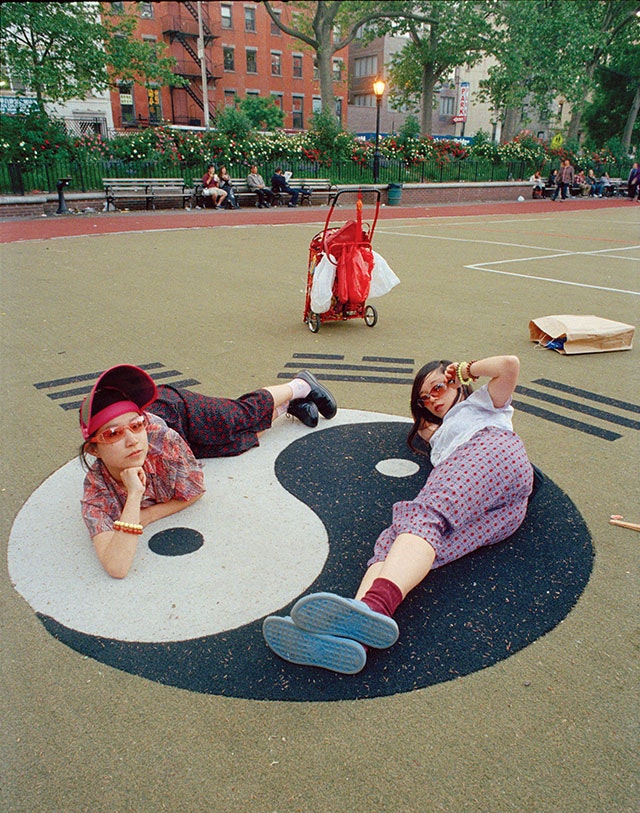
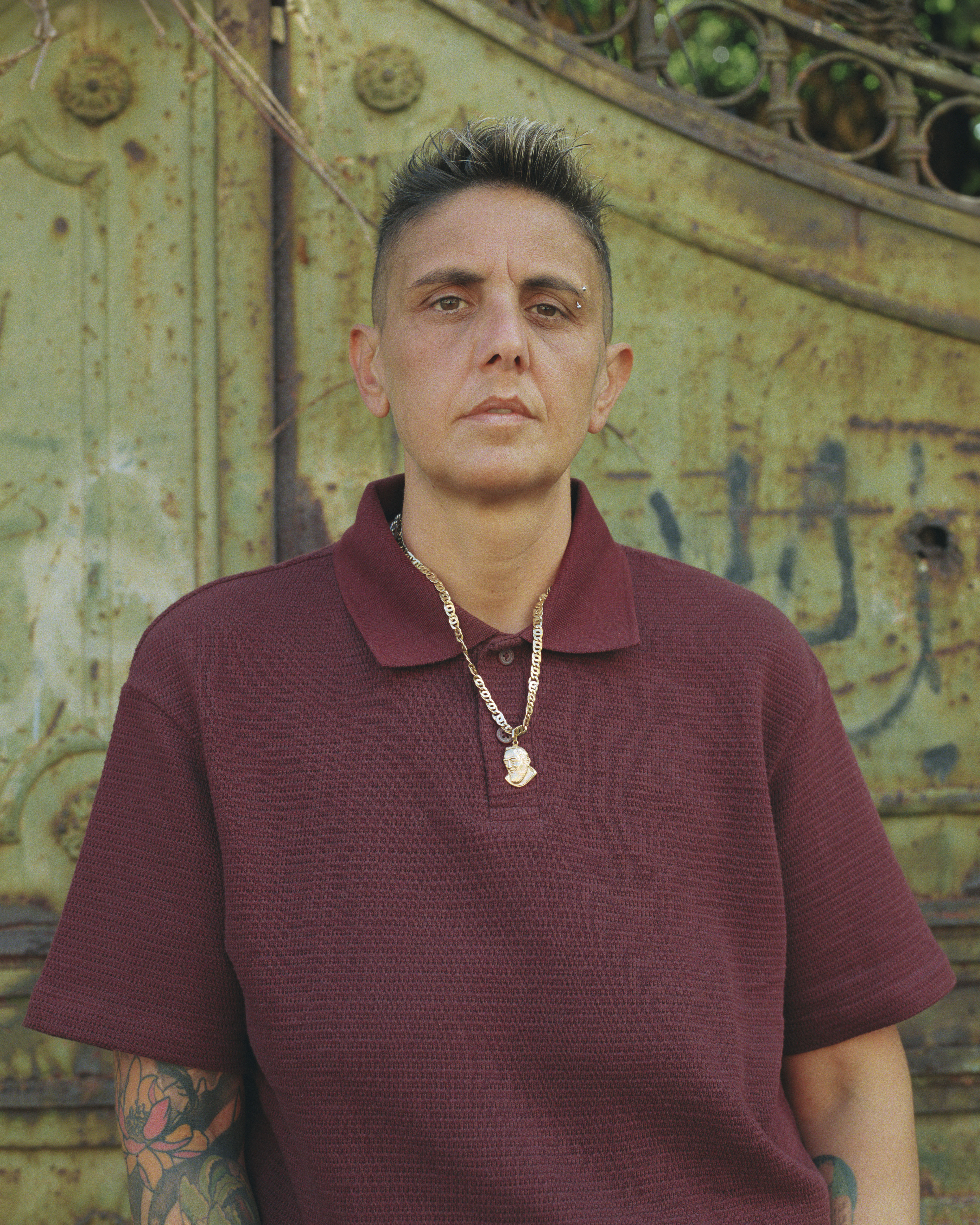
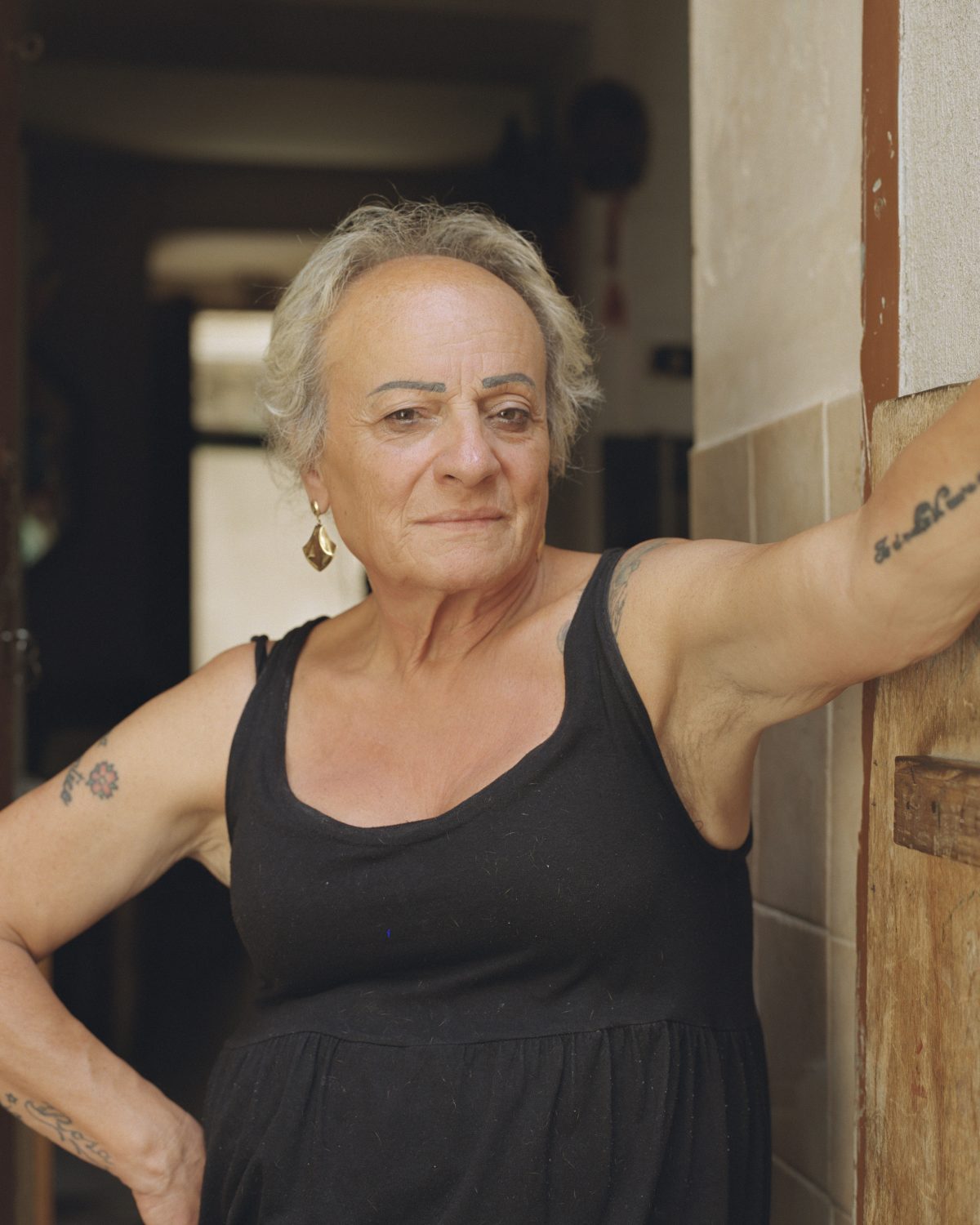
Roman’s portraits are striking. No matter whether the subject looks directly at, or away from the camera, their poses often feel rather statuesque yet alive at the same time. Portraiture has always been a very important way of representing those who do not have a platform or space to tell their story, specifically trans people, people of colour, or people with disabilities. In a world where being trans is becoming increasingly harder and dangerous, photography can be a space where people feel listened to, honoured and respected.
In this photographic prompt, you are invited to consider how you can use portraiture to communicate confidence and strength.
In pairs consider and discuss:
- If there were a statue of you on the streets of your hometown, how would you want to be seen?
- How would you pose?
- How can your body language help describe the way you wish to be remembered?
- Consider whether your statue would be just of your head, or full body. How might the way you pose change if it was just your head?
Research
The current fourth plinth at Trafalgar Square is presenting Mil Veces Un Instante (A Thousand Times An Instant) by Teresa Margolles. This sculpture is made up of plaster casts of the faces of 726 trans, non-binary and gender non-conforming people. What are the differences between this work and a singular statue of an important figure?
Find examples of statues to inspire you. Are there statues in your hometown you could explore?
Activity
After brainstorming together, each pair grabs a camera.
As one person performs their pose, the other sets up the camera and takes the portrait.
Try out different poses, see how each feel. You are free to direct the person making the photograph however you wish. Do you want to be photographed directly from the front, from an angle, or from low down?
After a few tries, swap places and follow the same directions.
If you do not wish to be photographed, you can choose an object in the room or symbol to represent your ‘statue’ pose.
Share back
After both have taken their statue photographs, you are invited to show and discuss this activity in a group of four.
Print the photographs you have taken. Lay them next to each other and discuss:
- Why did you choose this pose?
- How did it feel directing someone and having them take your image? Was it scary or exciting? Did you feel confident while posing, or awkward?
- Would you pose differently next time? If so, why?
III. The Threads That Bind Us – Relationships Between Diptychs
Roman’s work is primarily portraits of people from the queer community, but an important factor about the work is that the artist is particularly interested in telling the stories of working class, queer people. Roman adopts an intersectional approach where class and gender are not divided, but instead are both explored in these portraits.
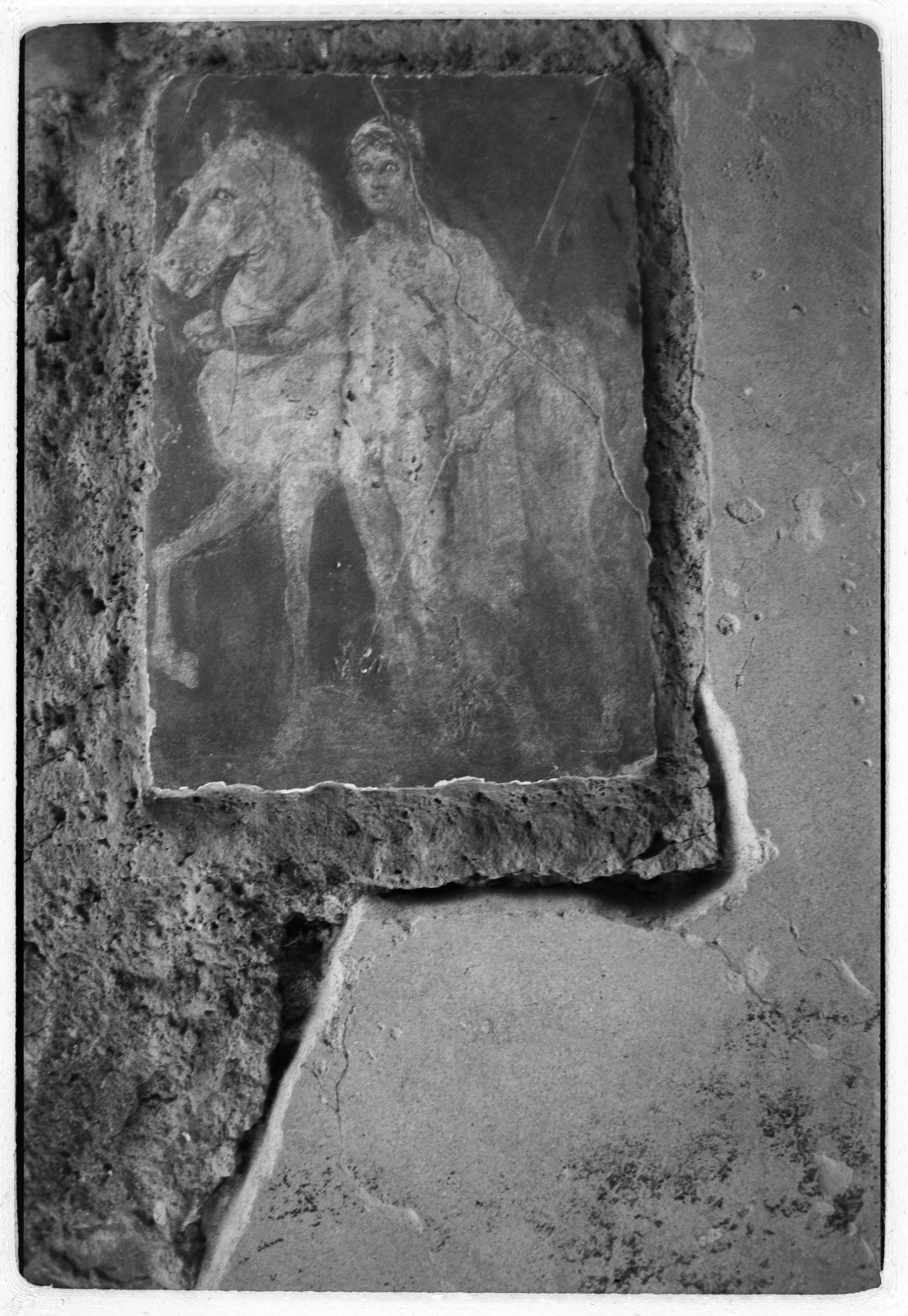
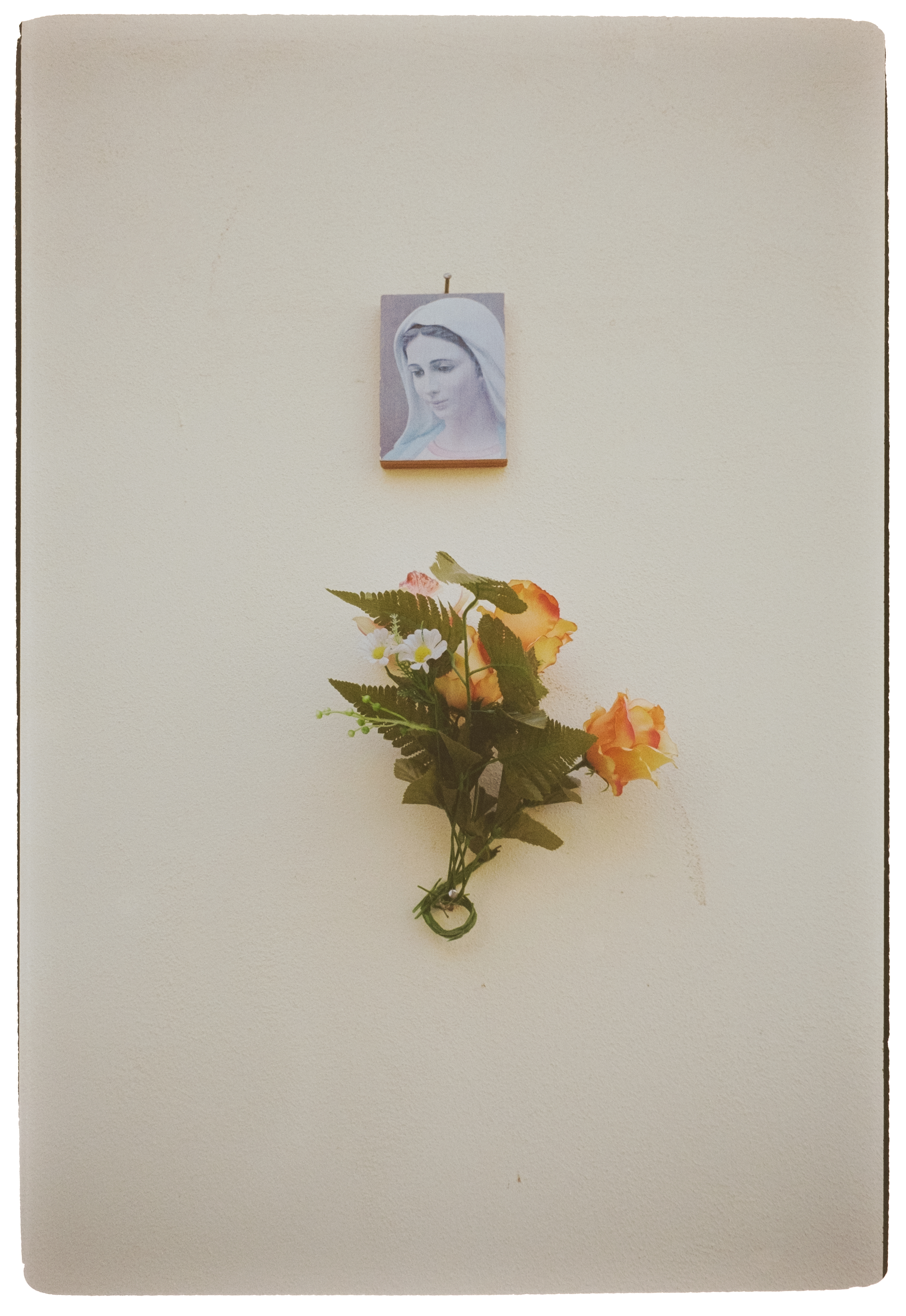
Spend some time looking at these two images.
Discuss
A portrait is often a window into someone’s world. It tells us something about them, through the way they dress, how they’re standing/sitting, but it also tells us about the relationship between the photographer and the person being photographed. For this prompt, you are invited to notice the patterns between the two photographs.
Where do you think this person in the image is?
What is their relationship to Roman?
They are looking straight into the camera, with their body turned to the left.
Which image do you think Roman took first?
Using post it notes, quickly write or draw what elements stand out from both:
- Are there any similarities between the two images?
- What do you think connects the images together?
- We know Roman photographed in Napoli, but where could the carving on the wall possibly originate from? What year do you think it was?
Explore the story
Place all the post it notes in the middle of the table. Take a moment to look at them. Notice which words or drawings immediately pull your attention.
After a minute or so, begin to read the words out loud and discuss as a group:
- Are there any similarities or repetitions?
- Which words belong together and which ones don’t?
- Do any of the words feel connected to one image more than the other?
- Could any of the words be a bridge between one image and the other?
Creative writing
Now divide the class into two small groups.
With the words from the post it notes, each group builds a short piece of writing that explores the relationship between the two images. This could take the form of a poem, a single long sentence or a short story.
The task is not to describe the images literally, but to use the language on the table as building blocks for creative writing.
Invite the group to consider:
- What mood or emotional thread do you want to excavate from the two images?
- Do you feel like the images speak to each other or do they come from different worlds?
- Which new words do you need to build a sentence?
- How might these words hint at themes such as identity, class, migration or belonging?
Each group assembles their chosen words.
A Set of Two
In this final activity, the students are invited to look at their existing material and create their own diptychs.
Invite the students to consider pairing:
- Two photographs
- One photograph and a piece of text
Place all your images and text material in the middle of a table.
Choose one photograph that immediately catches your eye. Without overthinking it, shuffle the remaining images and quickly select a second photograph that feels like it connects to the first in some way. Trust your instincts.
Place the two photographs next to each other and share with the group.
- What visual elements drew you to both?
- How do you feel when you see them together?
- What story, feeling or idea connects them?
Now choose a different photograph. Quickly select a piece of writing from the earlier exercises. Try to pick a text that does not describe what is happening in the image.
Place the photograph and the text next to each other.
- Which one comes first – image or text?
- How does changing the order also change the way you understand the two?
There are no rights or wrongs about this exercise. As this activity comes to a close, invite students to reflect on how pairing images and texts allowed new meanings to emerge. What began as separate pieces can become connected through intuition, order and attention. These diptychs offer a way of exploring identity, belonging, and memory without falling into fixed definitions.
Overall, these prompts can be a starting point for students to return to, work on again and develop their ideas further.
Share back
Once both groups have finished, gather to read each other’s sentences, poem or short story.
After sharing, discuss:
- How do the two interpretations differ?
- Are there any similarities?
- What new connections or ideas have surfaced during the exercise?
Other Artists
Bo Fan: Wander — Bo Fan (b.2002)
Lyndsay Perryman: Tops – Palmstudios
Pia-Paulina Guilmoth: Flowers Drink the River – STANLEY/BARKER
About the contributor:
Kairo Urovi is a visual artist based between Essex and Shkoder (AL). His work revolves around the complexities of that statement. Of being born and raised in Italy, with a family originally from Shkoder (Albania).
With a focus on printed matter and community-led approaches, their work explores trans and diasporic experiences. Blending documentary and conceptual approaches, Urovi often reimagines archives and personal histories to question how identities are formed, seen and remembered.
Instagram: https://www.instagram.com/kairo.kay/